
The best car battery charger is generally a smart, multi-stage automatic charger. These chargers intelligently assess your battery’s condition, deliver the optimal current, and then seamlessly switch to a maintenance mode. This precise control prevents overcharging, significantly extends battery lifespan, and ensures your car’s battery remains reliably charged and healthy.
Ever wondered what makes a car battery charger truly effective? This comprehensive guide dives into the world of car battery chargers, explaining their different types, how they work, and why they’re essential for maintaining your car’s health. We’ll explore key features, practical applications, and common mistakes to help you keep your battery in top condition.
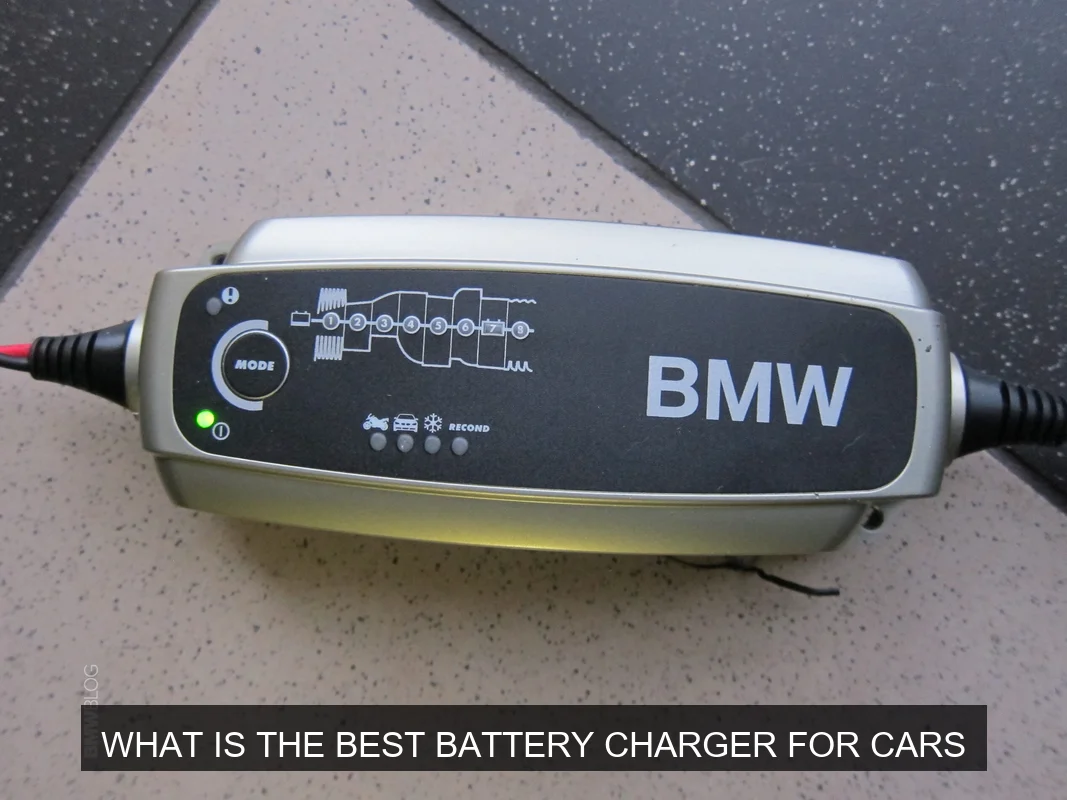
Image source: Bmwblog
📋 Table of Contents
- 🔹 Introduction: Powering Up Your Car’s Lifeline
- 🔹 What is a Car Battery Charger?
- 🔹 Understanding Different Types of Car Battery Chargers
- 🔹 Why is a Car Battery Charger Important?
- 🔹 How Does a Car Battery Charger Work?
- 🔹 Key Features to Look for in a Car Battery Charger
- 🔹 When Should a Car Battery Charger Be Used?
- 🔹 Common Misconceptions and Mistakes to Avoid
- 🔹 Tips for Safe and Effective Car Battery Charging
- 🔹 Frequently Asked Questions (FAQ)
- 🔹 Conclusion: Keeping Your Battery Charged for the Long Haul
Introduction: Powering Up Your Car’s Lifeline
Imagine this: You’re ready to start your day, hop in your car, turn the key, and… nothing. Just a sad click, or perhaps complete silence. A dead car battery is a frustrating experience, one that most drivers encounter at some point. But what if you could prevent this scenario and keep your car’s power source in prime condition?
That’s where a car battery charger comes in. It’s more than just a tool to revive a dead battery; it’s a vital piece of equipment for battery maintenance, extending its life, and ensuring reliable starts. This article will help you understand “what is the best battery charger for cars” by exploring the different types, how they function, and why they’re so important for every car owner.
What is a Car Battery Charger?
At its core, a car battery charger is an electrical device that replenishes the charge of your car’s 12-volt battery. Cars use lead-acid batteries, which store chemical energy and convert it into electrical energy to power the starter motor and other electrical components. Over time, or with infrequent use, a battery’s charge naturally depletes.
A charger reverses this process. It takes alternating current (AC) from a wall outlet, converts it into direct current (DC), and then sends that DC power into the battery. This recharges the battery, bringing its voltage back up to an optimal level and preparing it to reliably start your engine.
Understanding Different Types of Car Battery Chargers
Not all chargers are created equal. The “best” type really depends on your specific needs and how you plan to use it. Here’s a look at the main categories:
- Trickle Chargers: These are simple, low-amperage chargers designed to deliver a very small, constant current to the battery. Their main purpose is to prevent a fully charged battery from slowly discharging over long periods, like when a car is stored. However, they can potentially overcharge a battery if left connected for too long without supervision, which isn’t ideal for battery health.
- Battery Maintainers (Float Chargers): An evolution of the trickle charger, maintainers are designed for long-term connection without the risk of overcharging. They monitor the battery’s voltage and only supply current when needed to keep it at a full charge. Once the battery reaches full capacity, the maintainer switches to a “float” mode, providing just enough power to offset natural self-discharge. They are great for vehicles stored for weeks or months.
- Smart Chargers (Automatic Chargers): These are generally considered the most versatile and safest option. Smart chargers are micro-processor controlled, meaning they can “think” for themselves. They can assess the battery’s condition, determine the appropriate charging rate, and often employ a multi-stage charging process (bulk, absorption, float) to optimize charging efficiency and prevent damage. They automatically switch off or into maintenance mode when done, making them safe for extended connection. Many modern smart chargers also have features like desulfation to help revive older batteries.
- Portable Jump Starters (Battery Boosters): While not traditional chargers, these devices are worth mentioning as they are often confused with them. A portable jump starter provides a burst of high current to start a dead car immediately. It doesn’t recharge the battery over time; it just gives it enough juice to get the engine running so the car’s alternator can then take over and recharge the battery. They are excellent for emergencies but not for long-term battery health.
Why is a Car Battery Charger Important?
Investing in a good car battery charger offers several significant advantages for any car owner:
- Prevents Stranding: The most obvious benefit is avoiding the inconvenience and stress of a dead battery. Regular charging, especially with a smart maintainer, ensures your car starts reliably every time.
- Extends Battery Life: Deep discharges and prolonged periods of low charge significantly shorten a battery’s lifespan. By keeping your battery consistently charged at optimal levels, a charger can help it last longer, saving you money on replacements.
- Optimizes Performance: A fully charged battery provides peak performance to your car’s electrical system, from starting the engine to running accessories. This means more consistent power and less strain on your alternator.
- Convenience: You don’t have to rely on jump starts from other vehicles or call for roadside assistance. You can manage your battery health proactively from your own garage.
How Does a Car Battery Charger Work?
Understanding the basics of how these devices operate helps demystify their function. Here’s a simplified explanation:
A car battery charger generally performs two main tasks:
- AC to DC Conversion: Your home’s electrical outlets provide Alternating Current (AC). Car batteries, however, operate on Direct Current (DC). The charger contains a rectifier circuit that converts the AC power from the wall into DC power that your battery can accept.
- Controlled Current Delivery: The charger then delivers this DC power to the battery at a specific voltage and amperage. How it does this varies depending on the charger type:
- Simple chargers might deliver a fixed current.
- Smart chargers use microprocessors to monitor the battery’s voltage and internal resistance. They adjust the current and voltage delivery through a multi-stage process:
- Bulk Charge: This is the initial stage where the charger delivers the maximum safe current to rapidly bring the battery’s charge level up to about 80%.
- Absorption Charge: As the battery approaches full charge, the charger reduces the current and maintains a constant voltage. This prevents overheating and allows the battery to absorb the remaining charge safely.
- Float/Maintenance Charge: Once the battery is fully charged, the smart charger switches to a “float” or “maintenance” mode. It provides a very low, constant voltage and minimal current, just enough to counteract the battery’s natural self-discharge, ensuring it stays at 100% without overcharging.
Many chargers also incorporate safety features like spark protection, reverse polarity protection, and automatic shut-off to prevent damage to both the battery and the charger itself.
Key Features to Look for in a Car Battery Charger
When considering what makes the best battery charger for cars, understanding key features is crucial. It’s not about brand names, but about functionality and compatibility.
- Battery Type Compatibility: Most car batteries are 12-volt lead-acid. However, within lead-acid, there are different types like standard flooded, AGM (Absorbed Glass Mat), and Gel batteries. A good charger will often have settings for multiple battery types, ensuring proper charging for each.
- Amperage Output (Charging Speed): Chargers come with different amperage ratings. A higher amperage means faster charging. For maintenance, lower amps (1-5 amps) are fine. For recovering a dead battery, higher amps (10-20 amps) are more efficient. Some smart chargers offer selectable amperage settings.
- Multi-Stage Charging: As discussed, this is a critical feature for optimal battery health. It ensures the battery is charged safely and efficiently without overcharging.
- Safety Protections: Look for features like:
- Spark-Proof Clamps: Prevents sparks when connecting the clamps, reducing explosion risk.
- Reverse Polarity Protection: Warns you or prevents charging if you accidentally connect the clamps incorrectly (+ to -).
- Overcharge Protection: Automatically shuts off or switches to maintenance mode when the battery is full.
- Short-Circuit Protection: Guards against damage if the clamps accidentally touch.
- Desulfation Mode: This feature uses pulses of high-frequency current to break down sulfate crystals that can build up on battery plates over time, which often reduces a battery’s capacity. While it doesn’t guarantee a full recovery, it can sometimes extend the life of older, neglected batteries.
- Portability and Durability: Consider if you need a charger that’s easy to move around or one that can withstand tough garage environments.
When Should a Car Battery Charger Be Used?
Knowing when to use a charger is just as important as knowing what kind to use. Here are some common scenarios:
- Infrequent Driving: If you don’t drive your car daily, especially if it sits for a week or more, connecting it to a battery maintainer is a great idea. Modern cars have parasitic draws that slowly drain the battery even when off.
- Cold Weather: Batteries lose efficiency in cold temperatures, making it harder for them to hold a charge and deliver starting power. Pre-charging with a maintainer on cold nights can prevent no-starts.
- Before Extended Storage: If you’re storing a classic car, motorcycle, RV, or boat for the off-season, a battery maintainer is essential to keep the battery healthy and ready for use when spring arrives.
- After a Deep Discharge: If your battery has gone completely dead (e.g., you left your lights on), a smart charger can often recover it safely, though it might take several hours.
- For Maintenance: Even with regular driving, giving your battery a full charge with a smart charger every few months can help extend its overall life.
Common Misconceptions and Mistakes to Avoid
Using a battery charger correctly is key. Here are some pitfalls to steer clear of:
- Overcharging Dangers: Historically, leaving a charger connected for too long could boil the battery’s electrolyte, damaging it. While modern smart chargers prevent this, using an old, unregulated charger still carries this risk.
- Using the Wrong Charger Type: Don’t use a powerful 25-amp charger on a small motorcycle battery, or rely solely on a trickle charger for a deeply discharged car battery. Match the charger to the battery’s needs.
- Ignoring Safety Precautions: Working with electricity and lead-acid batteries requires caution. Always prioritize safety.
- Assuming All Batteries Are the Same: As mentioned, different battery chemistries (flooded, AGM, Gel) require different charging profiles. Using the wrong setting can reduce battery life.
- Charging a Damaged Battery: If a battery is physically damaged, leaking, or extremely old and failing to hold a charge, charging it might be unsafe or simply ineffective. It’s better to replace it.
Tips for Safe and Effective Car Battery Charging
To get the most out of your car battery charger and ensure your safety, follow these practical tips:
- Read the Manual: Every charger is different. Always read the instructions that come with your specific unit to understand its features and safety guidelines.
- Ensure Ventilation: Batteries can produce hydrogen gas, especially during charging. This gas is highly flammable. Always charge in a well-ventilated area, away from open flames or sparks.
- Proper Connection Sequence: Always connect the positive (+) charger clamp to the positive (+) battery terminal first, then the negative (-) charger clamp to a grounded, unpainted metal part of the car chassis, away from the battery. Only plug the charger into the wall outlet AFTER making the battery connections. When disconnecting, reverse the order: unplug from wall, then negative clamp, then positive clamp.
- Monitor Charging: Even with smart chargers, it’s good practice to periodically check on the charging process, especially if it’s your first time using the device or if the battery was deeply discharged.
- Maintain Your Charger: Keep the charger clean and dry. Inspect cables and clamps for damage before each use.
Frequently Asked Questions (FAQ)
Let’s address some common questions people often have about car battery chargers.
What is the main difference between a trickle charger and a smart charger?
A trickle charger provides a small, constant current, which can risk overcharging if left unsupervised for too long. A smart charger, on the other hand, is microprocessor-controlled; it assesses the battery’s condition, delivers current in multiple stages (bulk, absorption), and automatically switches to a safe maintenance (float) mode when full, preventing overcharging and optimizing battery health.
Can I leave a smart charger connected to my car battery indefinitely?
Yes, you typically can. Modern smart chargers are designed with a “float” or “maintenance” mode. Once the battery reaches full charge, they reduce the output to a very low level, just enough to counteract natural self-discharge, ensuring the battery stays topped off without being overcharged or damaged. This makes them ideal for long-term storage.
How long does it take to charge a car battery?
The charging time varies greatly depending on the battery’s state of discharge, its capacity (Ah rating), and the charger’s amperage output. A deeply discharged battery with a high capacity might take 10-24 hours with a typical 5-10 amp smart charger. A battery that’s only slightly low might charge in a few hours. Always consult your charger’s manual for estimated times.
Is it safe to charge a car battery while it’s still in the car?
Yes, it is generally safe to charge a car battery while it’s still installed in the car, provided you follow proper safety procedures. Ensure the area is well-ventilated, disconnect any unnecessary electrical accessories, and connect the negative charger clamp to a good chassis ground point away from the battery itself, not directly to the negative battery terminal.
What voltage car battery charger do I need?
For most standard passenger cars, you will need a 12-volt car battery charger, as this is the standard voltage for automotive batteries. Some larger vehicles or certain specialized applications might use 24-volt systems, but these are less common for typical cars. Always confirm your battery’s voltage before choosing a charger.
Conclusion: Keeping Your Battery Charged for the Long Haul
Understanding “what is the best battery charger for cars” boils down to recognizing the value of a smart, multi-stage automatic charger. These devices offer a perfect blend of efficiency, safety, and longevity for your car’s most critical power source.
By using the right type of charger, understanding how it works, and following best practices, you can dramatically extend your car battery’s life, prevent unexpected breakdowns, and ensure your vehicle is always ready for the road. Taking a proactive approach to battery maintenance with a reliable charger isn’t just a smart move; it’s an essential one for any responsible car owner. Your car, and your peace of mind, will thank you for it.