Unlocking the secret to trickle charging duration reveals it’s not a one-size-fits-all answer. The ideal time hinges on your battery’s size and discharge level, alongside the charger’s amperage. For safe, effective charging and to prevent damage, always use a smart trickle charger which automatically adjusts and maintains the optimal charge.
Ever walked out to your car, ready to start your day, only to be met with that gut-wrenching click-click-click of a dead battery? It’s a truly frustrating experience, isn’t it? That feeling of being stranded, the plans for your day suddenly thrown into chaos – we’ve all been there, or at least dreaded the thought. A car battery isn’t just a power source; it’s the heart of your vehicle’s electrical system, and when it falters, everything stops.
While jump-starting might get you back on the road in an emergency, it’s not a long-term solution. And for those of us who have vehicles that sit idle for extended periods – maybe a classic car, a motorcycle, an RV, or even just a second car that doesn’t get driven daily – battery health is a constant concern. This is where the unsung hero of battery maintenance, the trickle charger, comes into play. It’s not about quick fixes; it’s about sustained health and preventing that dreaded dead battery scenario.
But here’s the million-dollar question that often leaves car owners scratching their heads: how long to trickle charge a car battery? Is it an hour, a day, a week, or something else entirely? The answer, like many things in the automotive world, isn’t a simple “X” number of hours. It depends on several factors, and understanding them is the key to truly unlocking the secret of optimal battery care. Let’s dive in and demystify the art of trickle charging your car battery, ensuring your ride is always ready when you are.
Key Takeaways
- Understand Trickle’s Role: It’s for maintenance, not rapid recovery.
- Full Charge Duration: A dead battery needs 24-48 hours for full recovery.
- Maintenance Charging: 12-24 hours is often enough for a battery top-off.
- Use a Smart Charger: It prevents overcharging and optimizes battery health.
- Monitor Battery Voltage: Use a multimeter to check charge status accurately.
- Avoid Overcharging: Old or damaged batteries can be harmed.
- Prioritize Safety: Ensure proper ventilation and correct connections.
Quick Answers to Common Questions
How long does it typically take to trickle charge a car battery?
For a moderately discharged car battery, you can expect to trickle charge a car battery for about 12-24 hours. A good rule of thumb is to calculate your battery’s Ah rating and divide by your charger’s output in amps, then add a few extra hours.
Can I leave a trickle charger on my car battery for too long?
Modern “smart” trickle chargers are designed to be left on indefinitely as they switch to a maintenance mode, preventing overcharging. However, with older, non-smart chargers, it’s best to disconnect once fully charged to avoid potential long-term issues.
What if my car battery is completely dead? How long will it take then?
If your car battery is deeply discharged, it will naturally take longer to trickle charge a car battery. You might be looking at 24-48 hours or even more, depending on the battery’s condition and the charger’s output.
How do I know when my car battery is fully charged?
Most modern trickle chargers have an indicator light that turns green or displays “full” when the battery is completely charged. You can also verify with a voltmeter; a fully charged 12V battery should read around 12.6-12.8 volts.
Does the size of my car battery affect how long it takes to trickle charge?
Absolutely! Larger batteries, like those in trucks or SUVs, have higher ampere-hour ratings, meaning they’ll require more time to trickle charge a car battery compared to smaller car batteries. Always consider your specific battery’s capacity.
📑 Table of Contents
- Understanding Trickle Charging: More Than Just a “Slow Charger”
- The Science Behind the Charge: Factors Influencing Time
- How Long to Trickle Charge a Car Battery: The General Guidelines
- The Smart Charger Advantage: Why “Set It and Forget It” is Best
- Practical Tips and Safety Precautions for Trickle Charging
- Unlock The Secret How Long to Trickle Charge a Car Battery
Understanding Trickle Charging: More Than Just a “Slow Charger”
When we talk about trickle charging, we’re not just talking about any slow charger. It’s a specific, gentle approach to battery maintenance that plays a crucial role in extending battery life and ensuring reliability. Think of it less like a quick energy drink and more like a steady, nutritious meal for your battery.
What is Trickle Charging, Really?
At its core, trickle charging involves supplying a very low, consistent current to your car battery over an extended period. Unlike standard chargers that might deliver several amps to quickly replenish a dead battery, a traditional trickle charger typically operates at a much lower amperage, often between 0.5 and 2 amps. This gentle flow of electricity is designed to counteract the natural self-discharge that batteries experience, especially when not in use. The goal isn’t to rapidly bring a completely dead battery back to life (though it can help), but rather to maintain an already charged or partially charged battery in its optimal state.
Imagine your battery slowly leaking a tiny bit of energy every day. A trickle charger acts like a tiny faucet, constantly refilling that leak, ensuring the water level (or charge level) remains stable. This slow and steady approach is vital because it minimizes heat generation and stress on the battery’s internal components, which can be detrimental with higher current charging.
When Do You Need to Trickle Charge a Car Battery?
So, when is this gentle method truly necessary? You might be surprised how many situations call for it:
- Vehicles Stored Long-Term: This is perhaps the most common reason. If you have an RV, motorcycle, boat, classic car, or even a lawnmower that sits for weeks or months at a time, a trickle charger is your best friend. Batteries naturally discharge when idle, and a trickle charger prevents them from falling into a dangerously low state.
- Infrequently Driven Cars: Maybe you have a secondary car that only gets driven on weekends or for specific errands. Even a few days of inactivity can start to deplete the battery, especially in modern cars with constant parasitic draws from their complex electronics. A trickle charger keeps it topped up.
- Preventing Sulfation: When a lead-acid battery discharges, lead sulfate crystals begin to form on the plates. If the battery remains discharged for too long, these crystals harden and grow, a process called sulfation, which significantly reduces the battery’s capacity and ability to hold a charge. Regular trickle charging helps prevent this damaging process.
- Maintaining Optimal Charge: A battery performs best when it’s kept at or near full charge. Trickle charging ensures your battery is always ready to deliver peak performance, extending its overall lifespan.
The Science Behind the Charge: Factors Influencing Time
Determining precisely how long to trickle charge a car battery isn’t a one-size-fits-all answer because several critical factors come into play. Understanding these elements will empower you to make an informed decision and care for your battery effectively.
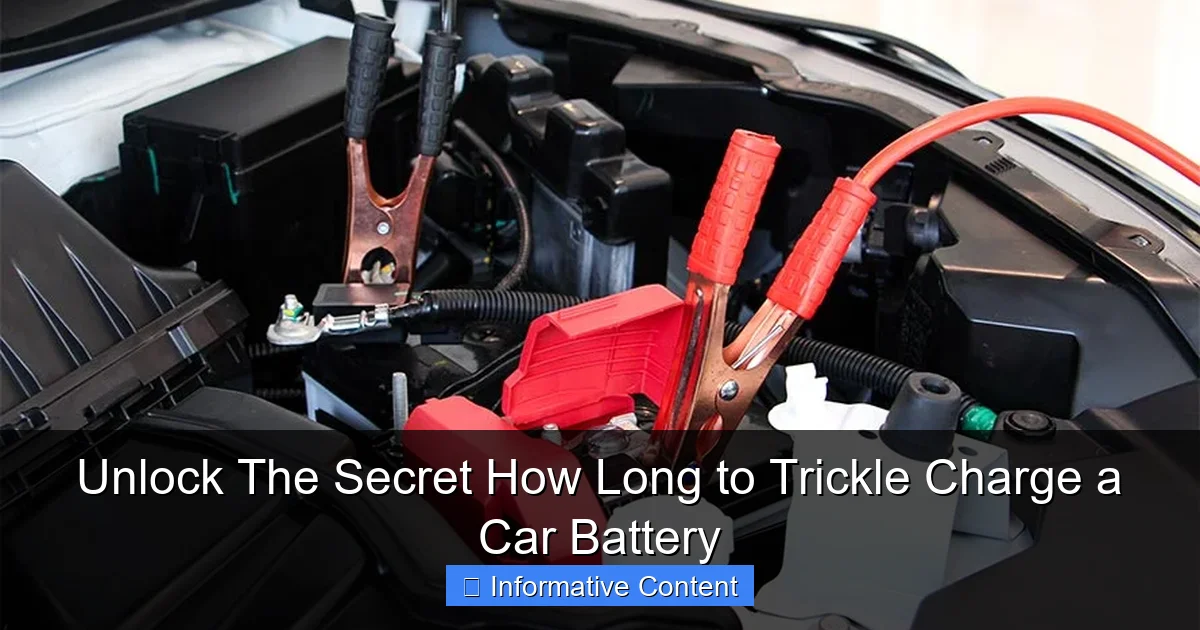
Visual guide about trickle charge car battery time
Image source: interstatebatteries.com
Battery Type Matters
Not all car batteries are created equal, and their internal chemistry dictates their charging characteristics:
- Flooded Lead-Acid Batteries: These are the most common and traditional car batteries. They contain liquid electrolyte. While they can generally handle a gentle trickle charge well, some require checking electrolyte levels periodically.
- AGM (Absorbed Glass Mat) Batteries: These are maintenance-free and more resistant to vibration. They charge faster and more efficiently than flooded batteries and also tolerate deep discharges better. They require specific charging voltages, so a smart trickle charger designed for AGM is ideal.
- Gel Cell Batteries: Similar to AGM in being sealed and maintenance-free, gel batteries use a silica-based gel instead of liquid electrolyte. They are very sensitive to overcharging and require a charger with precise voltage regulation, making a smart trickle charger an absolute must.
While lithium-ion batteries are becoming more common in some high-performance or electric vehicles, traditional “trickle chargers” as we understand them for lead-acid batteries are generally not suitable. Lithium batteries require specific battery management systems and dedicated chargers designed for their unique chemistry.
Battery State of Discharge
This is arguably the most significant factor. A battery that’s only slightly depleted will naturally take far less time to trickle charge than one that’s deeply discharged. Think of it like filling a glass of water: if it’s mostly full, it takes little time; if it’s almost empty, it takes much longer. A deeply discharged battery might take days to recover, if it can recover at all, through trickle charging alone.
Battery Capacity (Ah)
Battery capacity is measured in Amp-hours (Ah), indicating how much current a battery can supply for a certain amount of time. A typical car battery might be around 50-70 Ah, while a motorcycle battery could be 10-20 Ah, and a large truck or RV battery might be 100 Ah or more. It makes sense that a larger capacity battery will take longer to fully charge than a smaller one, even with the same trickle charge rate. For example, a motorcycle battery might take 12-24 hours to fully charge from a deeply discharged state with a 1-amp trickle charger, whereas a large truck battery could take 2-3 days or more.
Charger Amperage
The output current of your trickle charger directly affects charging time. A true trickle charger typically outputs 0.5 amps to 2 amps. If your charger outputs a mere 0.75 amps, it will take considerably longer to replenish a battery compared to a 1.5-amp charger. While faster might seem better, remember the gentle nature of trickle charging. For maintenance, a lower amp rate is perfectly fine and often preferred. For initial recovery of a somewhat depleted battery, a slightly higher amp (but still within the trickle range) might be more practical.
How Long to Trickle Charge a Car Battery: The General Guidelines
Given the variables we’ve just discussed, let’s establish some general guidelines for how long to trickle charge a car battery in different scenarios. It’s important to remember that these are approximations, and using a smart charger (which we’ll cover soon) can significantly simplify the process.
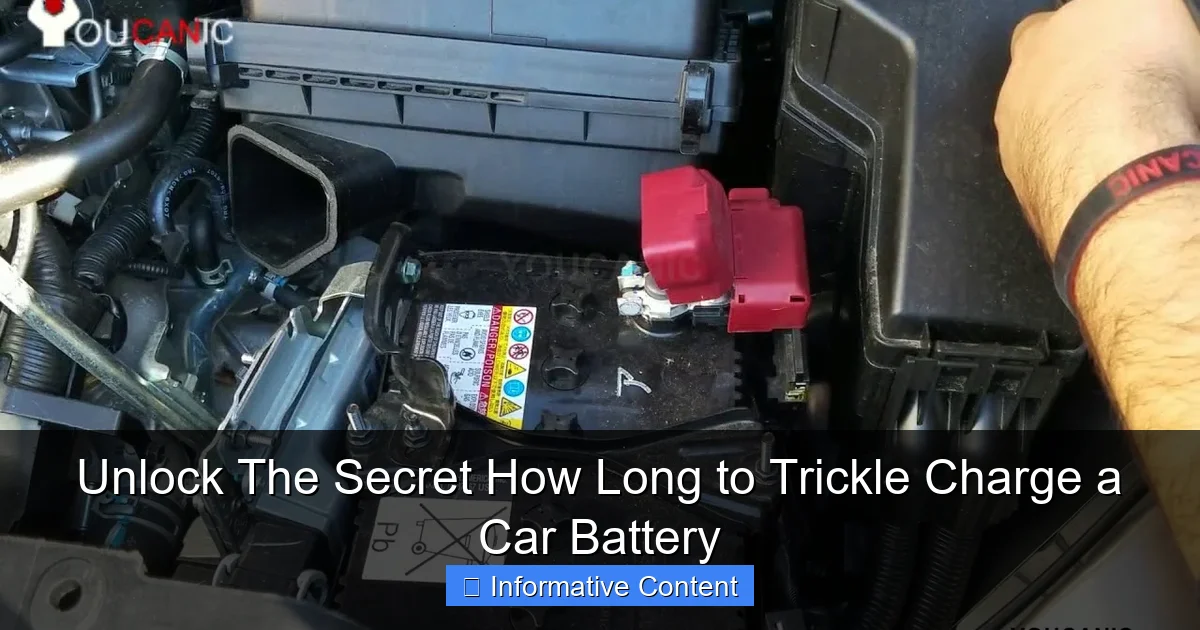
Visual guide about trickle charge car battery time
Image source: i.ytimg.com
For a Partially Discharged Battery
If your car battery isn’t completely dead but has simply lost some charge – perhaps your car sat for a week or two, or you accidentally left the interior lights on for a short while – a trickle charger can bring it back to full health relatively quickly. In such cases, you can generally expect the trickle charging process to take anywhere from 12 to 24 hours. During this time, the low current slowly replenishes the lost energy without putting undue stress on the battery. A key benefit here is that a smart trickle charger will automatically switch to a “float” or maintenance mode once full, preventing any risk of overcharging.
For a Deeply Discharged Battery
This is where things get a bit trickier. A deeply discharged battery (e.g., below 10.5 volts for a 12V battery) might require significantly longer, potentially 24 to 48 hours, or even several days, depending on the battery’s capacity and the charger’s output. However, there’s a crucial caveat: if a battery has been deeply discharged for an extended period, it may have suffered irreversible damage from sulfation. In such cases, a trickle charger might not be powerful enough to “wake up” the battery, or it might charge it, but the battery’s capacity will be permanently reduced.
For a truly dead battery, it’s often recommended to first use a standard, higher-amperage charger (e.g., 10-20 amps) to bring it back to a respectable charge level. Once it’s significantly recovered, then you can switch to a trickle charger for maintenance or to ensure it reaches a full, optimal charge. Always monitor a deeply discharged battery closely during charging, especially if it’s an older battery.
For Maintenance (Float Mode)
This is the sweet spot for trickle charging, and where a smart charger truly shines. If you’re using a modern battery maintainer with a “float mode,” you can leave it connected to your car battery indefinitely. The charger will bring the battery to full charge, then reduce the current to a very low, precisely regulated level just sufficient to counteract self-discharge. It essentially monitors the battery’s voltage and “trickles” in power only when needed, ensuring the battery stays at 100% without ever overcharging. This is the ideal scenario for vehicles in long-term storage, keeping the battery healthy and ready to go at a moment’s notice.
The Smart Charger Advantage: Why “Set It and Forget It” is Best
The traditional “dumb” trickle charger had its place, but it also came with risks, primarily overcharging. Modern technology has given us smart chargers, often called battery maintainers, and these devices have completely revolutionized how we approach long-term battery care. They are, without a doubt, the best answer to the question of how long to trickle charge a car battery, especially for maintenance.
What is a Smart Charger/Battery Maintainer?
Unlike basic chargers that simply push a constant low current, a smart charger is equipped with a microprocessor. This internal “brain” allows it to communicate with the battery, assess its condition, and adjust the charging process accordingly. They typically follow a multi-stage charging process, mimicking the best practices for battery longevity:
- Desulfation (Optional): Some smart chargers have a mode to break down lead sulfate crystals that may have formed on the battery plates, potentially restoring some lost capacity in older batteries.
- Bulk Charge: This stage applies the maximum safe current to bring the battery up to about 80% charge.
- Absorption Charge: The voltage is held constant, and the current gradually decreases as the battery approaches full charge, topping it off carefully.
- Float/Maintenance Mode: Once the battery is fully charged, the smart charger switches to a very low, pulsed voltage that maintains the charge without overcharging. It essentially monitors the battery and only provides current when its voltage drops below a certain threshold.
This intelligent, adaptive approach is why smart chargers are so superior for long-term battery health.
Overcharging Prevention
This is the single biggest advantage of a smart charger. Traditional trickle chargers, if left connected for too long, could continuously pump current into an already full battery. This leads to overcharging, which can cause:
- Electrolyte Boil-Off: For flooded batteries, overcharging causes the water in the electrolyte to boil, turning into hydrogen and oxygen gas, which escapes. This lowers the electrolyte level and can expose the battery plates, leading to permanent damage.
- Internal Heating: Excessive charging heats the battery, accelerating degradation of internal components.
- Plate Corrosion: Overcharging can corrode the battery plates, reducing their ability to hold a charge.
- Swelling and Rupture: In extreme cases, internal pressure from gassing can cause the battery case to swell or even rupture.
A smart charger’s float mode completely eliminates these risks, making it safe to leave connected for weeks, months, or even years.
Safety and Convenience
The “set it and forget it” nature of smart chargers offers unparalleled convenience. You connect it, and you can walk away with peace of mind, knowing your battery is being cared for perfectly. This makes them indispensable for:
- Seasonal vehicles (motorcycles, boats, RVs, ATVs).
- Classic cars that are only driven occasionally.
- Emergency generators.
- Any vehicle that sits unused for more than a couple of weeks.
They also often include safety features like reverse polarity protection and spark-proof clamps, making the charging process safer for you and your battery.
Practical Tips and Safety Precautions for Trickle Charging
While trickle charging is generally a safe and straightforward process, a few practical tips and safety precautions can ensure you do it correctly and protect both yourself and your car battery.
Pre-Charge Checks
- Clean Terminals: Before connecting anything, ensure your battery terminals are clean and free of corrosion. A wire brush and a baking soda-water solution can help. Clean terminals ensure a good electrical connection, allowing efficient charging.
- Check Electrolyte Levels (Flooded Batteries Only): If you have a traditional flooded lead-acid battery with removable caps, gently pry them off and check the electrolyte level. If it’s low, add distilled water until it covers the plates. Never add acid! AGM and gel batteries are sealed and don’t require this check.
- Ventilation: Batteries can produce hydrogen gas, which is flammable, especially during charging. Always charge your battery in a well-ventilated area, away from sparks, flames, or anything that could ignite the gas. Avoid charging in an enclosed space like a tightly shut garage without air circulation.
- Read Your Charger’s Manual: Every charger is a little different. Take a few minutes to read the instructions specific to your device. This will help you understand its features, limitations, and specific safety warnings.
Connecting Your Charger
Following the correct connection sequence is vital to prevent sparks and potential hazards:
- Ensure the trickle charger is unplugged from the wall outlet.
- Connect the positive (red) clamp of the charger to the positive (+) terminal of the battery.
- Connect the negative (black) clamp of the charger to a clean, unpainted metal part of your vehicle’s chassis, away from the battery and fuel lines. If you’re charging a battery outside the vehicle, connect the negative clamp to the negative (-) terminal of the battery.
- Once both clamps are securely attached, then plug the trickle charger into the wall outlet.
When you’re finished charging, always unplug the charger from the wall first, then disconnect the negative clamp, and finally the positive clamp.
Monitoring the Process
While smart chargers are designed to be left unattended, especially in float mode, it’s still good practice to periodically check on your battery and charger, especially during the initial stages of charging a depleted battery.
- Temperature: Feel the battery casing. It should remain cool to the touch. If it feels excessively warm or hot, immediately disconnect the charger and investigate. This could indicate a problem with the battery or the charger.
- Smell: A strong smell of rotten eggs could indicate that the battery is gassing excessively, which is a sign of overcharging or internal damage. Disconnect immediately.
- Hissing/Bubbling (Flooded Batteries): A slight hiss or gentle bubbling (for flooded batteries) is normal as the electrolyte warms and gasses slightly. However, vigorous boiling indicates a problem.
- Charger Indicators: Most smart chargers have indicator lights (e.g., red for charging, green for charged/float mode) that give you a quick visual status update.
When Not to Trickle Charge a Car Battery
There are specific situations where trickle charging, or any charging, should be avoided:
- Damaged or Swollen Battery: If your battery casing is visibly cracked, leaking, or swollen, do not attempt to charge it. This indicates severe internal damage, and charging could be dangerous. Dispose of it properly at a recycling center.
- Extremely Cold Temperatures (Without Compensation): While batteries can be charged in cold weather, very low temperatures (below freezing) can affect the charging process. Some smart chargers have a temperature compensation feature. If yours doesn’t, or if it’s extremely cold, charging may be less efficient and take much longer. For optimal charging, try to bring the battery to a more moderate temperature range if possible, or use a charger designed for cold weather operation.
- Frozen Battery: Never attempt to charge a frozen battery. It can explode. Allow it to thaw completely in a warm area before considering charging, though a frozen battery often indicates permanent damage.
Unlock The Secret How Long to Trickle Charge a Car Battery
So, we’ve journeyed through the intricacies of battery chemistry, charging dynamics, and the magic of modern smart chargers. The “secret” of how long to trickle charge a car battery isn’t a single number, but rather an understanding that depends on the battery’s condition, its capacity, the type of charger you’re using, and your goal.
For a partially discharged battery, you might be looking at 12-24 hours. For a deeply discharged battery, it could stretch to 24-48 hours or even more, with the important caveat that severe discharge might mean permanent damage. But the true game-changer, the ultimate answer for consistent, reliable battery care, lies with the smart charger or battery maintainer. These intelligent devices, with their multi-stage charging and essential float mode, allow you to “set it and forget it,” safely maintaining your car battery at its optimal charge for weeks, months, or even years on end.
Embracing proper trickle charging practices isn’t just about avoiding the inconvenience of a dead battery; it’s about actively extending the lifespan of your expensive car battery and ensuring your vehicle is always ready for your next adventure. Taking a little time now to understand and implement smart battery maintenance can save you a whole lot of headache, hassle, and money down the road. Keep your battery happy, and it will keep you moving forward!
🎥 Related Video: Bringing a dead battery back to life. Comment is you’ve had success with this method before.
📺 Compact Garage
Frequently Asked Questions
How long does it typically take to trickle charge a car battery that’s completely dead?
For a deeply discharged car battery, a standard trickle charger (usually 1-2 amps) could take anywhere from 24 to 48 hours, or even longer. The exact duration depends heavily on the battery’s capacity, its state of discharge, and the charger’s amperage output.
Can I leave a trickle charger connected to my car battery indefinitely?
Yes, modern smart trickle chargers, often called “battery maintainers” or “tenders,” are specifically designed to be left connected for extended periods, even indefinitely. They monitor the battery’s voltage and automatically switch to a float or maintenance mode, preventing overcharging and keeping the battery optimally conditioned.
What are the signs that my car battery is fully charged by a trickle charger?
Most modern trickle chargers have indicator lights that clearly show when the battery is fully charged, often changing from red to green or displaying a “full” status. Alternatively, you can use a multimeter to check if the battery voltage stabilizes around 12.6 to 12.8 volts (for a 12V lead-acid battery) after disconnecting the charger and letting it rest for a bit.
How long does it take for a trickle charger to maintain a healthy battery?
If your car battery is already healthy and mostly charged, a trickle charger primarily works to maintain its current charge, compensating for natural self-discharge. In this “maintenance mode,” the actual “charging” time is minimal, often just periodically topping up the battery for a few hours as needed over days or weeks.
Is it safe to trickle charge my car battery overnight?
Absolutely, trickle charging a car battery overnight is generally safe, especially when using an intelligent or smart trickle charger. These devices are equipped with advanced safety features that prevent overcharging, making them ideal for long periods of connection without supervision.
What’s the difference between a traditional trickle charger and a battery tender?
While often used interchangeably, a traditional trickle charger typically provides a constant low current without much regulation, which could potentially overcharge if left too long. A battery tender (or smart charger) is a more advanced type of trickle charger that constantly monitors the battery and switches to a float/maintenance mode once fully charged, preventing overcharging and extending battery life.