For most car batteries, you should charge at 2 to 10 amps. A slower charge, typically 2-4 amps, is generally safer and better for battery health, though it takes longer. A faster charge, around 10 amps, can get you going sooner but might generate more heat and isn’t ideal for every situation.
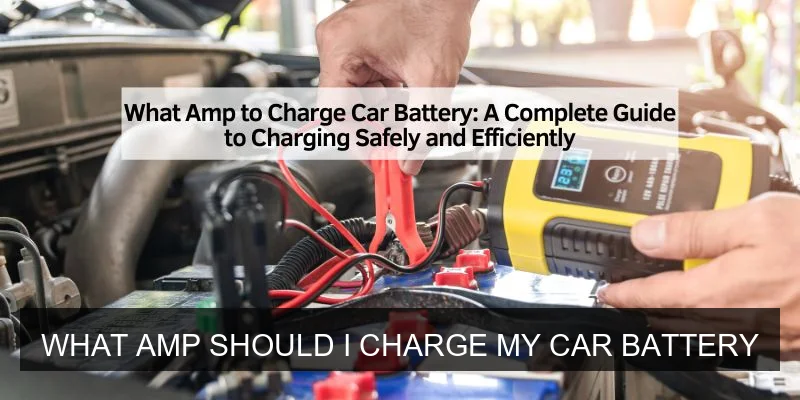
Image source: Thedailyautomotive
📋 Table of Contents
- 🔹 Understanding Car Battery Charging Amps
- 🔹 What Are Amps, Anyway?
- 🔹 Why Amperage is Important When Charging Your Car Battery
- 🔹 Choosing the Right Amperage for Your Car Battery
- 🔹 Slow Charging vs. Fast Charging: Which is Better?
- 🔹 Key Factors That Influence Your Amperage Choice
- 🔹 The Car Battery Charging Process: A Simple Guide
- 🔹 Common Mistakes to Avoid When Charging
- 🔹 Frequently Asked Questions (FAQ)
- 🔹 Conclusion
Understanding Car Battery Charging Amps
Ever found yourself with a car that just won’t start? It’s usually a dead battery, and knowing how to charge it properly can save you a lot of hassle. One of the biggest questions people have is: “what amp should I charge my car battery with?” It’s a great question, and understanding the answer is really important for both your battery’s health and your own safety.
This article will walk you through everything you need to know about choosing the right amperage for charging your car battery. We’ll explore what amps are, why they matter, and how to pick the best setting for your specific situation. By the end, you’ll feel confident giving your car battery the care it needs.
What Are Amps, Anyway?
Before we dive into specific numbers, let’s quickly explain what “amps” mean in this context. Ampere, or amp for short, is the unit used to measure electrical current. Think of electricity flowing like water through a pipe. Volts would be the water pressure, and amps would be the volume of water flowing through that pipe at any given moment.
When you’re charging a car battery, the amperage setting on your charger determines how much electrical current is flowing into the battery. A higher amp setting means more current is pushed into the battery faster, while a lower amp setting means a slower, gentler flow.
Why Amperage is Important When Charging Your Car Battery
Choosing the correct amperage isn’t just a technical detail; it directly affects the life and performance of your car battery. Here’s why it’s so important:
- Battery Health: Charging a battery with too many amps can generate excessive heat, which can damage the internal components of the battery over time. This shortens its lifespan.
- Charging Efficiency: Using too few amps might not fully charge a deeply discharged battery in a reasonable amount of time, or it might not provide enough power for modern battery types.
- Safety: Overheating from too many amps can sometimes lead to dangerous situations, including a swollen battery case or, in extreme cases, an explosion. Always follow safety guidelines.
- Battery Type: Different types of car batteries (like standard lead-acid, AGM, or Gel) have varying tolerances for charging currents. Using the wrong amp setting could be detrimental to specialized batteries.
It’s like watering a plant: some plants like a slow, steady drip, while others can handle a stronger flow. Give too much too fast, and you might harm it.
Choosing the Right Amperage for Your Car Battery
So, what amp should you charge your car battery at? Generally, for most standard automotive lead-acid batteries, a charge rate between 2 and 10 amps is common. However, the ideal choice depends on a few factors:
General Guidelines:
- 2-4 Amps: This is considered a slow, gentle charge. It’s often best for deeply discharged batteries and for maintaining batteries over long periods. It’s also excellent for maximizing battery life.
- 6-10 Amps: This is a moderate, faster charge. It’s good for bringing a moderately discharged battery back to life in a few hours. It’s a common setting for many standard battery chargers.
- 20 Amps and Up: These higher settings are usually for jump-starting assistance, not for a full, sustained charge. They push a lot of power quickly to get your engine turning over. Using such high amps for a prolonged charge can harm your battery.
Understanding Amperage and Estimated Charging Time
To give you a clearer idea, here’s a simplified table showing how different amperages might affect charging time for a typical 50 Ah (Ampere-hour) car battery, assuming it’s completely drained (which is rare for a battery that can still be recharged). Keep in mind, these are rough estimates and actual times can vary based on battery condition, temperature, and charger efficiency.
| Charging Amperage | Estimated Charging Time (for a 50 Ah battery) | Best Use Case |
|---|---|---|
| 2 Amps | Approximately 25-30 hours | Slow, deep charge; battery maintenance |
| 4 Amps | Approximately 12-15 hours | Gentle, overnight charge; maximizing battery life |
| 6 Amps | Approximately 8-10 hours | Standard recovery charge for moderately drained batteries |
| 10 Amps | Approximately 5-6 hours | Faster recovery charge; when time is a factor |
| 20 Amps+ | Not for sustained charging | Engine start/jump-starting assistance only |
Remember, your battery’s actual Ah rating might be different, so always check its label.
Slow Charging vs. Fast Charging: Which is Better?
This is a common dilemma. Both methods have their place, but one is generally preferred for long-term battery health.
Slow Charging (2-4 Amps)
Benefits:
- Better for Battery Health: A slow charge minimizes heat generation, which is crucial for preventing damage to the battery’s internal plates. This helps prolong its overall lifespan.
- More Complete Charge: Slower charging allows the chemical reaction inside the battery to happen more thoroughly, leading to a deeper, more complete charge.
- Ideal for Maintenance: If you’re storing a vehicle for a while or want to keep your battery topped off, a low-amp “trickle” charger or “battery maintainer” is perfect.
Downsides:
- Takes a Long Time: As shown in the table, a full charge at low amps can take many hours, sometimes overnight or longer.
Fast Charging (6-10 Amps, or higher for brief boosts)
Benefits:
- Quicker Recovery: If you need your car running again relatively quickly, a faster charge can get enough juice into the battery in a few hours to start the engine.
Downsides:
- Generates More Heat: The faster flow of current can cause the battery to heat up. While modern chargers have safeguards, repeated fast charging can still stress the battery.
- May Not Provide a Full Charge: Sometimes, a fast charge can lead to a surface charge, where the battery appears full but doesn’t have its full capacity stored.
- Not for All Battery Types: Some batteries, like certain gel cell types, are very sensitive to high charge rates and can be damaged by fast charging.
General Rule of Thumb: If you have the time, a slower charge is almost always better for your car battery’s longevity. Fast charging should generally be used when you’re in a pinch.
Key Factors That Influence Your Amperage Choice
Beyond just slow or fast, here are the main things to consider when deciding what amp to charge your car battery at:
Battery Capacity (Ampere-hours – Ah)
This is probably the most important factor. Your battery’s capacity, usually listed in Ampere-hours (Ah) on the label, tells you how much charge it can hold. A common recommendation is to charge a lead-acid battery at no more than 10-20% of its Ah rating. So, for a 60 Ah battery, an ideal charge rate would be between 6 and 12 amps. Staying closer to 10% (6 amps) is generally safer for a sustained charge.
Battery Type
- Standard Flooded Lead-Acid: Most flexible, can handle a range of amps.
- AGM (Absorbed Glass Mat): Can accept higher charge rates than flooded batteries but are also sensitive to overcharging. Many smart chargers have an “AGM” setting.
- Gel Cell: These are the most sensitive. They require lower, slower charge rates and specific voltage profiles to prevent damage. Always use a charger with a “Gel” setting if you have one.
Always check your battery’s label or owner’s manual for specific charging recommendations.
Current State of Charge
If your battery is only slightly depleted, a lower amp setting will top it off just fine. If it’s deeply discharged, a slightly higher amp setting (within the safe range) might be needed initially to bring it back to a usable voltage before switching to a lower maintenance charge.
Desired Charging Speed
As discussed, if you need a quick boost, a higher amp setting (like 10 amps) can get you going sooner. For maximum battery life and a complete charge, a lower amp setting (2-4 amps) is better if you have the time.
The Car Battery Charging Process: A Simple Guide
Once you’ve decided on the right amperage, here’s a general step-by-step process for safely charging your car battery:
- Safety First: Wear safety glasses and gloves. Ensure you’re in a well-ventilated area, as batteries can release hydrogen gas, which is flammable.
- Turn Off the Car: Make sure your vehicle is completely off.
- Locate the Battery: Open the hood or trunk, depending on where your battery is located.
- Clean Terminals: If there’s corrosion on the battery terminals, clean them with a wire brush and a baking soda and water solution. Ensure they are dry before proceeding.
- Connect the Charger:
- Connect the red (positive) clamp of the charger to the positive (+) terminal of the battery.
- Connect the black (negative) clamp of the charger to a clean, unpainted metal part of the car’s frame, away from the battery. If your charger has a “ground” clamp, use that. Some chargers might advise connecting directly to the negative terminal if you’re using a smart charger with specific safety features, so always check your charger’s manual.
- Select Amperage: If your charger has adjustable settings, select the appropriate amperage (e.g., 2A, 6A, 10A) and battery type (e.g., standard, AGM, Gel).
- Plug In the Charger: Only plug the charger into the electrical outlet after the clamps are properly connected to the car.
- Monitor the Charge: Most modern smart chargers will automatically monitor the battery and stop charging when it’s full. However, it’s a good idea to periodically check on the battery for any signs of overheating (a strong sulfur smell, hot-to-the-touch casing).
- Disconnect Safely: Once the battery is fully charged or you’re done, first unplug the charger from the electrical outlet. Then, remove the black (negative) clamp from the car’s frame, and finally, remove the red (positive) clamp from the battery.
Following these steps carefully helps ensure both your safety and the longevity of your battery.
Common Mistakes to Avoid When Charging
Even with good intentions, it’s easy to make mistakes. Here are some common pitfalls to steer clear of:
- Overcharging: Leaving a non-smart charger connected for too long, especially at a higher amp setting, can boil the electrolyte in a flooded battery, cause gassing, and damage the internal plates. Modern “smart” chargers typically prevent this.
- Undercharging: Not charging the battery long enough or at a low enough amp setting for a deeply discharged battery can lead to sulfation, where sulfate crystals build up on the plates and reduce capacity.
- Ignoring Battery Type: As mentioned, different battery types require different charging profiles. Using a standard lead-acid setting on an AGM or Gel battery can cause damage.
- Improper Connection: Reversing the positive and negative connections can damage both the battery and the charger, and it can be dangerous.
- Charging a Damaged Battery: If a battery is physically damaged (e.g., swollen case, leaking), do not attempt to charge it. It’s a safety hazard and should be replaced.
- Not Ventilating: Charging batteries can produce hydrogen gas. Always charge in a well-ventilated area to prevent gas buildup.
Frequently Asked Questions (FAQ)
Can I use a 2-amp charger on a car battery?
Yes, absolutely! A 2-amp charger provides a slow, gentle charge. This is often the best option for maintaining a battery over long periods, trickle charging a slightly depleted battery, or slowly bringing a deeply discharged battery back to life. It will take longer than higher amp settings, but it’s generally healthier for the battery in the long run.
Is 10 amps too much to charge a car battery?
For most standard car batteries, 10 amps is generally not too much for a temporary or recovery charge. It’s a common, moderately fast setting that can recharge a depleted battery in several hours. However, it’s not ideal for continuous, long-term charging or for all battery types, particularly sensitive gel cells. Always prioritize slower charging if time allows.
How long does it take to charge a car battery at 2 amps?
The time it takes to charge a car battery at 2 amps depends on its Ampere-hour (Ah) rating and how deeply discharged it is. For a typical 50 Ah car battery that’s completely drained, it could take roughly 25-30 hours. If the battery is only partially discharged, it will take significantly less time.
What happens if you charge a car battery with too many amps?
Charging a car battery with too many amps can generate excessive heat. This heat can cause the electrolyte to boil, lead to gassing (releasing hydrogen and oxygen), and can physically warp or damage the internal plates of the battery. Over time or with extreme over-amperage, this significantly shortens battery life and can even pose a safety risk, like swelling or rupturing the battery case.
What’s the difference between charging a battery at 6 amps vs. 10 amps?
The main difference is the charging speed. A 10-amp charge will supply current to the battery faster than a 6-amp charge, meaning your battery will reach a usable state or full charge in less time. For instance, a 50 Ah battery might take 8-10 hours at 6 amps, but only 5-6 hours at 10 amps. While 10 amps is faster, 6 amps is a bit gentler and can be slightly better for the battery’s long-term health if you aren’t in a hurry.
Conclusion
Deciding what amp should you charge your car battery at doesn’t have to be complicated. The key is to understand that a slow, steady charge (typically 2-4 amps) is almost always the healthiest option for your battery, helping to extend its life and ensure a full charge. Faster charges (around 10 amps) are useful when you’re pressed for time but should be used with more caution.
Always consider your battery’s specific type and capacity, consult its label, and most importantly, prioritize safety. With the right knowledge and a little care, you can keep your car battery in top condition and avoid those frustrating no-start mornings.