To charge a car battery effectively, the optimal amperage typically ranges from 2 to 15 amps, depending on the battery’s size, its current state of charge, and how quickly you need it charged. A lower amp setting, like 2-5 amps, offers a slower, healthier charge, while higher settings, around 10-15 amps, provide faster results for a deeply discharged battery, but require careful monitoring.
Understanding what amps to charge a car battery at is crucial for extending its lifespan and ensuring a full, safe charge. This guide breaks down the science behind charging amperage, helping you choose the correct setting for your specific battery and situation. We’ll cover everything from slow versus fast charging to essential safety tips, ensuring you have the knowledge to maintain your car’s power source confidently.
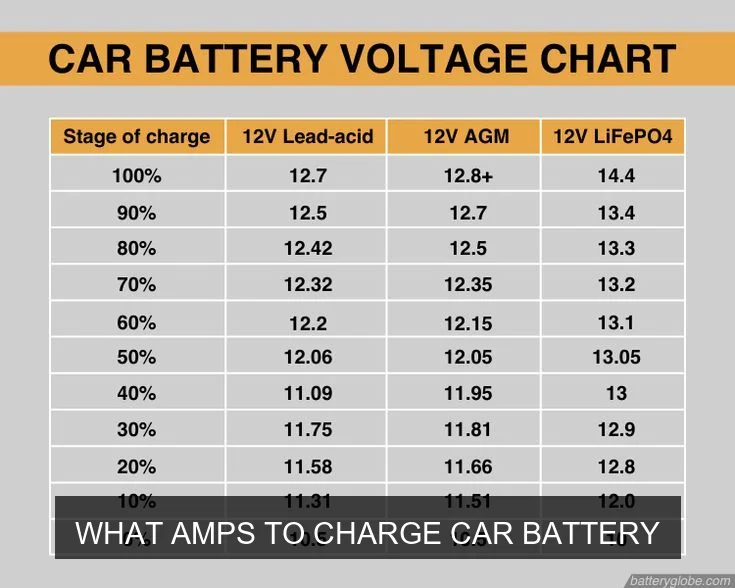
Image source: Pinimg
📋 Table of Contents
- 🔹 Understanding Car Battery Charging Amps
- 🔹 How Many Amps Do You Actually Need?
- 🔹 The Difference Between Slow and Fast Charging
- 🔹 Step-by-Step Guide: Choosing the Right Amps
- 🔹 Common Mistakes to Avoid When Charging Your Battery
- 🔹 Practical Tips for Safe and Effective Battery Charging
- 🔹 Frequently Asked Questions (FAQ)
- 🔹 Conclusion
Understanding Car Battery Charging Amps
When we talk about charging a car battery, amperage is a really important concept to grasp. Think of it like this: if voltage is the pressure pushing water through a hose, then amperage is the actual amount of water flowing through that hose. In electrical terms, amps (amperes) measure the rate of electrical current flow.
What is Amperage in Battery Charging?
Amperage, often just called “amps,” tells you how much electrical current is being delivered to your battery at any given moment. A higher amp setting means more current is flowing into the battery, and a lower amp setting means less current. This directly impacts how quickly your battery will charge.
It’s like filling a swimming pool. You can use a small garden hose (low amps) or a fire hose (high amps). Both will eventually fill the pool, but the fire hose will do it much faster.
Why Does Amperage Matter for Your Battery?
Choosing the right amperage is crucial for a few key reasons:
- Battery Health: Too many amps can overheat and damage the battery, especially if it’s deeply discharged or smaller. Too few amps might not fully charge a very dead battery, leading to sulfation and reduced lifespan.
- Charging Speed: Higher amps mean faster charging, which can be great if you’re in a hurry. However, faster isn’t always better for battery longevity.
- Safety: Incorrect amperage can lead to dangerous situations, including overheating, gassing, or even battery explosion in extreme cases, though modern chargers have safety features.
The ‘C-Rate’ Concept (Simplified)
You might sometimes hear about “C-rate” when discussing batteries. Simply put, the C-rate is a way to describe how fast a battery is charged or discharged relative to its total capacity. For example, a 1C charge rate means the battery would ideally charge from empty to full in one hour. For a 60 Amp-hour (Ah) battery, a 1C rate would be 60 amps. However, car batteries are rarely charged at such high rates to preserve their health.
Most car battery charging guidelines recommend much lower C-rates, often in the range of C/10 to C/4, meaning a charge current of 1/10th to 1/4th of the battery’s Ah rating. So, for a 60 Ah battery, this would typically be 6 to 15 amps.
How Many Amps Do You Actually Need?
There isn’t a single “perfect” amp setting for every car battery in every situation. It’s more about finding the right balance based on several factors.
Standard Amperage Recommendations
For most conventional lead-acid car batteries, a good general range for charging is between 2 and 15 amps. You’ll commonly see chargers offering settings like 2A, 4A, 6A, 10A, or 15A.
- Low Amps (2-5 Amps): Ideal for maintenance charging, smaller batteries, or slow, gentle charging of a deeply discharged battery. This is often called a “trickle charge.”
- Medium Amps (6-10 Amps): A good all-around choice for a moderately discharged battery in a typical passenger car. Balances speed with battery health.
- High Amps (10-15 Amps): Best for quickly charging a severely discharged battery, especially larger ones (trucks, SUVs). Use with caution and monitoring.
Factors Influencing Amp Selection
To pick the right setting, consider these points:
- Battery Size (Amp-hour or Ah Rating): This is perhaps the most important factor. A larger battery (higher Ah) can safely handle more amps than a smaller one. You’ll usually find the Ah rating on a label on top or side of your battery.
- Battery’s State of Charge: Is the battery completely dead, or just a little low? A very dead battery might initially draw more amps, but it’s often better to start with a lower setting to avoid overheating.
- Desired Charging Speed: Do you need the car running in an hour, or can it charge overnight? Slower charging is generally better for battery longevity.
- Type of Charger: Modern “smart” or “automatic” chargers will often adjust the amperage automatically as the battery charges, starting higher and tapering off. Manual chargers require you to select the amp setting yourself.
- Battery Chemistry: While most car batteries are lead-acid, there are variations like flooded, AGM, and Gel. Always ensure your charger has the correct setting for your battery type, as charging requirements can differ slightly.
The Difference Between Slow and Fast Charging
This is where understanding amps really pays off. Both slow and fast charging have their place, but knowing when to use each is key.
Slow Charging: Low Amps (e.g., 2-5 Amps)
Using a low amp setting is often the preferred method for overall battery health.
- Benefits:
- Gentle on the Battery: Less heat generation, reducing stress on internal components.
- More Complete Charge: Allows the battery to fully absorb the charge, helping to prevent sulfation and prolong its life.
- Safer: Lower risk of overcharging or damage.
- Ideal for Maintenance: Perfect for keeping a stored vehicle’s battery topped off.
- Drawbacks:
- Time: It takes significantly longer. A fully discharged battery might take 12-24 hours or more to fully charge at 2 amps.
Fast Charging: Higher Amps (e.g., 10-15 Amps)
When you need to get back on the road quickly, higher amp settings can be a lifesaver.
- Benefits:
- Speed: Significantly reduces charging time. A very dead battery might get enough charge to start your car in an hour or two at 10-15 amps.
- Drawbacks:
- Heat Generation: Higher current creates more heat, which can accelerate wear and tear on the battery.
- Risk of Damage: If not monitored, or if used on a small or already damaged battery, fast charging can cause harm.
- Less Thorough Charge: While it gets you going, it might not achieve a complete, deep charge compared to a slower method.
When to Use Which
- Use Slow Charging when: You have plenty of time, the battery isn’t severely discharged, or you’re using a maintainer for long-term storage. This is always the best option for battery longevity.
- Use Fast Charging when: You’re in an emergency and need to get the car started quickly, and the battery is deeply discharged (e.g., couldn’t start the car). Always monitor the battery closely during fast charging.
Step-by-Step Guide: Choosing the Right Amps
Let’s put this into practice. Here’s how to decide what amps to charge your car battery with.
1. Check Your Battery’s Capacity (Ah Rating)
Look for the Amp-hour (Ah) rating on your battery. It’s usually a number like 50 Ah, 60 Ah, or 80 Ah. This tells you how much energy the battery can store.
As a general rule, a safe maximum charging rate is often considered to be about 1/4th of the Ah rating for a full charge, or 1/10th for a gentler, overnight charge.
| Battery Ah Rating | Gentle Charge (C/10) | Faster Charge (C/4) | Typical Charger Settings |
|---|---|---|---|
| 40 Ah (Small Car) | 4 Amps | 10 Amps | 2A, 4A, 6A, 10A |
| 60 Ah (Typical Car) | 6 Amps | 15 Amps | 4A, 6A, 10A, 15A |
| 80 Ah (Larger Car/SUV) | 8 Amps | 20 Amps* | 6A, 10A, 15A |
| *Note: Most consumer chargers don’t exceed 15A-20A. For 20A, ensure charger and battery are rated for it. | |||
2. Consider the Battery’s Condition
- Slightly Discharged (e.g., interior light left on): A lower amp setting (2-6 Amps) is perfectly fine and often preferred.
- Moderately Discharged (e.g., struggled to start): 6-10 Amps is a good balance.
- Deeply Discharged (e.g., completely dead, no lights): You might start at a higher setting (10-15 Amps) for an hour or two to get some charge into it, then switch to a lower setting for a complete charge. However, some smart chargers handle this automatically.
3. Match Amps to Charger Type
- Automatic/Smart Chargers: These are often the easiest. You select the battery type (if applicable), and the charger handles the current automatically, adjusting as needed. Many have a “fast” and “slow” mode, which corresponds to higher and lower max amps.
- Manual Chargers: You have full control. This means you need to be more diligent in selecting the correct amperage and monitoring the battery. If you have a manual charger, it’s generally safer to err on the side of lower amps.
4. Example Scenarios
Let’s look at a couple of common situations:
- Scenario A: Your Sedan battery (60 Ah) died overnight. You need to start it in 2 hours.
You’d likely use a higher setting, say 10-15 amps, for an hour or so. This should give it enough juice to crank the engine. Once started, the alternator will take over. Then, consider a longer, slower charge later.
- Scenario B: You’re storing your classic car for the winter and want to keep its 50 Ah battery topped off.
A “trickle” or “maintenance” charger at 2-4 amps is perfect. Many smart chargers have a dedicated maintenance mode. This keeps the battery in optimal condition without overcharging.
Common Mistakes to Avoid When Charging Your Battery
Even with the right amps, common errors can damage your battery or compromise safety.
- Overcharging: Providing too many amps for too long, or using a charger that doesn’t shut off, can cause the battery’s electrolyte to boil, damaging the plates and potentially causing a dangerous buildup of hydrogen gas.
- Undercharging: Not charging the battery long enough or at a sufficient amperage can leave it in a partially discharged state. Over time, this leads to sulfation, where hard sulfate crystals build up on the battery plates, reducing capacity and lifespan.
- Ignoring Battery Type: Charging an AGM or Gel battery with settings meant for a flooded lead-acid battery (or vice-versa) can cause damage. Always check your battery type and charger settings.
- Charging a Damaged Battery: If a battery is physically damaged (cracked case, bulging sides), frozen, or excessively hot, do not attempt to charge it. It could be dangerous.
- Lack of Ventilation: Charging batteries can produce hydrogen gas, which is highly flammable. Always charge in a well-ventilated area, away from sparks or open flames.
Practical Tips for Safe and Effective Battery Charging
Charging your car battery doesn’t have to be intimidating. Follow these tips for the best results.
- Read Your Charger’s Manual: This is paramount. Every charger is a bit different, and the manual will provide specific guidance for its safe operation and settings.
- Charge in a Well-Ventilated Area: Always charge your battery outdoors or in a garage with open doors. This helps dissipate any hydrogen gas that might be released.
- Connect Cables Correctly:
- Connect the positive (+) charger clamp to the positive (+) battery terminal.
- Connect the negative (-) charger clamp to the negative (-) battery terminal, or to an unpainted metal part of the car chassis away from the battery for safety, especially if using an older manual charger.
- Always connect the charger to the battery *before* plugging the charger into the wall outlet.
- Always unplug the charger *before* disconnecting the clamps from the battery.
- Monitor the Battery: Especially during higher-amp charging, periodically check the battery for excessive heat or any unusual smells. If it gets very hot or starts bubbling excessively, stop charging immediately.
- Consider a Smart Charger: These automatic chargers often have multiple stages (desulfation, bulk, absorption, float) and will automatically adjust amperage, detect battery type, and stop charging when full. They’re generally safer and easier to use, especially for beginners.
- Check Electrolyte Levels (Flooded Batteries): For traditional flooded lead-acid batteries, ensure the electrolyte level is adequate before charging. If low, top up with distilled water (after charging, if levels are very low, to prevent overflow). This isn’t necessary for “maintenance-free” or sealed batteries like AGM.
Frequently Asked Questions (FAQ)
What is the ideal amperage for a car battery?
The ideal amperage for charging a car battery typically falls between 2 and 15 amps. For the healthiest charge, aim for 2-6 amps, especially for overnight or maintenance charging. For a quicker boost to get a dead car started, 10-15 amps can be used cautiously for a shorter duration.
Can I charge a car battery with too many amps?
Yes, charging a car battery with too many amps can be detrimental. Excessive amperage can lead to overheating, boil off the electrolyte, and cause internal damage to the battery’s plates, shortening its lifespan. In extreme cases, it can even cause the battery to bulge or explode due to pressure buildup from gassing.
How long does it take to charge a car battery at X amps?
The charging time depends on the battery’s Amp-hour (Ah) rating and its state of discharge. As a rough estimate:
- A 60 Ah battery that’s fully discharged might take around 10-15 hours at 6 amps.
- The same 60 Ah battery might take 4-6 hours at 15 amps to reach a significant charge.
- At 2 amps (trickle charge), it could take 30+ hours for a full charge.
Modern smart chargers will typically tell you when the battery is fully charged.
Is it better to charge a car battery slowly or quickly?
It is generally better to charge a car battery slowly using a lower amperage. Slow charging (e.g., 2-6 amps) generates less heat, allows the battery to absorb the charge more thoroughly, and contributes to a longer overall battery lifespan. Fast charging should be reserved for urgent situations where quick results are necessary.
What is a trickle charger, and what amps does it use?
A trickle charger is a low-amperage battery charger designed to charge a battery very slowly over a long period or to maintain a battery’s charge. They typically use very low amp settings, usually in the range of 1 to 3 amps. Trickle chargers are excellent for vehicles stored for extended periods, preventing the battery from discharging and extending its life without the risk of overcharging.
Conclusion
Understanding what amps to charge a car battery with is an empowering piece of knowledge for any car owner. It’s not just about getting your car started; it’s about making choices that protect your battery, extend its useful life, and ensure your safety. Remember, a slower, gentler charge is almost always better for the battery in the long run, reserving higher amp settings for when time is critical.
By considering your battery’s size, its current condition, and using your charger correctly, you can confidently maintain your car’s power source. Always prioritize safety, follow your charger’s instructions, and happy motoring!