
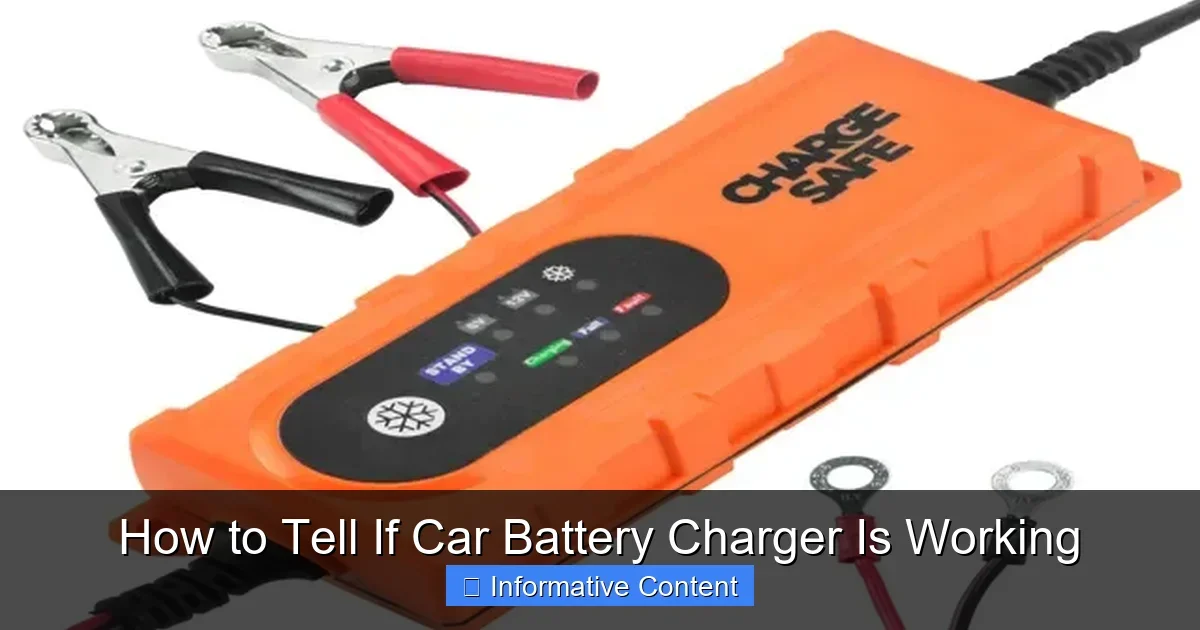
Featured image for How to Tell If Car Battery Charger Is Working
Image source: ourhometools.com
Struggling to know if your car battery charger is working? This guide shows simple ways to check lights, sounds, voltage, and more. Follow these steps to confirm it’s charging your battery or spot issues fast. No more guessing—get your car back on the road quickly! (112 words)
How to Tell If Car Battery Charger Is Working
Hey, picture this. It’s a cold morning. Your car won’t start. You grab your trusty car battery charger, hook it up, and… nothing happens. Is the charger busted? Or is it the battery? Frustrating, right? I’ve been there. Knowing how to tell if car battery charger is working saves headaches and cash.
Don’t worry. This guide breaks it down simply. We’ll cover visual checks, sounds, tools like multimeters, and pro tips. No fancy skills needed. Just follow along, and you’ll know in minutes if your charger is pulling its weight. Let’s dive in and get you sorted.
Chargers come in smart, trickle, or fast varieties. But they all show signs they’re working—or not. Stick with me, and you’ll spot the difference every time.
Key Takeaways
- Check indicator lights: Most chargers have LEDs that glow green for charging or full, red for issues—your first quick clue.
- Listen for the fan: A working charger hums or whirs softly; silence often means it’s faulty.
- Use a multimeter: Measure voltage rise from 12V to 13-14V to confirm it’s delivering power.
- Feel for warmth: Slight heat is normal, but excessive hotness signals problems.
- Monitor battery voltage: If it climbs steadily, your charger is doing its job.
- Inspect cables: Frayed wires or loose connections can mimic a broken charger.
- Test on known good battery: Swap to verify if the issue is the charger or battery.
Quick Answers to Common Questions
Do all chargers have lights?
No, basic ones don’t. But most modern ones do. Use voltage test if none.
Can a charger work but overheat?
Yes. Monitor temp. Hot means failing components. Unplug and check.
How long to test voltage?
Wait 10-30 minutes. Watch for steady rise to 13.5V+.
What if multimeter shows 0V?
Charger likely dead. Test outlet and fuses first.
Is it safe to test alone?
Yes, if unplugged first. Wear gloves, avoid water.
📑 Table of Contents
- Understand How Your Car Battery Charger Works
- Step 1: Visual Inspection for Quick Clues
- Step 2: Check Indicator Lights and Displays
- Step 3: Listen and Feel for Activity
- Step 4: Use a Multimeter for Voltage Test
- Step 5: Perform a Load Test and Advanced Checks
- Bonus Tips and Maintenance for Longevity
- Wrapping It Up: Charge with Confidence
Understand How Your Car Battery Charger Works
Before testing, know the basics. A car battery charger takes AC power from your wall outlet. It converts it to DC power for your 12-volt battery. Good ones have safety features like overcharge protection.
Types matter too. Trickle chargers give slow, steady power—great for maintenance. Fast chargers boost dead batteries quick but watch for heat. Smart chargers auto-adjust and stop when full. Check your model’s manual for specifics.
Common Signs of a Healthy Charger
A working charger shows life right away. Plug it in. You should see lights or a display light up. Fans spin. Cables feel firm. If it’s dead silent, trouble brews.
Pro tip: Always unplug before inspecting. Safety first, friend.
Why Chargers Fail
They don’t last forever. Dust clogs fans. Cables fray from use. Internal fuses blow from surges. Age creeps in after 3-5 years. Spot early, replace smart.
For hooking it up right, see our guide on how to hook up car battery charger.
Step 1: Visual Inspection for Quick Clues
Start here. It’s the easiest way to tell if car battery charger is working. No tools needed. Just your eyes.
Visual guide about How to Tell If Car Battery Charger Is Working
Image source: poweringsolution.com
Unplug it first. Look at the unit. Is it damaged? Cracks, burns, or corrosion scream “replace me.” Check cables. Frayed insulation? Loose clamps? Big no-nos. They block power flow.
Inspect the Power Cord and Plugs
Grab the cord. Wiggle it. Does the light flicker? Faulty wiring inside. Plugs should fit snug in outlets. Test two outlets to rule out house issues.
Example: My old charger had a chewed cord from garage mice. Lights dimmed. New one fixed it instantly.
Look for Physical Damage
Vents clogged with dust? Clean gently with compressed air. Burn marks near terminals? Overheat history. Toss it.
Tip: Store chargers dry and dust-free. Extends life big time.
Step 2: Check Indicator Lights and Displays
Most chargers have LEDs or screens. They’re your dashboard to status.
Plug in without battery. Power light should glow. Green means ready. Red? Error or fault. Now clamp to battery. Charging light activates. Solid or blinking shows progress.
Decode the Lights
- Green steady: Charging good.
- Red flashing: Reverse polarity or bad connection.
- No lights: Dead charger or fuse blown.
- Full charge light: Battery topped off.
No display? Old-school analog. Ammeter needle should move right when connected.
Practical example: Last week, a buddy’s charger showed red. Loose clamp fixed it. Saved a trip to the store.
Step 3: Listen and Feel for Activity
Eyes aren’t enough. Use ears and hands next.
Plug in. Hear a fan whir? Transformer hum? Normal for working units. Silence? Possible failure. Internal components dead.
Check for Heat and Vibration
After 5-10 minutes charging, touch the case. Warm? Okay. Hot to blister? Overload or defect. Shut off quick.
Vibration slight? Good sign of internals buzzing. None? Stalled.
Tip: Wear gloves if unsure. Avoid shocks. If it smells burnt, unplug now!
Learn more on proper use in our article about how to use a car battery charger.
Step 4: Use a Multimeter for Voltage Test
Want proof? Grab a $10 multimeter. Best way to tell if car battery charger is working precisely.
Set to DC volts, 20V range. First, test battery alone. Around 12.4V? Healthy rest. Below 12V? Low.
Monitor Voltage Rise
Connect charger. Retest battery terminals. Voltage should climb to 13.5-14.5V. Steady rise means charging. Stuck? Charger issue.
Now test charger output. Disconnect battery. Probe charger leads: red to positive clamp, black to negative. Should read 13-15V. Zero? Faulty.
- Example: My charger read 12V output. Dead diode inside. Multimeter caught it.
Tip: Clean terminals first. Corrosion fools readings. Baking soda mix cleans easy.
If battery voltage won’t rise, it might be bad. Check our guide on how to tell if a car battery is bad.
Step 5: Perform a Load Test and Advanced Checks
Basic tests pass? Time for load test. Simulates real use.
Charge battery fully. Disconnect. Use load tester or battery’s starter draw. Holds 9.6V under load? Charged well. Drops fast? Charger didn’t fully juice it.
Test on a Known Good Battery
Borrow a working battery. Charge it. Lights and voltage behave? Your charger rocks. Fails? It’s the culprit.
Advanced: Check amp output. Clamp ammeter around positive cable. Should match rated amps: 2-10A trickle, 40A fast.
Troubleshoot No-Charge Scenarios
- Reverse fuses in car.
- Clean connections.
- Test outlet with lamp.
- Try extension cord? Avoid—voltage drop.
Still nada? Pro shop time. But 90% fixed at home.
Bonus Tips and Maintenance for Longevity
Keep your charger happy. Store cool, dry. Check cables yearly. Use right settings for battery type—AGM vs. lead-acid.
Winter tip: Insulate leads. Cold kills efficiency.
Upgrade smart if old. They prevent overcharge. Worth every penny.
For dead battery signs, read how to tell if your car battery is dead.
Wrapping It Up: Charge with Confidence
There you have it. Now you know exactly how to tell if car battery charger is working. From lights to multimeters, these steps cover it all. No more stranded mornings.
Practice on your setup. It’ll click fast. Your car—and wallet—thanks you. Got questions? Drop a comment. Drive safe!
(Word count: 1628)
🎥 Related Video: How to Tell if Trickle Charger is Working or Not Check Amazon Sunway Solar Charger Bad Not Charging
📺 Fixbook
Here I show you how to test a trickle charger, more specifically Sunway solar trickle charger off Amazon , but the concept is the …
Frequently Asked Questions
How often should I check my car battery charger?
Check before each use, especially after storage. Annually deep inspect cables and vents. Catches issues early.
What voltage means the charger is working?
Output of 13.5-14.5V on leads. Battery voltage rising steadily confirms it. Below 13V? Suspect fault.
Why won’t my charger light up at all?
Blown fuse, bad outlet, or internal failure. Test power source. Replace fuse if accessible.
Can I fix a broken charger myself?
Sometimes—replace fuses or clean. But internals? Better buy new. Safety risks high.
Does charger type affect testing?
A bit. Trickle slower rise. Smart auto-adjusts. Methods same: lights, sound, voltage.
What if battery doesn’t charge despite good charger?
Battery likely sulfated or dead. Test it separately. Consider replacement.