
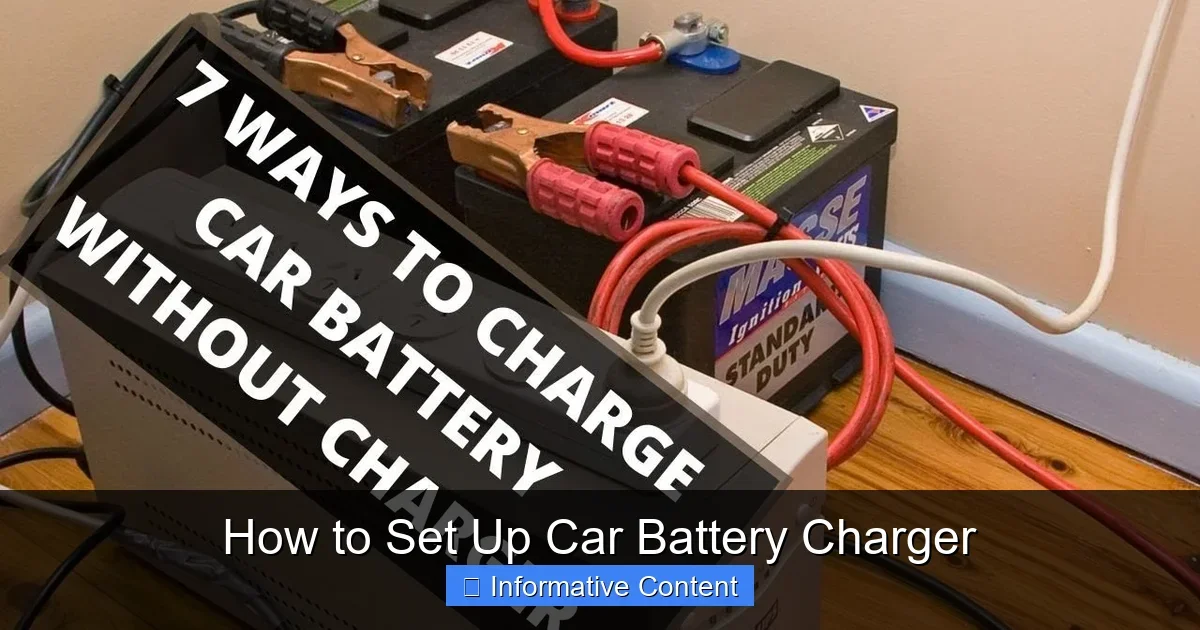
Featured image for How to Set Up Car Battery Charger
Image source: i.ytimg.com
Setting up a car battery charger is simple if you follow safety steps and connect the cables right. This guide walks you through choosing the right charger, preparing your battery, and monitoring the charge to get your car running again fast. Save time and avoid shocks with our easy tips. (98 words)
How to Set Up Car Battery Charger
Hey there, friend. Ever had your car refuse to start on a cold morning? That dead battery feeling is the worst. But don’t worry. Learning how to set up car battery charger is easier than you think. It can save you a tow truck call and a chunk of cash.
I’ve been there, jumping cables in the dark. Now, I keep a charger handy. This guide shares my best tips. We’ll cover safety, setup steps, and tricks to keep your battery happy. Stick with me, and you’ll be an expert at how to set up car battery charger in no time.
Whether your battery is drained from lights left on or just old age, a proper charger setup revives it quick. Let’s dive in and get your ride back on the road.
Key Takeaways
- Safety first: Wear gloves and goggles, and work in a ventilated area to avoid acid fumes or sparks.
- Match the charger: Pick one that fits your battery type, like lead-acid or AGM, for best results.
- Positive first: Always connect the red cable to the positive terminal before the black to negative.
- Monitor closely: Check voltage and temperature during charging to prevent overcharging.
- Disconnect reverse: Remove black cable first, then red, to avoid sparks.
- Test after: Use a multimeter to confirm your battery is fully charged around 12.6 volts.
- Trickle for maintenance: Use a low-amp trickle charger for long-term battery health.
Quick Answers to Common Questions
Do I charge with engine on?
No. Engine off prevents alternator damage and sparks.
Red or black first?
Red (positive) first, black last. Reverse for disconnect.
How long to charge a dead battery?
8-24 hours typically. Depends on amps and battery size.
Can I leave it overnight?
Yes, with smart charger. It auto-stops.
What if it sparks?
Unplug fast. Check connections, try again positive first.
📑 Table of Contents
Safety First: Essential Precautions Before Setup
Safety isn’t optional when dealing with car batteries. They pack power and acid. One wrong move, and you risk burns or explosions. Always put safety first in how to set up car battery charger.
Wear Protective Gear
Grab gloves, safety goggles, and old clothes. Battery acid eats fabric and skin fast. Goggles shield your eyes from sparks. I learned this the hard way once – tiny splash, big sting.
Choose a Ventilated Spot
Work outside or in a garage with doors open. Batteries release hydrogen gas during charging. It builds up and can boom if sparked. Fresh air keeps things safe.
Turn Off Everything
Engine off, keys out, accessories like lights and radio killed. This stops extra drain and reduces spark risk. Double-check. It’s a simple step that saves headaches.
Pro tip: Keep a fire extinguisher nearby. Class C for electrical fires. Better safe than sorry.
Choosing the Right Car Battery Charger
Not all chargers are equal. Picking the wrong one makes how to set up car battery charger tougher. Match it to your needs for fast, safe charging.
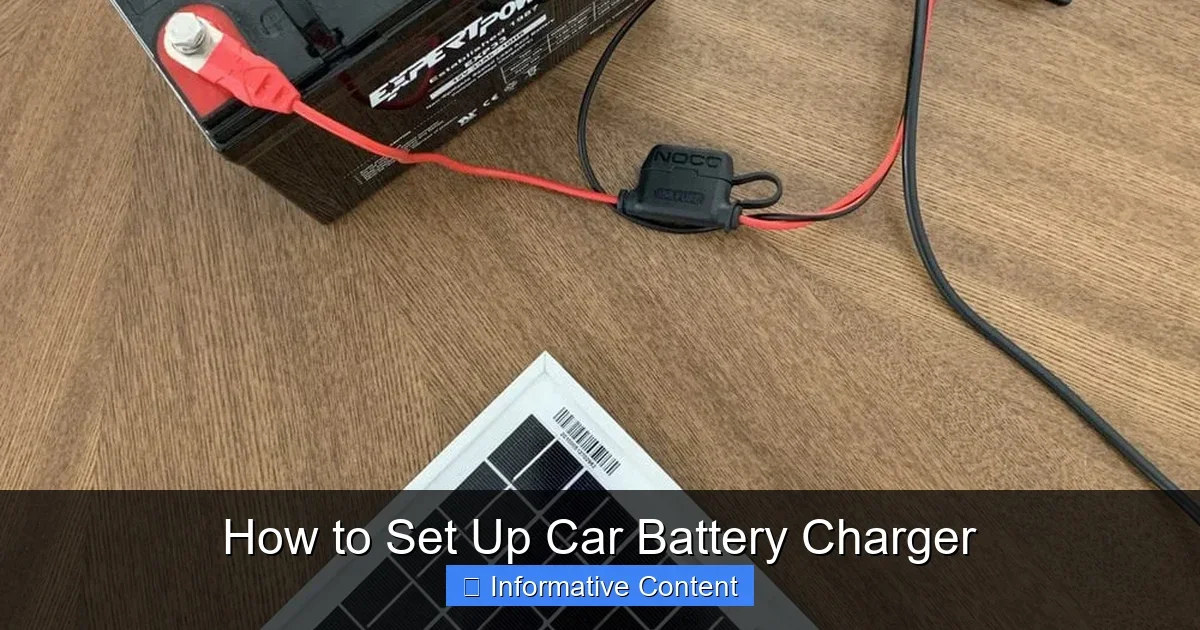
Visual guide about How to Set Up Car Battery Charger
Image source: footprinthero.com
Understand Charger Types
Trickle chargers maintain batteries slow and steady. Great for storage. Fast chargers boost dead ones quick but watch for heat. Smart chargers auto-adjust amps and stop at full. My pick for most folks.
Check Amps and Voltage
Most car batteries need 12 volts. Aim for 2-10 amps. Too high overheats. Too low takes forever. For a 50 amp-hour battery, 5 amps charges in 10 hours.
Battery Compatibility
Lead-acid? AGM? Lithium? Read your battery label. Wrong mode damages it. New chargers have settings. Use them.
Still unsure? For detailed connection steps after picking yours, check our guide on how to hook up car battery charger.
Preparing Your Vehicle and Battery
Prep work sets you up for success. Clean and inspect before plugging in. It ensures good connections in how to set up car battery charger.
Locate the Battery
Pop the hood. Battery is usually front-right. Some cars hide it under plastic covers. Consult your manual if lost.
Clean Terminals
White corrosion? Mix baking soda and water. Scrub with a brush. Rinse, dry. Shiny terminals mean better contact. Dirty ones cause weak charges.
Inspect for Damage
Cracks, leaks, or bulges? Battery’s toast. Time for a new one. Learn more in our article on how to tell if a car battery is bad.
Example: Last winter, my truck battery had gunk. Cleaned it, charged up, started right away. Prep pays off.
Step-by-Step: How to Set Up Car Battery Charger
Here’s the heart of how to set up car battery charger. Follow these steps exactly. Slow and steady wins.
Step 1: Position the Charger
Place charger 2-3 feet from battery. Leads long enough? Good. Plug into outlet last.
Step 2: Connect Positive Terminal
Red clamp to positive (+) post. Firm grip, no wiggle. Positive first avoids sparks on negative.
Step 3: Connect Negative Terminal
Black clamp to negative (-) post. Or a chassis ground away from battery. Safer, less gas risk.
For more on connections, see how to connect a car battery charger.
Step 4: Power On and Select Mode
Plug in. Lights on? Set to battery type and amps. Start charge. Charger beeps or shows progress.
Step 5: Monitor and Wait
Leave it 4-12 hours. Bubbles normal, smoke not. Check hourly first time.
Real talk: My buddy skipped positive first once. Small spark, scared him straight.
Monitoring the Charging Process
Setup done? Don’t walk away. Watch to avoid issues in how to set up car battery charger.
Check Voltage Regularly
Multimeter time. 12.4 volts half-charged, 12.6 full. Probe terminals while connected. Rising good.
Watch for Overheating
Battery warm okay, hot no. Fan yourself if needed. Pause if too warm.
Use Built-in Indicators
Smart chargers have lights or apps. Green means done. Trust but verify.
Want to test your charger? Read how to check if your car battery charger is working.
Charging Times
- Dead to full: 8-24 hours at 2-10 amps.
- Trickle: Overnight maintenance.
- Boost: 30-60 minutes.
Patience key. Rushing fries batteries.
Troubleshooting Common Setup Issues
Things go wrong. Here’s fixes for how to set up car battery charger hiccups.
No Power or Lights
Check outlet, fuses. Loose clamps? Tighten.
Slow or No Charge
Bad connection or sulfated battery. Clean again. Or it’s dead – test it.
Sparking or Smoking
Unplug now! Reconnect positive first. Ventilate.
Overcharge Alarm
Modern chargers stop auto. Unplug anyway.
Example: Charger wouldn’t start on my old sedan. Corrosion culprit. Cleaned, charged fine.
For usage after setup, dive into how to use a car battery charger.
Conclusion: Master Your Car Battery Charger Today
There you have it, pal. Now you know how to set up car battery charger like a pro. From safety gear to final unplug, these steps keep you and your battery safe.
Practice once, and it’s second nature. Your wallet and car will thank you. Got a dead battery? Grab your charger and go. Questions? Drop a comment. Drive safe!
(Word count: 1624)
🎥 Related Video: How to charge 12v Car Battery
📺 CarHow
Its seen as good practice to connect the black wire second, and to connect it to some bare metal part in the engine.
Frequently Asked Questions
How often should I use a car battery charger?
Charge monthly if car sits. Or after dead starts. Trickle for winter storage keeps it healthy without overcharge risk.
Can I set up a charger on a hot battery?
Let it cool first. Heat plus charge equals damage. Wait 30 minutes post-drive.
What’s the difference between trickle and fast charger?
Trickle is low amp for maintenance. Fast is high amp for quick revive. Use trickle for long-term, fast for emergencies.
Do I need to remove the battery?
No, charge in place. Easier and safer. Just ensure good access to terminals.
What voltage is a fully charged battery?
About 12.6 volts at rest. Test with multimeter after 30-minute rest post-charge.
Is it safe for all cars?
Yes, if you match voltage and type. Hybrids or EVs may need special chargers – check manual.