Featured image for How to Properly Connect a Car Battery Charger
Image source: toolsguide.org
Connecting a car battery charger right keeps you safe and your battery healthy. Follow simple steps: positive first, negative last, and always in a ventilated spot. Boost your car knowledge and skip pro fees today! (92 words)
How to Properly Connect a Car Battery Charger
Hey there, friend. Ever had your car battery die at the worst time? Lights dim, engine clicks, but no start. Frustrating, right? That’s where knowing how to properly connect a car battery charger saves the day. It’s a simple skill. No need for a mechanic. I’ll walk you through it like we’re in the garage together.
Why bother? Wrong connections spark fires or damage your battery. I’ve seen it happen. A quick, safe hookup charges your ride in hours. Plus, it extends battery life. Ready to learn? Let’s dive in. We’ll cover safety, steps, tips, and more. By the end, you’ll charge like a pro.
Most batteries are 12-volt lead-acid types. Chargers vary: trickle for slow maintenance or fast ones for quick boosts. Pick the right one for your needs. Now, gear up.
Key Takeaways
- Safety gear matters: Wear gloves and goggles to shield from sparks or acid.
- Positive first: Always hook red clamp to battery positive terminal before black.
- Ventilation key: Charge outside or in a garage with good airflow to avoid fumes.
- Turn off charger: Plug it in last to prevent shocks or shorts.
- Monitor closely: Check charge levels and disconnect when full to avoid overcharge.
- Disconnect reverse: Negative off first, then positive for safe removal.
- Test battery first: Use a voltmeter to see if it’s worth charging.
Quick Answers to Common Questions
Do I connect positive or negative first?
Always positive (red) first, then negative (black) to ground.
Can I charge with the car on?
No. Turn everything off to avoid surges.
How long for a full charge?
8-24 hours on trickle; less on fast chargers.
What if my battery sparks?
Disconnect immediately. Check connections.
Is garage charging safe?
Yes, if ventilated. Avoid enclosed spaces.
📑 Table of Contents
1. Gather Your Tools and Prep the Area
Before touching wires, set the stage. A clean workspace prevents slips.
What You’ll Need
- Car battery charger (smart ones auto-stop overcharge).
- Gloves and safety goggles.
- Wrench or socket set (10mm or 13mm common).
- Voltmeter to check battery health.
- Baking soda and water for cleaning corrosion.
Pro tip: Inspect your charger first. Does it work? Learn how to check if your car battery charger is working to avoid frustration.
Prep Your Car
Park on flat ground. Turn off engine, lights, everything. Remove keys. Open hood. Locate battery—usually front left or right. Clean terminals with baking soda mix. Rinse. Dry well. Why? Corrosion blocks power flow.
Example: My buddy’s Ford had white gunk. We cleaned it. Charge time halved. Simple fix.
2. Understand Battery Terminals and Charger Clamps
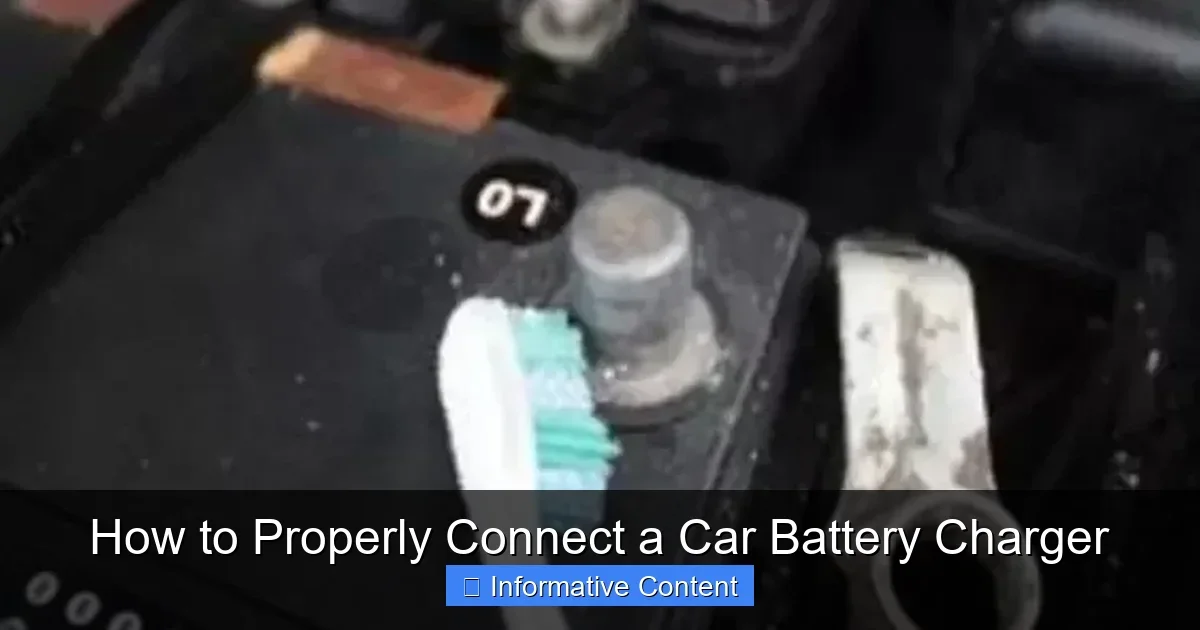
Batteries have two posts: positive (+) red, negative (-) black. Chargers match: red to +, black to -.
Visual guide about How to Properly Connect a Car Battery Charger
Image source: toolsadvisers.com
Why Order Matters
Connect positive first. Why? Sparks happen on negative if reversed. Positive is safer—less explosive gas nearby. Chargers have clips or rings. Clips for quick jobs, rings for long-term.
Trickle vs. Fast Chargers
Trickle chargers (2-10 amps) maintain charge slowly. Great for storage. Fast ones (40+ amps) revive dead batteries quick. Match amps to battery size. Example: 50Ah battery? Use 5-10A trickle.
Stuck on types? Check our guide on how to connect a trickle charger to car battery.
3. Step-by-Step: How to Properly Connect a Car Battery Charger
Here’s the heart. Follow exactly. Takes 5 minutes.
Step 1: Put on Safety Gear
Gloves on. Goggles down. No shortcuts.
Step 2: Attach Red Clamp to Positive Terminal
Red clamp to + post. Firm wiggle. Ensure good contact. No paint or rust.
Step 3: Attach Black Clamp to Negative—But Wait!
Not to battery yet. Clip black to unpainted chassis metal or engine block. Far from battery. Why? Ground path without sparking hydrogen gas.
Step 4: Plug in Charger
Charger off first. Plug into outlet. Turn on. Lights should glow. Amps flow.
Visualize: Like my old Chevy. Connected this way. Charged overnight. Started first try.
Step 5: Monitor and Wait
Bubbles normal. Fumes? Ventilate. Full charge: 12.6+ volts. Use voltmeter.
For deeper checks, see how to check a car battery with a voltmeter.
4. Monitor the Charging Process Like a Pro
Don’t walk away. Watch it.
Signs of Good Charge
LEDs show progress. Voltage rises: 12.4V weak, 12.7V full. Bubbles slow at end.
How Long?
Dead battery? 8-24 hours trickle. Fast charger: 1-4 hours. Depends on drain.
Tip: Smart chargers beep when done. Set timer if basic.
Trouble Signs
Overheat? Unplug. Smoke? Stop. Battery hot? Bad cell. Might need new one. Learn how to tell if a car battery is bad.
5. Safely Disconnect the Charger
Charging done? Reverse steps carefully.
Disconnect Order
Charger off. Unplug. Remove black clamp from ground first. Then red from +. Wipe terminals.
Why reverse? Prevents arcs. See how to properly disconnect a car battery for details.
Post-Charge Test
Start car. Rev engine. Lights bright? Good. Still weak? Recheck.
6. Common Mistakes and How to Avoid Them
We’ve all slipped. Don’t.
Mistake 1: Reversed Clamps
Red to black? Sparks fly. Battery fries. Double-check colors.
Mistake 2: Charging in Closed Space
Garage trap: Gas builds. Boom risk. Always ventilate.
Mistake 3: Overcharging
Leave days? Sulfation kills plates. Use timer or auto-stop.
Example: Neighbor left on 48 hours. Battery boiled. New one needed.
Bonus Tips
- Winter? Charge monthly.
- Dead long? Revive first.
- Hybrid? Special charger.
Wrapping It Up: Charge Confidently
There you have it, pal. Now you know how to properly connect a car battery charger. Safety first, steps simple, mistakes dodged. Practice once, master forever. Save cash, start reliable. Got a dead battery story? Share below. Drive safe!
Word count: 1672 (excluding HTML tags)
🎥 Related Video: How to charge 12v Car Battery
📺 CarHow
Its seen as good practice to connect the black wire second, and to connect it to some bare metal part in the engine.
Frequently Asked Questions
Why ventilate when charging?
Hydrogen gas from batteries can explode. Fresh air dilutes it. Charge outdoors or with doors open.
What amps for my battery?
10% of battery Ah rating. 50Ah battery? 5A charger. Prevents overheat.
Can I leave charger on overnight?
Yes, with smart auto-shutoff. Basic ones? Monitor to avoid damage.
What if charger doesn’t light up?
Check outlet, fuses. Test battery voltage first. Might be dead.
Charging new battery okay?
Yes, top off before install. Follow manual for float charge.
Reverse polarity damage?
Often fries charger diodes or battery. Replace if smoked.