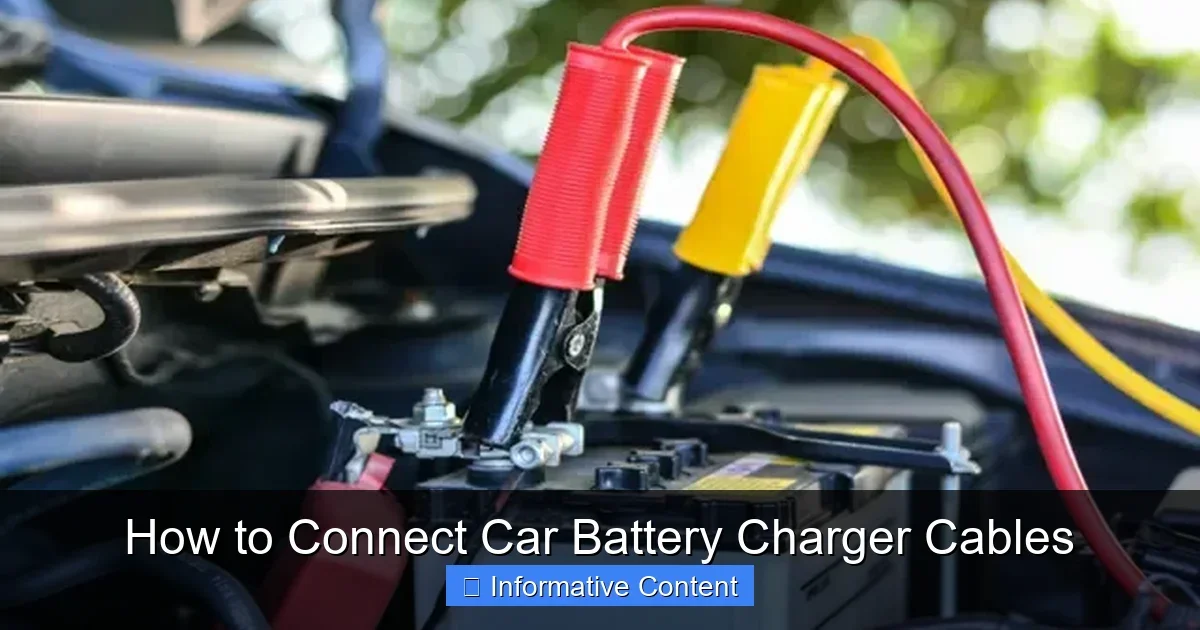
Featured image for How to Connect Car Battery Charger Cables
Image source: toolsadvisor.org
Connecting car battery charger cables is simple if you follow safety rules and steps. This guide walks you through everything from prep to charging, so you can power up your car without hassle. Get your battery back to life today! (112 words)
How to Connect Car Battery Charger Cables
Hey there, friend. Ever had your car refuse to start because the battery is dead? It happens to the best of us. Maybe you left the lights on or took a long trip with accessories draining power. Don’t worry. Knowing how to connect car battery charger cables can save the day. It’s easier than you think, and I’ll walk you through it like we’re in the garage together.
This guide covers everything. From safety tips to step-by-step instructions. No jargon. Just clear advice. By the end, you’ll charge that battery like a pro. Let’s get your ride running again.
Why bother learning how to connect car battery charger cables? It’s cheaper than calling a tow truck. Safer than jumping with another car if done right. And it keeps your battery healthy longer. Ready? Let’s dive in.
Key Takeaways
- Safety first: Wear gloves and eye protection, and disconnect the negative cable from the battery first to avoid sparks.
- Positive to positive: Always clamp the red cable to the positive (+) terminal before the black to negative (-).
- Secure connections: Ensure clamps grip tightly without touching each other to prevent short circuits.
- Monitor charging: Check progress regularly and unplug in reverse order—negative first.
- Choose right charger: Match voltage and use smart chargers for automatic shutoff.
- Avoid mistakes: Never charge a frozen or damaged battery, and work in a ventilated area.
Quick Answers to Common Questions
Do I connect positive or negative first?
Always positive (red) first, then negative (black). This minimizes sparks.
Can I charge with the car on?
No. Turn off engine and accessories for safety.
How long to charge a dead battery?
4-12 hours typically. Use a smart charger to avoid overcharge.
What if cables spark?
Disconnect immediately. Check polarity and tighten clamps.
Is it okay in cold weather?
Warm the battery first. Cold slows charging and risks cracks.
📑 Table of Contents
- Why Your Car Battery Needs Charging and When to Do It
- Safety Precautions Before Connecting Car Battery Charger Cables
- Tools and Equipment You’ll Need
- Step-by-Step Guide: How to Connect Car Battery Charger Cables
- Common Mistakes to Avoid When Connecting
- Disconnecting and Post-Charge Care
- Troubleshooting Charging Problems
Why Your Car Battery Needs Charging and When to Do It
Car batteries don’t last forever. They lose charge from short trips, cold weather, or old age. Signs include dim lights or a clicking starter. If it’s below 12.6 volts, it’s time to charge.
Spotting a Weak Battery
Listen for slow cranking. Or check headlights—they dim when the engine’s off. For more on this, see our guide on how to check car battery health without multimeter. Simple tests help you decide if charging or replacing is next.
Benefits of Proper Charging
Regular charging extends life. It prevents sulfation—crystal buildup that kills batteries. Use a charger instead of driving short distances. It’s reliable and controlled.
Safety Precautions Before Connecting Car Battery Charger Cables
Safety isn’t optional. One wrong move sparks a fire or shock. Treat batteries like wild animals—respect them.
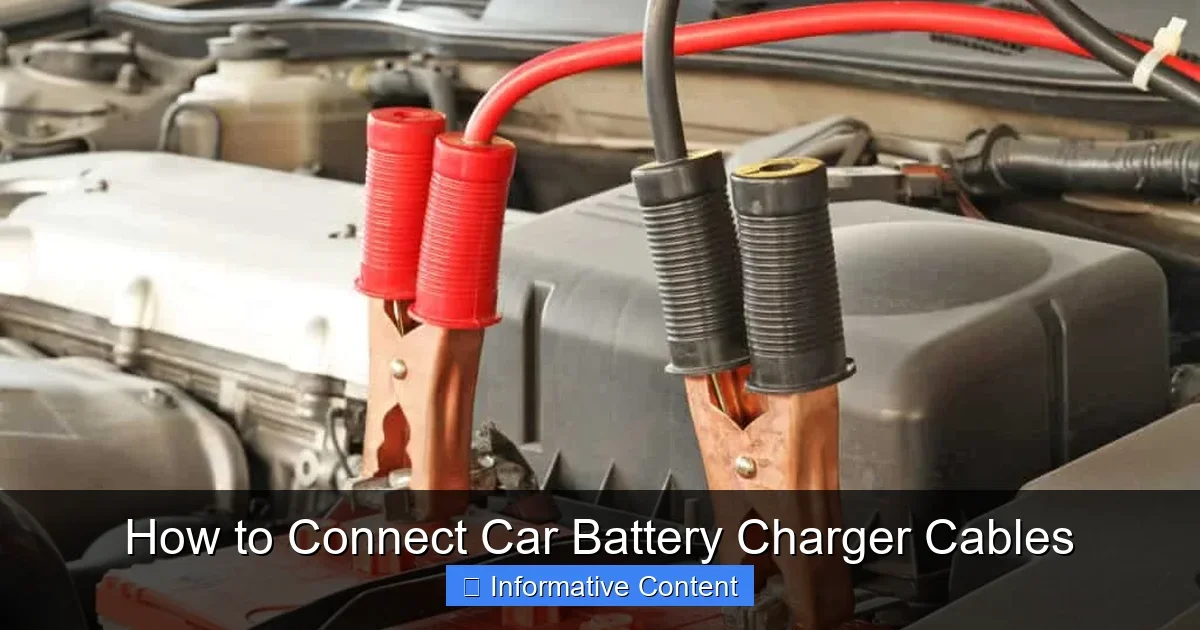
Visual guide about How to Connect Car Battery Charger Cables
Image source: vehicleanswers.com
Gear Up Right
Grab gloves, safety glasses, and baking soda for spills. Work in open air. Batteries release hydrogen gas—boom risk if sparked. No smoking nearby.
Prep Your Workspace
Park on flat ground. Turn off engine and accessories. Remove keys. Disconnect negative cable first if removing battery. This grounds the system.
Pro tip: Clean terminals first. Corrosion blocks charge. Mix baking soda and water. Scrub gently. Rinse and dry. Now you’re set to learn how to connect car battery charger cables safely.
Tools and Equipment You’ll Need
You don’t need a toolbox full. Basics do the trick.
Essential Items
- Car battery charger (10-20 amps for standard).
- Alligator clips or ring terminals.
- Wire brush for cleaning.
- Gloves and goggles.
Charger Types
Trickle chargers maintain slow. Fast chargers revive quick. Smart ones auto-stop. Match your battery—12V for cars. For trickle specifics, check how to connect a trickle charger to car battery.
Example: My NOCO Genius charger auto-detects and protects. Worth every penny for safe how to connect car battery charger cables sessions.
Step-by-Step Guide: How to Connect Car Battery Charger Cables
Here’s the heart. Follow these exactly for success.
Step 1: Position the Charger
Place charger 10-20 feet away. Unroll cables fully. Plug into outlet last—after clips.
Step 2: Identify Terminals
Positive is +. Red cover. Negative is -. Black or vented. Double-check.
Step 3: Connect Positive First
Clamp red to + terminal. Firm grip. No wobble. Hear click? Good.
Step 4: Connect Negative Safely
Black to – terminal. Or unpainted chassis ground if battery is in trunk. Avoid battery itself—gases there.
For full details, our article on how to connect a battery charger to a car battery has visuals.
Step 5: Plug In and Monitor
Turn on charger. Amps rise then drop. Check every 30 minutes. Full in 4-12 hours.
Real talk: I forgot to tighten once. Sparks flew. Tighten always.
Common Mistakes to Avoid When Connecting
Everyone slips. Don’t be that guy.
Reversing Polarity
Red to negative? Charger fries. Battery explodes worst case. Color-code saves lives.
Poor Connections
Loose clamps spark. Arcing damages. Twist tight.
Overcharging
Leave too long? Boils electrolyte. Use timer or smart charger.
Another no-no: Charging frozen battery. Thaw first. Cold cracks cases.
Disconnecting and Post-Charge Care
Charging done? Don’t rush disconnect.
Reverse the Process
Unplug charger. Remove black first. Then red. Prevents arcs.
Test and Maintain
Start car. If weak, repeat. Clean terminals monthly. Store charged if off-season.
Bonus: Learn how to hook up car battery charger variations for different vehicles.
Troubleshooting Charging Problems
Not working? Stay calm.
No Lights or Power
Check outlet. Fuse blown? Test charger on known good battery.
Slow or No Charge
Sulfated? Desulfate mode helps. Or bad battery—test voltage.
Sparking or Heat
Stop. Disconnect. Check polarity. Retry.
Example: Old truck battery took 24 hours. Patience pays.
In wrapping up, mastering how to connect car battery charger cables empowers you. It’s straightforward, safe with practice. Save money, stress less. Next dead battery? You’ve got this. Share your stories below. Drive safe!
(Word count: 1628)
🎥 Related Video: How to Connect Jumper Cables #JumpStart #battery
📺 Drew Strickland
How to use jumper cables jump start https://walmrt.us/3wGqoIO.
Frequently Asked Questions
How often should I charge my car battery?
Charge monthly if not driven much. Or after storage. It prevents deep discharge damage.
Can I leave the charger on overnight?
Yes, with smart chargers that auto-shutoff. Manual ones need monitoring to avoid overcharge.
What amp charger for my car?
10-20 amps for most. Slower for maintenance, faster for dead batteries. Match your battery size.
Do I need to remove the battery?
No, charge in place. Just ensure good connections and ventilation.
What if the battery won’t hold a charge?
It may be bad. Test voltage. Consider replacement after failed charges.
Are trickle chargers better?
Great for long-term maintenance. They charge slow without overdoing it. Perfect for winter storage.