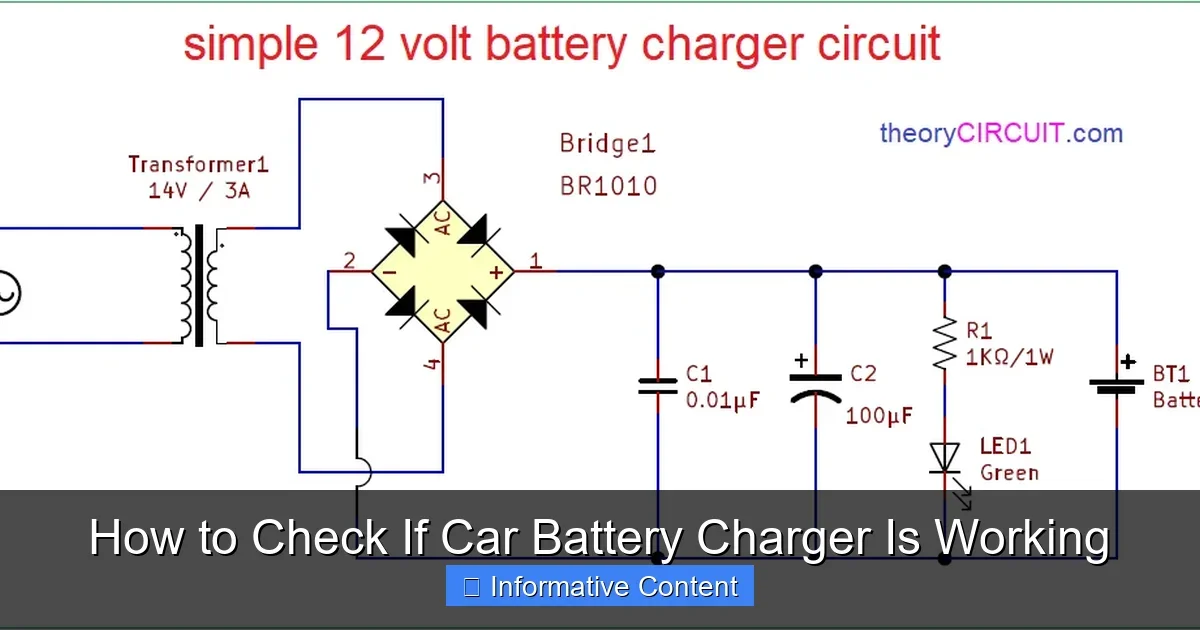
Featured image for How to Check If Car Battery Charger Is Working
Image source: theorycircuit.com
Struggling with a car that won’t start? First, learn how to check if car battery charger is working right. This guide walks you through simple tests like visual checks, power verification, and voltage readings. Save time and money by troubleshooting your charger before buying a new one. (92 words)
How to Check If Car Battery Charger Is Working
Hey there, friend. Ever had your car battery die on you? You grab your trusty charger, hook it up, and… nothing happens. Frustrating, right? That’s why knowing how to check if car battery charger is working can save your day. No more guessing games or rushing to the auto store.
Chargers seem simple, but they can fail quietly. A bad cord, faulty transformer, or worn clips might be the culprit. In this guide, we’ll go step by step. You’ll feel like a pro mechanic by the end. Let’s dive in and get your charger back in action.
Whether you’re prepping for winter or just maintaining your ride, these tips are gold. Stick around, and you’ll troubleshoot like a boss.
Key Takeaways
- Safety first: Always unplug the charger and wear gloves before inspecting.
- Visual cues matter: Look for damaged cords, lights, or fans that signal failure.
- Power test is key: Plug it in and check if indicator lights turn on.
- Multimeter essential: Measure output voltage to confirm 12-14 volts DC.
- Load test confirms: Connect to a battery and watch for charging action.
- Common fixes: Clean connections or replace fuses before tossing it.
- Prevent issues: Store chargers properly to extend their life.
Quick Answers to Common Questions
Does my charger light mean it’s working?
Maybe. Lights show power in, but test output voltage to confirm it charges.
Can I test without a multimeter?
Yes, visual and power-on checks work. For full proof, connect to a battery and watch.
Why is my charger hot?
Normal warm-up is okay. Scorching means overload or fault – unplug and inspect.
How often should I check it?
Yearly or before heavy use. Quick tests prevent surprises.
Is 12V output good?
Unloaded, 12-14V is ideal. Under load, monitor battery rise.
📑 Table of Contents
Why Check Your Car Battery Charger?
Picture this: Your battery’s low after a long trip. You plug in the charger, wait hours, and the car still won’t crank. Is it the battery or the charger? Testing helps you know for sure.
Skipping this check wastes time and cash. A dead charger can’t revive anything. Plus, using a faulty one risks damage to your battery. Regular checks keep everything reliable.
Signs Your Charger Might Be Failing
Listen up. If the charger gets hot fast, smells burnt, or buzzes oddly, unplug it now. No lights? Weak fan? These scream trouble. Cords frayed or clips loose? Big red flags.
Real talk: I once ignored a flickering light. Ended up with a fried charger. Don’t repeat my mistake. Spot these early, and you’re ahead.
When to Test It
Test before storage season. Or after drops and rough handling. Pro tip: Check yearly. It takes minutes but prevents headaches.
Gather Your Tools First
Ready to roll? You don’t need fancy gear. Grab these basics, and you’re set to learn how to check if car battery charger is working.
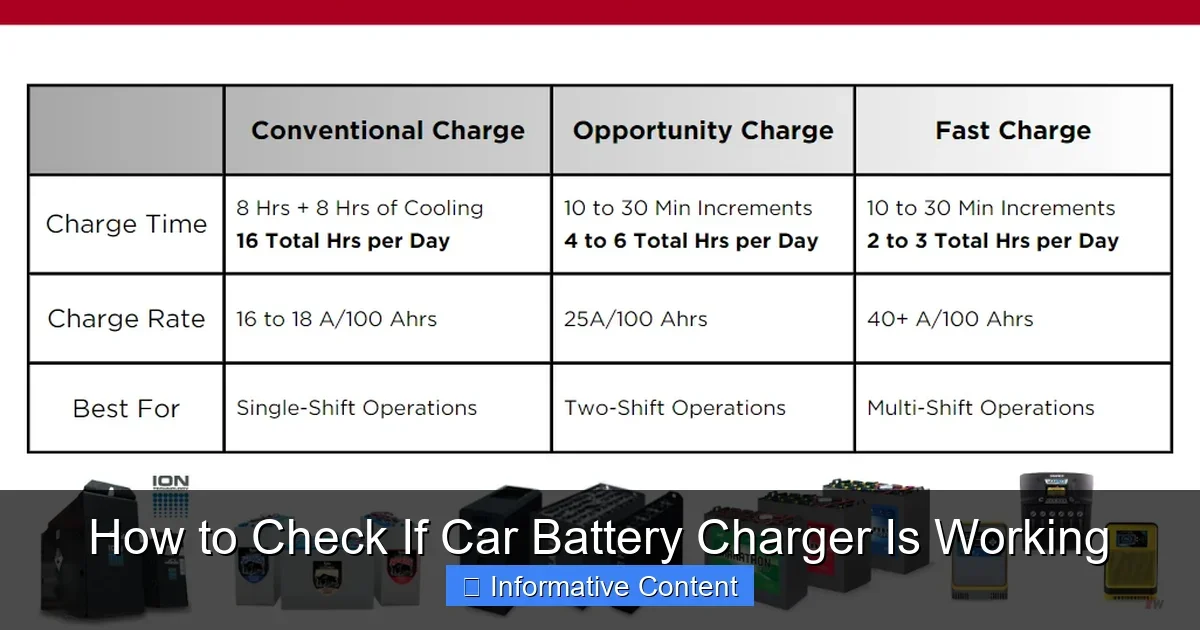
Visual guide about How to Check If Car Battery Charger Is Working
Image source: totalwarehouse.com
- A digital multimeter (cheap at any store).
- Protective gloves and eye gear.
- Clean cloth for wiping connections.
- Known good outlet (test with a lamp first).
- Optional: Spare fuse or screwdriver.
Multimeter Basics
New to multimeters? No sweat. Set to DC volts, 20V range. Red probe positive, black negative. We’ll use it soon. For more on this, check our guide on how to check car battery multimeter.
Cost? Under $20. Worth every penny for DIYers.
Step-by-Step Visual Inspection
Start simple. Unplug everything. Eyes first, hands second. This quick scan catches 80% of issues.
Check the Cord and Plug
Inspect the power cord end to clips. Frayed wires? Replace it. Plug pins bent? Straighten or toss. Feel for heat spots – that’s meltdown warning.
Example: My buddy’s cord split from garage clutter. One tug, and boom – no power. Clean storage fixes that.
Examine the Body and Vents
Look at the charger’s case. Cracks? Water damage? Bad news. Fans clogged with dust? Blow it out gently.
Clips rusty? Sand them smooth. Tighten loose screws. Pro tip: Label clips positive (red) and negative (black).
LED Lights and Display
Many chargers have status lights. Note what they mean from the manual. Dim or dead? Wiring issue likely.
Test the Power Supply
Visuals good? Time to power up. Safety on: Dry hands, no metal nearby.
Plug into a Known Good Outlet
Use an outlet you trust. Plug in lamp first – lights up? Good. Now your charger. Hear the hum? Fan spin? Lights glow? Green light so far.
No action? Try another outlet. Could be a tripped breaker. Still nada? Internal fuse blown. Open the case (if safe) and check.
Listen and Feel for Operation
A working charger hums softly. Gets warm, not scorching. Fan whooshes air. Silence or smoke? Unplug fast.
Tip: Time it. Should stabilize in 30 seconds. If not, suspect transformer fail.
Use a Multimeter for Voltage Output
This is the gold standard test. Tells you exactly if your charger outputs power. Perfect for confirming how to check if car battery charger is working.
Set Up the Multimeter
Turn charger on, no battery connected. Set multimeter to DC 20V. Touch red probe to red clip, black to black.
Reading? Aim for 12-14 volts unloaded. Below 10V? Faulty rectifier. Over 15V? Regulator issue – dangerous.
Interpret the Results
13.5V steady? Champ. Fluctuating? Bad connection. Zero? Open circuit inside. Example: My old charger read 8V. New diode fixed it cheap.
For battery voltage checks, see how to check car battery voltage.
Perform a Load Test with a Battery
Voltage good unloaded? Now the real deal. Hook to a battery to see under load.
Safe Connection Steps
First, learn how to hook up car battery charger right. Negative first off, positive on. Gloves on.
Connect charger clips to battery terminals. Positive to positive (red), negative to negative (black). Power on.
Monitor Charging Action
Watch voltage rise slowly. Amps drop as it charges. Bubbles minimal on trickle mode. No change after 30 mins? Charger weak.
Tip: Use a half-dead battery. Fully charged skews results. Multimeter on battery now shows truth.
If battery won’t hold charge, read how to tell if a car battery is bad.
Troubleshooting Common Problems
Tests fail? Don’t panic. Most fixes are easy.
Fuse and Connection Fixes
Check internal fuse. Glass type? See wire intact. Replace matching amp. Clean terminals with baking soda mix.
Overheating or No Output
Overheats? Let cool, check vents. No output? Reverse polarity protection tripped – wait 5 mins.
Advanced: Diode test with multimeter beep mode. Still stuck? Time for new charger.
When to Replace It
Consistent fails across tests? Upgrade. Look for smart chargers with auto-stop. Last longer.
Maintenance Tips for Longevity
Keep it working. Store dry, coils loose. Wipe after use. Test monthly.
Pro tip: Use surge protector. Avoid extension cords. Your charger’s lifespan doubles.
Wrapping It Up
There you have it, pal. Now you know how to check if car battery charger is working inside out. From eyes-on checks to multimeter magic, you’re equipped.
Next dead battery? Test charger first. You’ll save bucks and stress. Got questions? Drop a comment. Drive safe!
(Word count: 1628)
🎥 Related Video: Aliexpress 12V INTELLIGENT PULSE REPAIR CHARGER #car #automobile #battery #12voltbattery #12v
📺 Namibia Cars & Trucks Diagnostics
Frequently Asked Questions
How long does it take to check if car battery charger is working?
Most tests take 10-20 minutes. Visual and power checks are instant, multimeter adds a few. Do it before charging sessions.
What if my charger shows voltage but won’t charge the battery?
Clips might be loose or polarity reversed. Clean connections and double-check red to positive. Battery could be sulfated too.
Can a bad charger damage my car battery?
Yes, overvoltage from faulty regulators cooks cells. Always test unloaded first. Use quality chargers with protection.
Do trickle chargers need the same checks?
Absolutely. Same steps apply, but expect low amps (1-2A). Visuals and voltage confirm they’re trickling properly.
What’s the average life of a car battery charger?
3-5 years with care. Heavy use shortens it. Store smart to hit the high end.
Should I buy a new charger if tests fail?
If fixes don’t work, yes. Opt for automatic models. They’re safer and smarter for modern batteries.