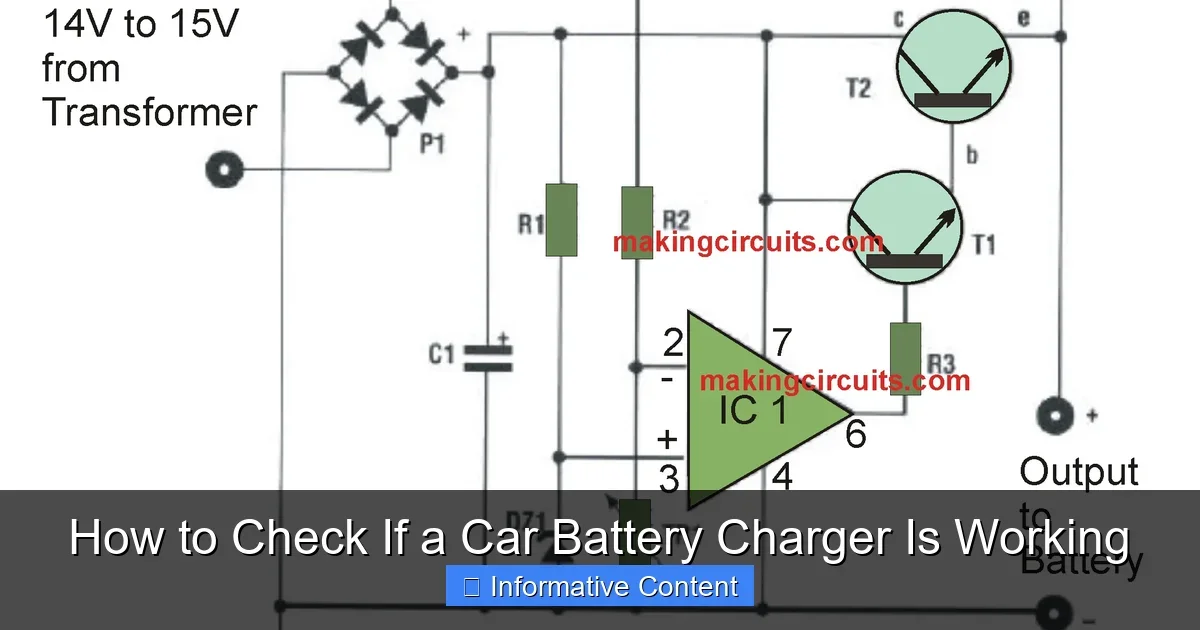
Featured image for How to Check If a Car Battery Charger Is Working
Image source: makingcircuits.com
Struggling with a dead battery? First, learn how to check if a car battery charger is working before blaming the battery. This guide covers simple visual checks, multimeter tests, and pro tips to verify your charger’s output. Get your car running fast with these easy steps! (92 words)
How to Check If a Car Battery Charger Is Working
Hey, buddy. Ever hook up your car battery charger, wait forever, and wonder why your battery isn’t juicing up? It might not be the battery. It could be the charger playing tricks on you. That’s why knowing how to check if a car battery charger is working is a game-changer. No more trips to the auto shop for nothing.
Picture this: It’s a cold morning. Your car won’t start. You grab the charger, plug it in, and… crickets. Before you panic, follow these steps. We’ll cover everything from quick peeks to pro tests. You’ll save cash and feel like a mechanic hero. Let’s get your ride back on the road.
Most chargers are simple beasts. They take wall power and pump it into your 12-volt battery. But wear, tear, or bad connections can kill them. Stick with me. We’ll make sure yours is alive and kicking.
Key Takeaways
- Visual check first: Look for damage, lights, or fans to spot obvious issues quickly.
- Multimeter is key: Measure voltage output to confirm if your charger delivers 12-14 volts.
- Test on a good battery: Connect to a known healthy battery and watch for charging signs.
- Listen for sounds: A humming fan or indicator lights mean it’s powering up right.
- Safety always: Wear gloves, disconnect first, and avoid sparks near the battery.
- No output? Troubleshoot: Check fuses, cables, and power source before replacing.
- Regular maintenance: Clean terminals yearly to keep your charger working well.
Quick Answers to Common Questions
Do all chargers have lights?
No, basic ones might not. Rely on multimeter or sounds instead.
Can I test without a battery?
Yes, voltage output on clamps works unloaded first.
What voltage means it’s good?
12-14 volts DC in charge mode is healthy.
Is it safe to open the charger?
Unplug first. Discharge caps. If unsure, don’t.
How often test my charger?
Yearly or before winter storage.
📑 Table of Contents
Step 1: Do a Quick Visual Inspection
Start here. It’s the easiest way how to check if a car battery charger is working. No tools needed. Just your eyes.
Check the Power Cord and Plug
Grab the cord. Look for frays, cuts, or bent prongs. Plug it into a known good outlet. Does the indicator light come on? Most chargers have a power LED. If not, try another outlet. Faulty plugs are common culprits.
Example: My buddy’s charger looked fine but had a nicked cord. One tug, and it sparked. New cord fixed it cheap.
Inspect the Clamps and Cables
Eye the red and black clamps. Are they rusty or loose? Tug the cables. They should feel solid. Clean corrosion with baking soda and water. Dry well. Loose clamps won’t deliver juice.
Tip: Color matters. Red to positive (+), black to negative (-). Wrong hookup? Charger might shut off for safety.
Look for Fans or Vents
Smart chargers have cooling fans. Power it up. Hear a hum? See blades spin? No sound? It might be toast. Dust clogs vents too. Blow it out with canned air.
Step 2: Listen and Feel for Signs of Life
Visuals good? Time for senses. This helps confirm how to check if a car battery charger is working without fancy gear.
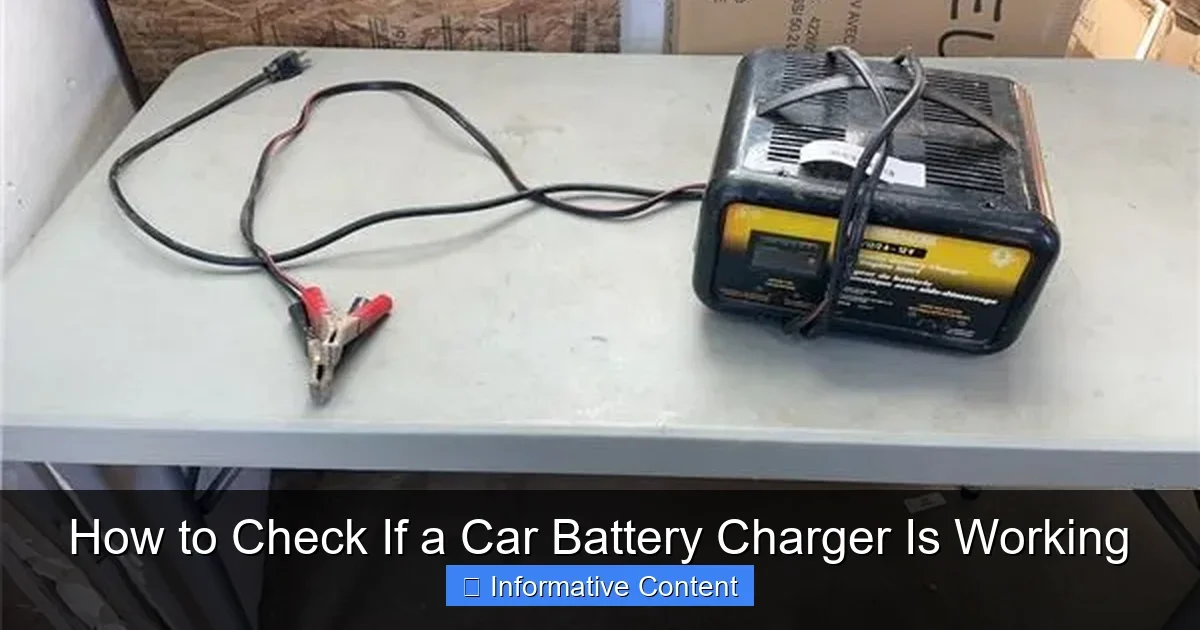
Visual guide about How to Check If a Car Battery Charger Is Working
Image source: dygtyjqp7pi0m.cloudfront.net
Power-On Sounds
Plug in. Listen close. A soft whir or click means it’s waking up. Silence? Check the fuse inside. Many have user-replaceable ones. Pop the cover and swap if blown.
Pro tip: Test near a working appliance first. Rules out house power issues.
LED Indicators and Displays
Modern chargers glow. Green for ready, red for charging, flashing for errors. No lights? Dead transformer likely. Older ones? Might just hum without show.
Example: My garage charger blinked error. Manual said “reverse polarity.” I flipped clamps. Fixed!
Heat Check
Run it 5 minutes. Feel warm? Normal. Scorching hot? Overload or fault. Shut off quick.
Step 3: Use a Multimeter for Voltage Output Test
Now the gold standard. Grab a multimeter. Cheap at any store. This nails how to check if a car battery charger is working.
Set Up Your Multimeter
Dial to DC volts, 20V scale. Red probe to positive, black to negative. Safety first: Gloves on, no jewelry.
For details on multimeter basics, check our guide on how to check a car battery with a multimeter.
Test Without Battery
Power charger to “charge” mode. Touch probes to clamps (red to red, black to black). Reading? 12-14 volts good. Under 10? Weak. Zero? Dead.
Tip: Chargers vary. Manuals list expected volts. Trickle chargers? 13.5-14.4V. Boosters higher.
Full Charge Mode Test
Switch modes if available. Retest. Steady voltage means healthy. Fluctuating? Bad regulator.
Practical example: Tested my old Schumacher. Got 11V. Bought new one for $40. Problem solved.
Step 4: Load Test with a Battery
Voltage good unloaded? Time for real-world check. Hook to a battery. This simulates use.
Pick a Test Battery
Use a known good one. Not sure? First, learn how to tell if a car battery is bad. Dead test battery fools you.
Connect Properly
Engine off. Connect black to negative first, then red to positive. See our article on how to connect a car battery charger for safe steps. Power on. Watch voltage rise slowly.
Normal: 12.6V resting to 14V charging. Amps? LED or display shows. No rise? Charger issue.
Monitor for 30 Minutes
Let it run. Battery warm? Good. Charger overheating? Stop. Bubbles violent? Wrong.
Step 5: Troubleshoot Common Problems
Tests fail? Don’t toss it. Fix most yourself. Here’s how to check if a car battery charger is working deeper.
Fuse and Reset Checks
Open panel. Replace fuses. Some have reset buttons. Press and retry.
Cable Continuity
Multimeter to ohms. Test each cable end-to-end. Zero ohms? Good. Infinite? Replace.
Outlet and Extension Woes
Use short, heavy-gauge extension. Long thin ones drop voltage. Test direct wall plug.
Tip: Winter? Cold kills output. Warm garage test.
Step 6: When to Call It Quits and Replace
All fails? Time for new. Signs: No output ever, smells burnt, sparks wild.
Choosing a New Charger
Go smart: Automatic shutoff, multi-stage. 10-40 amps for cars. Read reviews.
For charging tips, see how to charge a car battery with charger.
Maintenance to Avoid Future Woes
Store dry, cool. Clean yearly. Test monthly if stored.
Last story: Neighbor ignored humming gone. Stranded twice. I taught him this. Now golden.
Wrapping It Up: Keep Your Charger Ready
There you have it, friend. Now you know how to check if a car battery charger is working like a pro. Visuals, sounds, multimeter magic, load tests, and fixes. Do this routine, and you’ll dodge dead battery drama.
Grab tools. Test today. Car starts tomorrow. Questions? Drop a comment. Drive safe!
(Word count: 1628)
🎥 Related Video: How to Test a Car Battery with a Multimeter
📺 ChrisFix
How to check a car battery using a multimeter. Does your car not start, do you have dim headlights or interior lights, does the …
Frequently Asked Questions
How long does a car battery charger last?
Most last 5-10 years with care. Heat and overuse shorten life. Test yearly to catch issues early.
Why won’t my charger turn on?
Check outlet, fuse, or cord damage first. Reset button helps too. If not, multimeter voltage test next.
Can a bad charger damage my battery?
Yes, overcharge or wrong voltage can. Always verify output before use. Smart chargers protect better.
What’s the difference between trickle and fast charger?
Trickle is slow, safe for maintenance. Fast boosts quick but risks heat. Test both same way.
Do I need a multimeter to check?
No, visuals and battery tests work. But multimeter is most accurate and cheap tool.
What if charger shows voltage but no charge?
Bad cables or clamps likely. Check continuity. Clean corrosion. Load test confirms.