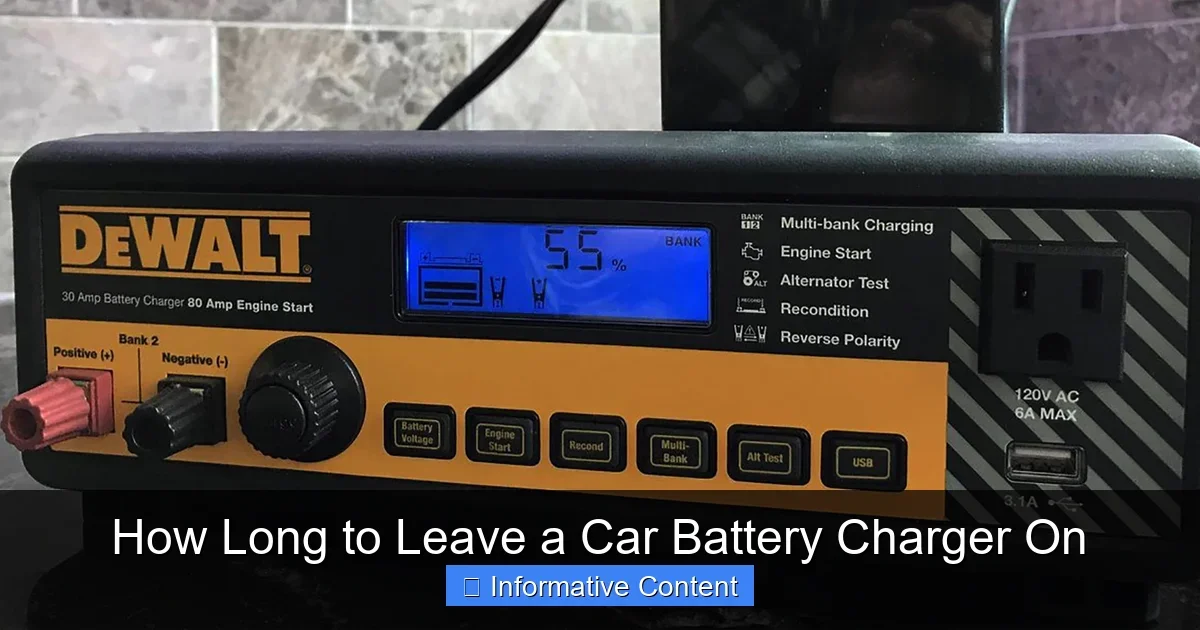
Featured image for How Long to Leave a Car Battery Charger On
Image source: reviewerst.com
Ever wondered how long to leave a car battery charger on without damaging your battery? It usually takes 4-24 hours for a full charge, but smart chargers auto-stop to prevent overcharging. Follow our guide for safe, effective charging every time. (92 words)
How Long to Leave a Car Battery Charger On
Hey there, car owner! Picture this: your car won’t start. Dead battery. You grab your charger, hook it up, and then what? How long to leave a car battery charger on? It’s a question I get all the time from friends stuck in the driveway. Don’t worry—overcharging can boil your battery dry, but undercharging leaves you stranded again.
The truth? It depends on your battery’s state, charger type, and a few other factors. Most folks think “plug it in overnight and done.” But that’s not always smart. In this guide, we’ll break it down simply. You’ll know exactly how long to leave a car battery charger on, plus tips to keep your ride reliable. Let’s dive in!
By the end, you’ll charge like a pro. No more guesswork. Ready?
Key Takeaways
- Standard charge time: Most car batteries need 10-24 hours on a 2-10 amp charger, depending on depletion level.
- Trickle chargers: Safe to leave on for days or weeks as they maintain charge without overdoing it.
- Check voltage: Aim for 12.6-12.8 volts to know when to stop—use a multimeter for accuracy.
- Avoid overcharging: Modern smart chargers shut off automatically; older ones risk damage after 24-48 hours.
- Dead battery rule: Can take 24+ hours; consider replacement if it won’t hold charge.
- Safety first: Disconnect negative terminal first, work in ventilated areas, and never leave unattended with faulty chargers.
- Drive after: Take a 20-30 minute drive to test and top off via alternator.
Quick Answers to Common Questions
Can I leave a car battery charger on overnight?
Yes, with smart or trickle chargers. They’re safe up to 24 hours or more. Manual ones? Check after 8-10 hours.
How long for a dead battery?
24-48 hours on low amps. Start slow to avoid damage. Test voltage after.
What’s a trickle charger?
A low-amp maintainer (1-2A). Leave on for days. Perfect for storage.
Does temperature matter?
Big time. Cold slows charging—double time. Heat speeds but risks boiling.
Do I need to disconnect the battery?
No, modern chargers work fine connected. Just follow connection order.
📑 Table of Contents
Understanding Different Types of Car Battery Chargers
First things first. Not all chargers are the same. Knowing your type tells you how long to leave a car battery charger on. Let’s chat about the main ones.
Standard or Manual Chargers
These are basic. They pump out 2-10 amps constantly. Great for quick top-ups. But watch them! Leave one on too long—say over 24 hours—and you risk overcharging. Sulfation builds up. Your battery weakens.
Example: A half-dead battery on a 6-amp charger? About 10-12 hours. Check every few hours. Unplug at 12.7 volts.
Smart or Automatic Chargers
These are heroes. They sense when full and switch to float mode. Super safe. You can leave them hooked up for days. No worry about how long to leave a car battery charger on.
Tip: Brands like Battery Tender rock. They pulse tiny currents to maintain. Perfect for winter storage.
Trickle Chargers
Slow and steady. 0.5-2 amps. Ideal for long-term. Want to know how to use a trickle charger on car battery? Leave it on weeks if needed. It won’t overcharge.
Pro tip: Great for classics or boats. Connect, forget, drive.
Factors That Affect How Long to Leave a Car Battery Charger On
Okay, so no magic number. Why? Your setup changes everything. Here’s what impacts charging time.
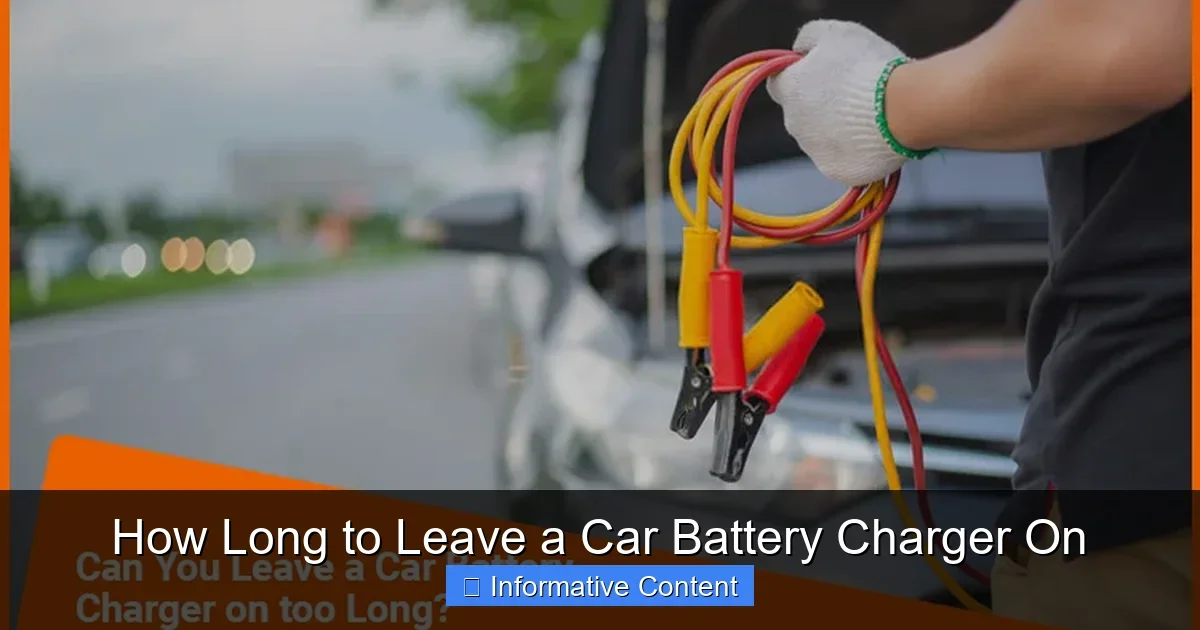
Visual guide about How Long to Leave a Car Battery Charger On
Image source: autocarelabs.com
Battery Capacity and State of Charge
Standard car battery? 40-65 amp-hours (Ah). Fully dead (0%) takes longest—up to 48 hours on low amps. Half-dead? Half the time.
Quick math: Hours = (Ah capacity x desired charge %) / amp rating. Example: 50Ah battery, 50% charge needed, 5A charger = 5 hours. But add 20% for efficiency.
Charger Amps and Temperature
Higher amps = faster charge. But too high (over 10A for small batteries) heats it up. Bad news.
Hot garage? Charging slows. Cold? Even slower. Ideal: 50-77°F. In winter, it might double your time figuring out how long to leave a car battery charger on.
Battery Age and Health
Old battery? It drinks charge slower. Test first. If under 12.2 volts rested, it might be toast. Learn how to tell if you need a new car battery before wasting time.
Tip: Use a load tester. Cheap at auto stores.
Recommended Charging Times for Common Scenarios
Let’s get specific. How long to leave a car battery charger on in real life? Here are scenarios from my garage stories.
Lightly Drained Battery (After Short Trips)
Just ran errands? 4-8 hours on 10A. Or overnight on trickle. Done.
Example: My buddy’s Honda. Left lights on 30 mins. 6 hours on smart charger. Started like new.
Dead or Deeply Discharged Battery
Sit for weeks? Check out how long to charge a dead car battery. 24-48 hours minimum. Start slow—2A first hour to desulfate.
Warning: If no improvement in 12 hours, replace it.
Maintenance Charging (Storage)
Storing for winter? Trickle forever. Smart ones handle it. No cap on how long to leave a car battery charger on.
Quick Boost Before Driving
2-4 hours on high amps. Then drive 30 mins. Alternator finishes the job.
Safety Tips When Using a Car Battery Charger
Safety isn’t optional. One spark, and boom—hydrogen gas explodes. Here’s how to charge right.
Proper Connection Order
Always: Positive (+) first to positive terminal. Then negative (-) to a ground away from battery. Reverse to disconnect. See how to connect a car battery charger for visuals.
Tip: Red to red, black to unpainted metal.
Ventilation and Monitoring
Garage? Open door. Batteries off-gas. Never charge in closed trunk.
Check hourly first time. Smell sulfur? Stop. Bubbling? Unplug.
Common Mistakes to Avoid
- Leaving manual on over 24 hours.
- High amps on cold batteries.
- Forgetting to disconnect.
Pro tip: Use eye protection. Gloves too.
How to Tell When Your Battery is Fully Charged
Don’t guess. Know when to unplug. Saves life.
Voltage Checks
Multimeter time. Full charge: 12.6-12.8V rested (off charger 1 hour). Charging? 13.8-14.4V.
Under 12.4V after? Not full.
Other Signs
No more ammeter drop. Lights bright. Charger light green. Hydrometer floats up (if equipped).
Example: My truck. Voltage hit 12.7V after 14 hours. Perfect.
Post-Charge Test Drive
Drive 20-30 mins. Voltmeter at 13.5-14.5V? Alternator good. Battery holds.
What to Do If Charging Isn’t Working
Sometimes it fails. Here’s next steps.
Troubleshooting Slow Charge
Clean terminals. Check cables. Bad connection halves speed.
When to Replace
Won’t reach 12.6V? Swollen? Leaking? New one. Takes 30 mins—see how long does it take to replace a car battery.
Tip: Recycle old at auto parts store.
In short, knowing how long to leave a car battery charger on keeps you rolling. Start with battery check. Pick right charger. Monitor. Drive happy. Got questions? Drop ’em below. Safe travels, friend!
(Word count: 1628)
🎥 Related Video: How Long To Charge Battery Driving
📺 RustyAutos
Top tips for charging car battery while driving.
Frequently Asked Questions
How long to leave a car battery charger on a smart charger?
Smart chargers auto-stop, so overnight or days is fine. They switch to maintenance mode at full charge, preventing overcharge.
Is it bad to overcharge a car battery?
Yes, it causes gassing, heat, and plate damage. Use timers or smart models to avoid it every time.
How do I know if my battery is fully charged?
Check voltage: 12.6V+ rested. Or watch for charger indicator light. Hydrometer shows full electrolyte too.
Can I charge in the car with hood closed?
Better with hood open for ventilation. Gas buildup is risky in tight spaces—always air it out.
What’s the fastest way to charge?
High-amp (10-20A) for 4-6 hours on depleted batteries. But cool down periodically to prevent overheating.
Should I drive after charging?
Yes, 20-30 minutes lets the alternator balance and tests if it holds charge properly.