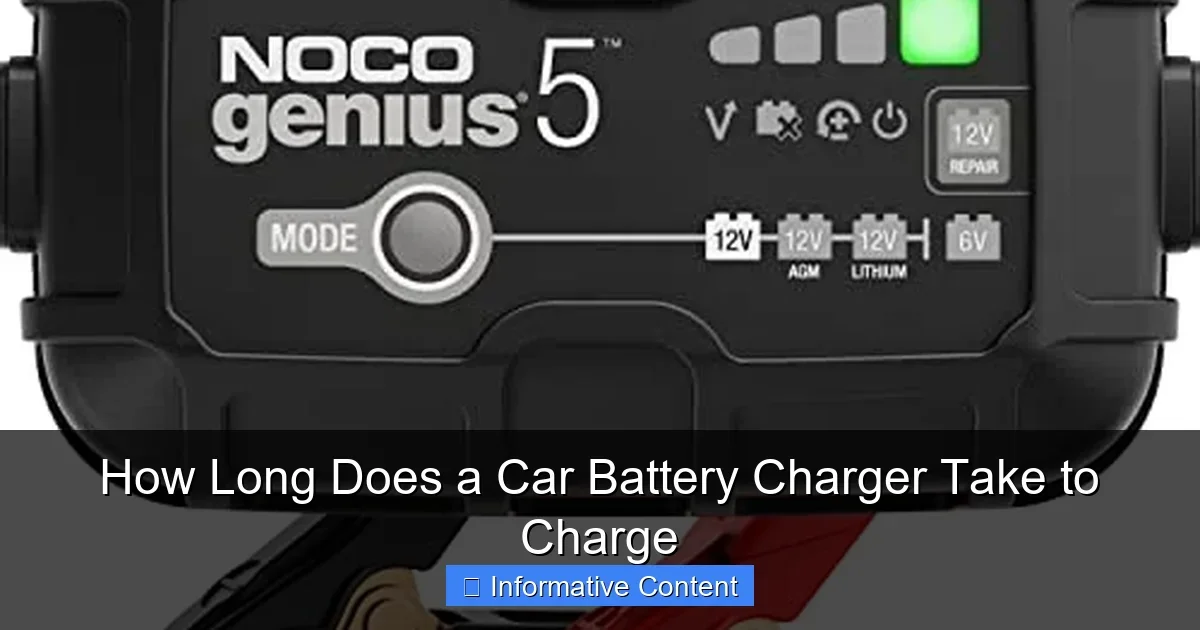
Featured image for How Long Does a Car Battery Charger Take to Charge
Image source: m.media-amazon.com
Car battery chargers typically take 4-24 hours to fully charge, depending on amps, battery size, and condition. Trickle chargers are slow but safe for maintenance, while fast chargers can do it in hours. Always match your charger to the battery for best results and safety.
How Long Does a Car Battery Charger Take to Charge
Hey, have you ever been stuck with a dead car battery? That sinking feeling when your engine won’t turn over. I’ve been there. You grab your charger, hook it up, and then wonder: how long does a car battery charger take to charge? It’s a common question. The answer isn’t one-size-fits-all. It depends on a few things we’ll cover here.
Don’t worry. This guide will walk you through it like we’re chatting in the garage. We’ll look at charger types, what slows things down, real-world times, and tips to get you back on the road fast. By the end, you’ll charge like a pro. Let’s dive in.
Quick spoiler: Most chargers take 4 to 24 hours. But read on for the details that make all the difference.
Key Takeaways
- Charger Amps Matter: Higher amps (like 10-50A) charge faster, but use low amps (2-10A) for safety on dead batteries.
- Battery Capacity: A standard 50Ah battery at 10A takes about 5-10 hours to full charge.
- Dead Battery Time: Expect 12-24+ hours for a fully dead one; check our dead car battery charging guide.
- Temperature Impact: Cold slows charging; ideal is 50-80°F for quickest results.
- Trickle Charging: Takes 24-48 hours but prevents overcharge; great for storage.
- Safety First: Never leave unattended overnight without auto-shutoff features.
- Test First: Use a voltmeter to check battery health before charging.
Quick Answers to Common Questions
How long for a 10A charger on a 40Ah battery?
About 5-8 hours. Factor in 20% losses and starting charge level.
Is overnight charging safe?
Yes with smart chargers that auto-stop. Avoid manual ones.
Can I charge in the car?
Yes, but hood up for ventilation. Disconnect accessories.
Does fast charging hurt batteries?
Can if too hot. Limit to 20A max for regulars.
How to know when fully charged?
Voltage at 12.6V+ after rest. Charger light or app says done.
📑 Table of Contents
Understanding Car Battery Basics
Before we talk chargers, let’s get your battery straight. Car batteries are like gas tanks for electricity. They store power to start your engine and run accessories.
Battery Capacity: The Ah Rating
Most car batteries have 40 to 80 amp-hours (Ah). That’s how much charge they hold. A 50Ah battery can deliver 50 amps for one hour. Or 5 amps for 10 hours.
Why does this matter for how long does a car battery charger take to charge? Bigger capacity means longer charge time. Simple math: Divide Ah by charger amps. Add 20-30% for efficiency losses. A 50Ah at 5A? About 12 hours.
Battery Types and Chemistry
Lead-acid batteries are standard. Flooded, AGM, or gel. AGM charges faster and handles deep discharges better. Always check your manual. Wrong charger can damage it.
Pro tip: Test voltage first. Full is 12.6V. Half is 12.2V. Dead is under 12V. This tells you how much charge is needed.
Types of Car Battery Chargers
Chargers aren’t all the same. Pick the right one, and you’ll cut charging time. Here’s the breakdown.
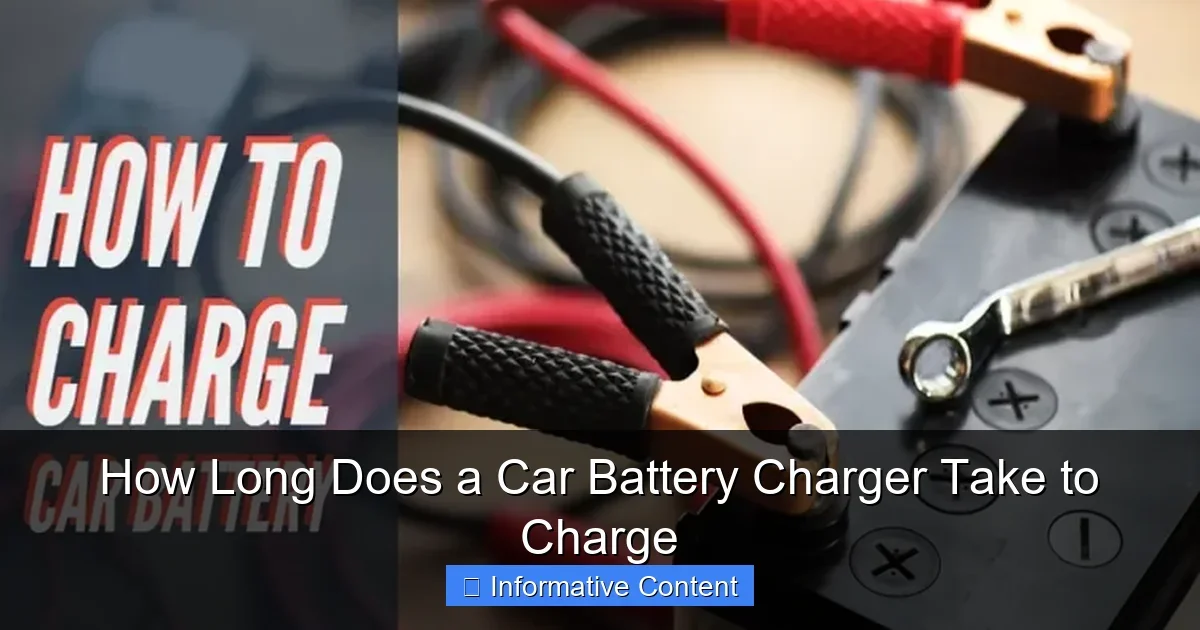
Visual guide about How Long Does a Car Battery Charger Take to Charge
Image source: toolsadvisers.com
Trickle Chargers (2-10A)
Slow and steady. Great for maintenance. They sip power to top off batteries. How long does a car battery charger take to charge with trickle? 24-48 hours for full. But safe overnight.
Example: Parked car in winter? Trickle keeps it ready. Check how long to trickle charge a car battery for more.
Fast or Boost Chargers (20-100A)
These beasts charge quick. 1-4 hours for most. But heat builds fast. Use for emergencies only. Risk of damage if overdone.
Smart Chargers
My favorite. They auto-adjust amps and voltage. Multi-stage: bulk, absorption, float. Safest and often fastest overall. Many shut off when done.
Tip: Invest in a 10-20A smart charger. Balances speed and safety.
Factors That Affect Charging Time
Ever charge two batteries the same way and get different times? Here’s why.
Current Battery State
Fully dead? Double the time. Surface charge vs deep discharge. A mildly low battery at 12.4V charges in hours. Dead at 10V? Overnight or more.
For dead ones, see how long does a dead car battery take to charge.
Charger Amperage Output
Rule of thumb: 10% of Ah rating max. 50Ah battery? 5A safe. 10A faster but watch temp.
At 10A, 50Ah takes 6-8 hours. Math: 50Ah / 10A = 5 hours + losses.
Temperature and Environment
Cold slows chemistry. Below 32°F? Time doubles. Hot over 90°F? Risk boil-over. Ideal: 50-80°F garage.
Other factors: Parasitic drain from lights or alarms adds time. Disconnect them.
Typical Charging Times: Real Examples
Let’s get specific. No fluff. These are averages for a 50Ah lead-acid battery.
Quick Charge Scenarios
- 2A trickle: 24-36 hours.
- 10A standard: 6-10 hours.
- 20A fast: 3-5 hours (with cooling).
- 50A boost: 1-2 hours (emergency only).
Partially discharged (80% full)? Halve the time. Learn step-by-step in how to charge a car battery with a charger.
Dead Battery Realities
Fully sulfated dead battery: 12-48 hours. Desulfation mode on smart chargers helps. Test after 24 hours.
Example: My buddy’s truck. Dead after lights left on. 10A charger. 14 hours to 12.6V.
Trickle for Storage
Winter storage? 1-2A trickle. Tops off in days. Maintains without overcharge.
Safe Charging Tips and Best Practices
Speed is great. Safety first. Follow these, avoid fires or explosions.
Step-by-Step Charging Guide
- Clean terminals. Remove corrosion with baking soda water.
- Connect positive first, then negative. Clamp away from battery.
- Plug into outlet last.
- Check hourly first time. Feel for heat.
- Disconnect outlet first, negative clamp, then positive.
Monitor and Tools
Use voltmeter. Aim for 12.6-12.8V full. Hydrometer for flooded batteries.
Tip: Charge in well-ventilated area. No sparks near battery.
Pro Tips for Faster Charging
- Warm battery first in cold weather.
- Use highest safe amps.
- Remove battery for faster charge indoors.
- Avoid overcharging; smart chargers prevent this.
When to Replace or Get Help
Not all batteries revive. If it won’t hold charge, time’s up.
Signs of Bad Battery
Swollen case. Won’t start after full charge. Under 12V after rest. Age over 3-5 years.
Professional Options
Auto parts stores test free. Or call a mechanic. Jump-starting buys time; see how long does it take to jump a car battery.
Maintenance matters. Drive weekly. Check fluid levels.
Wrapping It Up: Charge Smart, Drive Happy
So, how long does a car battery charger take to charge? Anywhere from 2 hours to 2 days. Match charger to battery. Factor in state and temp. Use smart chargers for ease.
Follow our tips. You’ll save time, money, and hassle. Next dead battery? You’ll handle it like a pro. Got questions? Drop a comment. Safe driving!
(Word count: 1628)
🎥 Related Video: How Long Does It Take To Charge A Car Battery? #Shorts
📺 OptiMate1
How long it takes to charge a car battery? Watch this video to find out the answer. ✓ Subscribe to our channel if you want to know …
Frequently Asked Questions
How long does a car battery charger take to charge a dead battery?
Typically 12-24 hours or more with a 10A charger. Start low amps to avoid damage. Smart chargers handle it best.
What’s the difference between trickle and fast chargers?
Trickle (2-10A) takes days but is safe for long-term. Fast (20A+) finishes in hours but risks heat. Use trickle for maintenance.
Can temperature affect how long does a car battery charger take to charge?
Yes, cold slows it down a lot. Heat speeds it but dangers overheat. Charge at 50-80°F for best results.
Do I need to remove the battery to charge?
Not always, but it charges faster off the car. Reduces drain and heat. Easier indoors too.
How often should I charge my car battery?
If stored, trickle monthly. Otherwise, only when low. Prevent with regular drives of 30+ minutes.
What if my charger isn’t working?
Check connections, fuses. Test outlet. Try another charger. Battery might be sulfated beyond repair.