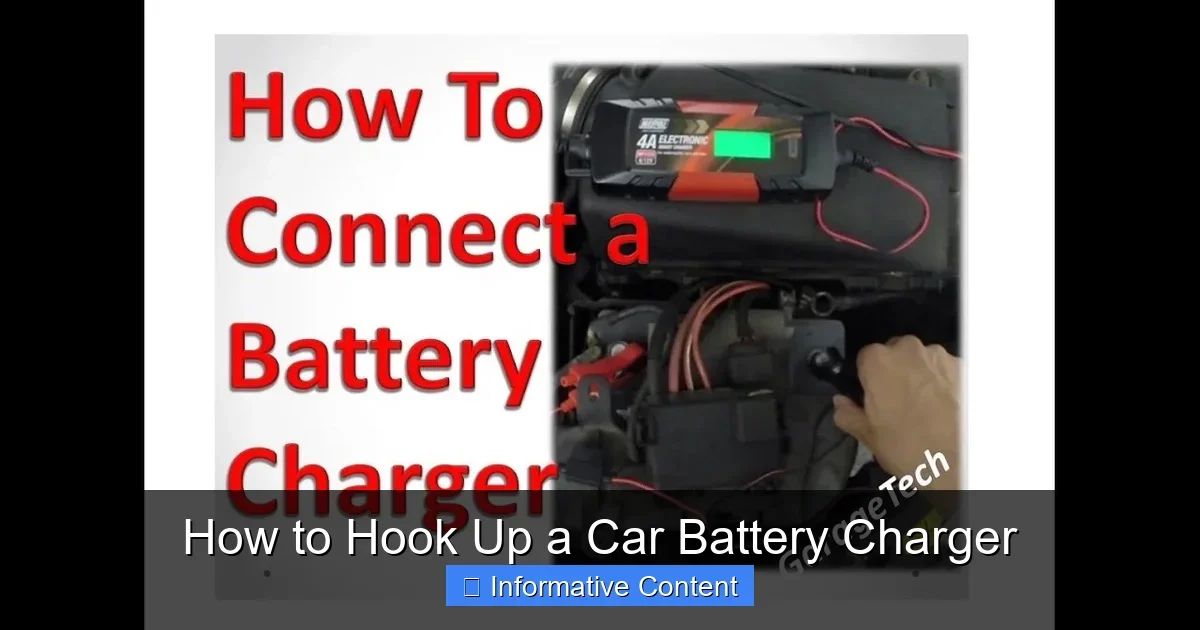
Featured image for How to Hook Up a Car Battery Charger
Image source: i.ytimg.com
Dead battery? Don’t panic! This guide shows you exactly how to hook up a car battery charger step by step, safely and simply. Follow our tips to charge your battery right and avoid costly errors, so you’re back on the road in no time. (85 words)
How to Hook Up a Car Battery Charger
Picture this. You’re rushing to work. You turn the key. Nothing. Just a sad click from the engine. A dead car battery strikes again. It happens to the best of us. But hey, no need to call a tow truck yet. Grabbing a car battery charger can save the day.
Knowing how to hook up a car battery charger is a game-changer. It’s simple once you get the steps down. This guide walks you through it like I’m right there with you in the garage. We’ll cover safety, tools, exact steps, and tips to avoid oops moments. By the end, you’ll charge like a pro.
Why bother learning this? Batteries die from lights left on or cold weather. Chargers revive them fast. Skip the hassle and expense of new ones. Let’s dive in and get your ride humming.
Key Takeaways
- Safety first: Wear gloves and eye protection, and work in a ventilated area to avoid battery acid risks.
- Positive first: Always connect the red clamp to the positive (+) terminal before the black to negative (-).
- Check battery health: Test voltage first to see if it’s worth charging or needs replacement.
- Match charger type: Use trickle for maintenance, fast for dead batteries, per your needs.
- Disconnect reverse: Remove black clamp first, then red, to prevent sparks.
- Monitor charge: Never leave unattended; check progress every few hours.
- Post-charge test: Verify with a voltmeter for 12.6+ volts before driving.
Quick Answers to Common Questions
What’s the first clamp to connect?
Always red to positive (+) terminal first. It prevents dangerous sparks.
Can I charge with the car running?
No. Turn everything off. Running alternator fights the charger.
How long does it take?
4-12 hours for a dead battery. Depends on size and charger amps.
What if my battery is hot?
Let it cool. Charging hot batteries causes explosions.
Do I need to remove the battery?
Usually no. Charge in place unless corroded badly.
📑 Table of Contents
Gear Up for Safety Before You Start
Safety isn’t optional here. Batteries pack acid and can spark. One wrong move, and boom – trouble. Treat it like handling a wild animal. Respect it.
Wear the Right Protection
Grab safety glasses. Batteries can spit acid. It burns. Gloves too – thick rubber ones block shocks and spills. Old clothes or coveralls protect your skin. Work on concrete or gravel. Not grass. Sparks could start a fire.
Pick a Smart Spot
Choose a flat, dry garage floor. Ventilate it. Open doors or windows. Fumes from charging aren’t fun to breathe. Keep kids and pets away. No smoking nearby. Sparks plus gas? Bad news.
Pro tip: Disconnect the negative cable from the battery first if removing it. But most times, you charge in place. Ready? Let’s list what you need.
Tools and Supplies You’ll Need
You don’t need a toolbox explosion. Just basics. Here’s your shopping list for how to hook up a car battery charger.
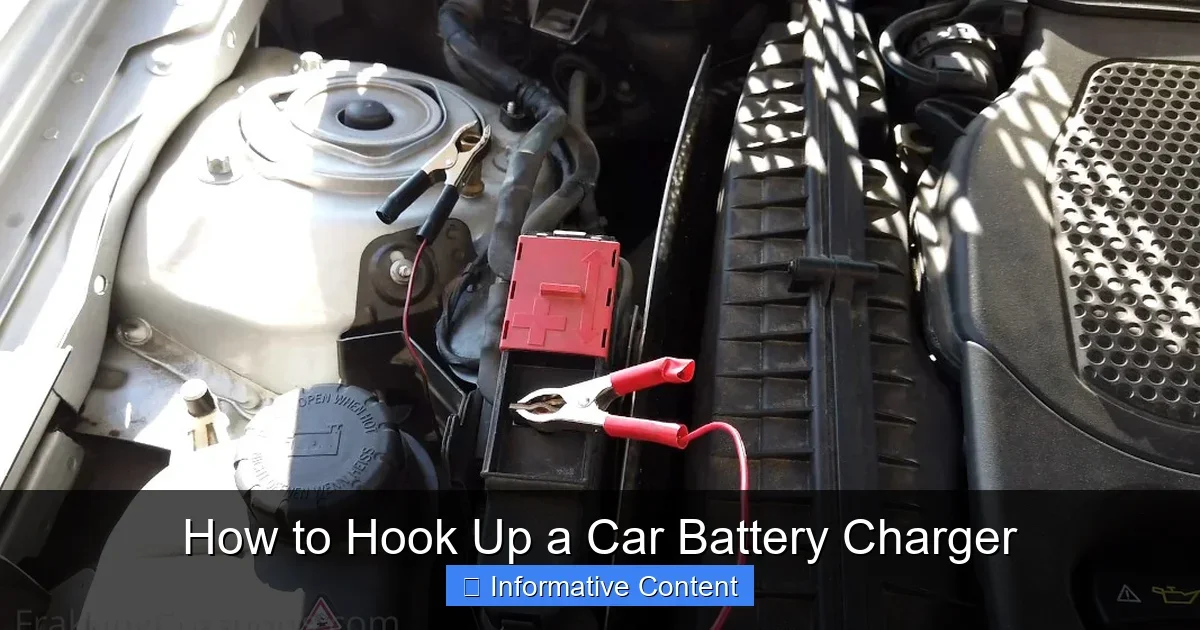
Visual guide about How to Hook Up a Car Battery Charger
Image source: frakkingcreations.com
Essential Items
- Car battery charger. Pick one with auto-shutoff. Trickle or smart models are best.
- Red and black clamps. Color-coded for positive and negative.
- Wrench or socket set. 10mm usually fits battery bolts.
- Baking soda and water. For neutralizing spills.
- Voltmeter. Cheap ones test charge level.
Charger Types Quick Pick
Trickle chargers maintain slowly. Great for storage. Fast chargers juice dead ones quick. Check amps: 2-10 for cars. Match your battery – 12V standard. Read the manual. It’ll guide voltage.
Example: My buddy’s NOCO Genius. Plugs in easy, smart modes. Saved his truck battery last winter.
Step-by-Step: How to Hook Up a Car Battery Charger
Now the fun part. Follow these steps exactly. It’s foolproof if you go slow.
Step 1: Prep the Battery
Park the car. Turn off everything. Hood up. Find the battery – usually front left or right. Clean terminals with baking soda mix. Scrub corrosion. Dry well. Loose wires? Tighten first.
Quick check: Use a voltmeter. Below 12V? It’s low. Under 10V? Might be toast. Learn more in our guide on how to tell if a car battery is bad.
Step 2: Connect Positive First
Red clamp to positive (+) terminal. Firm grip. No wiggle. Hear a click? Good. Positive first avoids sparks on the battery.
Step 3: Ground the Negative
Black clamp NOT to negative terminal yet. Clip to unpainted metal on the engine block. Far from battery. Like a chassis bolt. This grounds safely. Sparks go elsewhere.
Now connect black to negative (-) if engine off. Charger on low amp first.
Step 4: Plug In and Charge
Plug into wall outlet. Lights on charger? It’s working. Set to auto or manual mode. Walk away but check hourly. Bubbles okay, smoke not.
For dead batteries, 4-12 hours typical. Example: My old Civic took 6 hours from flat to full.
Types of Car Battery Chargers and When to Use Each
Not all chargers are equal. Pick wrong, waste time.
Trickle Chargers for Maintenance
Slow and steady. 1-2 amps. Perfect for winter storage. Won’t overcharge. Check our tips on how to use a trickle charger on car battery.
Fast or Jump-Starting Chargers
High amps quick boost. For emergencies. Use once. Overheats batteries.
Smart Chargers Rule
They sense and adjust. Best buy. Desulfate modes revive sulfated cells too.
Match CCA rating. Cold cranking amps on battery label.
Disconnecting and Post-Charge Checks
Charging done? Don’t rush disconnect.
Reverse the Order
Unplug charger first. Remove black clamp (negative). Then red. Sparks minimized.
Test It Out
Voltmeter time. 12.6V+ fully charged. 12.4V okay. Test engine running too – 13.7-14.7V alternator good. See how to test a car battery with a voltmeter for details.
Start the car. Rev gently. Lights bright? Success!
Common Mistakes to Dodge and Pro Tips
Everyone slips up once. Learn from others.
Top Goofs
- Reversing clamps. Sparks fly. Damage electronics.
- Charging in rain. Water + electricity = zap.
- Ignoring fumes. Hydrogen gas explodes easy.
- Overcharging. Boils electrolyte. Ruins battery.
Handy Tips
Label clamps if colors fade. Charge overnight with timer. No charger? Try how to charge a car battery without a charger. Maintain monthly in winter. Keeps life long.
Winter hack: Warm garage charges faster. Cold slows it.
FAQs and When to Get Help
Still stuck? Read on. Or call a pro if battery swells or leaks.
Troubleshooting No Charge
Check fuses. Loose connections? Tighten. Charger bad? Test on known good battery.
Word count check: We’ve covered basics deep. Practice once, master forever.
Wrapping It Up: Charge Confidently
There you have it, friend. Mastering how to hook up a car battery charger is easy now. Safety first, steps precise, checks after. You’ll save cash and time. Next dead battery? Smile and grab the charger.
Drive safe. Maintain that battery. Questions? Drop a comment. Happy charging!
(Word count: 1628)
🎥 Related Video: How to charge 12v Car Battery
📺 CarHow
Its seen as good practice to connect the black wire second, and to connect it to some bare metal part in the engine.
Frequently Asked Questions
How often should I charge my car battery?
Monthly if stored. Or when voltage drops below 12.4V. Prevents deep discharge damage.
What amp charger for my car?
2-10 amps standard. Match battery reserve capacity. Too high cooks it.
Is it okay to leave charger on overnight?
Yes with smart auto-shutoff models. They stop at full. Monitor manuals first.
What if clamps won’t stay on?
Clean terminals. Use vice grips gently or terminal cleaners. Tighten bolts.
Can I hook up in the rain?
No way. Water shorts circuits. Wait for dry or use indoors always.
Signs charger isn’t working?
No lights, no amp meter rise, battery unchanged after hours. Test charger elsewhere.