Is your car acting up, struggling to start, or showing dim lights? Knowing how to tell if a car battery is bad is crucial for avoiding unexpected breakdowns. This guide details the common symptoms, visual indicators, and simple tests you can perform to confidently diagnose a failing battery and ensure your vehicle remains reliable.
There are few things more frustrating than turning the key in your ignition only to be met with silence, a slow groan, or a rapid clicking sound. That sinking feeling in your stomach usually points to one prime suspect: your car battery. But how do you really know if your car battery is bad, or if something else is going on?
Diagnosing a failing battery before it leaves you stranded can save you a lot of time, money, and stress. In this comprehensive guide, we’ll walk you through all the tell-tale signs, both obvious and subtle, that indicate when a car battery is bad. We’ll also cover simple tests you can perform and what factors contribute to battery failure, empowering you to confidently identify and address a bad car battery.
Key Takeaways
- Listen to Your Car: Slow engine cranking, clicking sounds, or no start at all are primary indicators that your car battery is bad or severely discharged.
- Observe Electrical Issues: Dim headlights, flickering dashboard lights, or malfunctioning accessories can all signal a weak or failing battery.
- Perform a Visual Inspection: Look for physical signs like corrosion around terminals, a swollen or cracked battery case, or a sulfur-like (rotten egg) smell, which indicate a bad car battery.
- Test with Tools: A simple voltmeter can check resting voltage, but a load test is more accurate for determining if a car battery is bad under stress. Professional testing offers the most reliable diagnosis.
- Understand Lifespan Factors: Car batteries typically last 3-5 years, but extreme temperatures, frequent short trips, and lack of maintenance can significantly shorten their life.
- Take Action: If diagnosed as bad, the only solution is battery replacement. Learn how to safely jump-start in an emergency and ensure proper disposal of the old battery.
Quick Answers to Common Questions
Can a completely dead car battery be recharged?
Yes, often a completely dead car battery can be recharged, especially if it’s new and simply discharged (e.g., from leaving lights on). However, if the battery is old or internally damaged, it may not hold a charge or fully recover its capacity, indicating a truly bad car battery.
How long does it take to fully charge a car battery?
The time it takes to fully charge a car battery depends on its size, how discharged it is, and the amperage of the charger. A slow charger (2-4 amps) can take 12-24 hours for a deeply discharged battery, while a faster charger (10-20 amps) might do it in 2-6 hours.
Does a car battery need to be replaced if the terminals are just corroded?
Not necessarily. While excessive corrosion can prevent a good electrical connection, it doesn’t always mean the car battery is bad itself. Often, cleaning the terminals thoroughly and applying anti-corrosion spray can restore proper function. However, frequent, heavy corrosion can indicate an underlying battery issue.
Can a bad alternator cause a car battery to seem bad?
Yes, absolutely. A failing alternator won’t properly charge the battery, leading to repeated discharge. This can make the battery appear bad, as it won’t hold a charge, but the root cause is the alternator. Testing both components is crucial for proper diagnosis.
Is it safe to jump-start a car with a swollen battery?
No, it is extremely dangerous to jump-start a car with a swollen or bulging battery. Swelling indicates a buildup of internal gases, and attempting to jump-start it could cause the battery to rupture, leak corrosive acid, or even explode. Replace a swollen battery immediately.
📑 Table of Contents
The Silent Powerhouse: Understanding Car Battery Basics
Your car battery is a vital component, acting as the heart of your vehicle’s electrical system. Its primary job is to provide the initial surge of power needed to start your engine. Once the engine is running, the alternator takes over, charging the battery and powering the car’s electrical components. However, your battery also supplies power when the engine is off, like for your lights, radio, or charging your phone.
Car batteries aren’t designed to last forever. They have a finite lifespan, typically ranging from three to five years, though this can vary greatly depending on driving habits, climate, and maintenance. Over time, chemical reactions inside the battery change, reducing its ability to hold a charge and deliver the necessary power. This degradation is what ultimately makes a car battery bad.
Knowing the normal behavior of a healthy battery helps you recognize when something is amiss. A healthy battery delivers consistent, strong power. When your car battery is bad, it struggles to perform these essential functions, leading to noticeable problems.
What Does a Healthy Battery Do?
- Provides a quick and strong crank to start the engine.
- Maintains a stable voltage (around 12.6 volts when fully charged and resting).
- Powers accessories like lights, radio, and power windows when the engine is off for a reasonable period.
Common Symptoms of a Dying Battery
Often, your car will give you warning signs before the battery completely fails. Paying attention to these symptoms can help you determine if your car battery is bad before you’re stuck in an inconvenient spot. These are the most frequent complaints related to a failing battery.
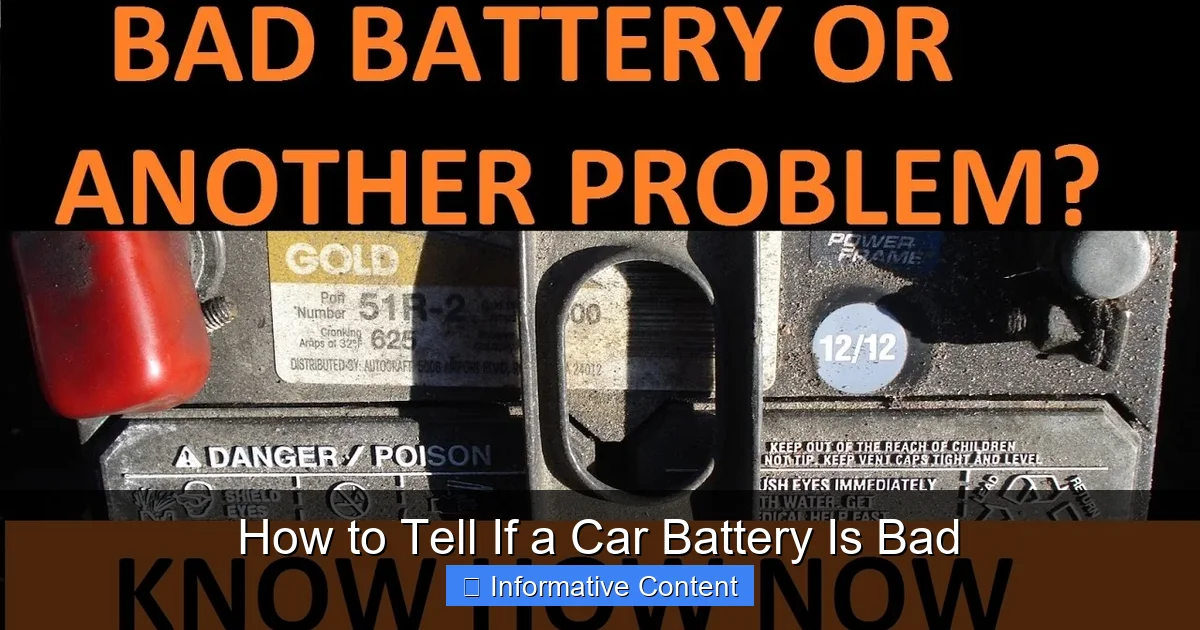
Visual guide about How to Tell If a Car Battery Is Bad
Image source: i.ytimg.com
Slow Engine Crank
This is perhaps the most common and noticeable symptom that your car battery is bad. When you turn the key or push the start button, does the engine crank slowly, almost sluggishly? Does it sound like it’s struggling to turn over? This “rrrr…rrrr…rrrr” instead of a quick “vroom” indicates that the battery isn’t supplying enough power to the starter motor. It’s a classic sign that your car battery is bad or on its way out.
Clicking Sound, No Start
If you hear a rapid clicking sound when trying to start the car, but the engine doesn’t turn over at all, this is a strong indicator that your car battery is bad and severely discharged. The clicking often comes from the starter solenoid trying to engage but not having enough power to fully do so. This means the battery is almost completely depleted and cannot provide the necessary current for ignition.
Dim Headlights or Electrical Issues
A failing battery can’t power all your vehicle’s electrical components effectively. Before starting the car, turn on your headlights. If they appear dim or flicker, or if your dashboard lights are unusually faint, it’s a sign of low battery voltage. Similarly, if power windows roll up and down slowly, or the radio cuts out, these electrical inconsistencies point to a bad car battery or one that’s close to failing.
Battery Warning Light Illuminates
Most modern vehicles have a battery warning light (often shaped like a battery icon) on the dashboard. If this light comes on while you’re driving, it doesn’t necessarily mean your car battery is bad. Instead, it typically indicates an issue with the charging system, meaning the alternator might not be charging the battery properly. However, if the alternator isn’t doing its job, your battery will eventually drain and become bad, so it’s a critical warning sign that needs immediate attention.
Other Intermittent Electrical Problems
Sometimes a bad car battery manifests in more unusual ways. Your car’s computer might reset, losing radio presets or trip meter data. Power locks might fail, or an anti-theft system might suddenly activate. These sporadic electrical glitches can be frustrating to diagnose, but a failing battery is a common underlying cause. If you’re experiencing strange electrical behavior, consider testing your battery.
Visual Clues: What to Look For Under the Hood
Sometimes, you don’t even need to start the car to tell if your car battery is bad. A quick visual inspection under the hood can reveal obvious physical signs of battery distress. Always wear safety glasses and gloves when inspecting your battery, as it contains corrosive acid.
Corrosion Around Battery Terminals
Take a look at the terminals where the cables connect to the battery posts. Do you see a fluffy, white, blue, or green substance building up around them? This is corrosion, usually made of lead sulfate crystals. While some minor corrosion can be normal and cleaned, excessive buildup can prevent a good electrical connection, making it harder for the battery to deliver power. Significant corrosion can be a sign that gas is escaping from the battery, which might indicate a bad car battery or one that’s overcharging.
Swollen or Bulging Battery Case
Carefully examine the sides and top of the battery case. If the case appears swollen, bulging, or warped, this is a very serious sign that your car battery is bad. Swelling typically occurs when the battery has been exposed to extreme heat or has been overcharged, causing gases to build up inside. A swollen battery is extremely dangerous and should be replaced immediately, as it could rupture or explode.
Cracked or Leaking Battery Case
Any cracks, breaks, or visible leaks on the battery case are definitive signs of a bad car battery. Battery acid is highly corrosive and can damage other components in your engine bay. A leak means the battery is losing electrolyte, severely impairing its ability to hold a charge and indicating a critical failure. If you spot a leak, proceed with extreme caution and arrange for immediate replacement.
Foul Odor (Rotten Eggs)
If you notice a strong, pungent smell akin to rotten eggs (sulfur) emanating from your battery, it’s a red flag. This odor is caused by hydrogen sulfide gas, which is released when the battery is overheating or overcharging. This can happen due to a faulty alternator or an internal short in the battery itself. A rotten egg smell is a strong indicator that your car battery is bad, potentially dangerous, and needs immediate attention.
Testing Your Battery: Tools and Techniques
While symptoms and visual cues are helpful, the most accurate way to tell if a car battery is bad is to test it. You can do some basic tests yourself with inexpensive tools, or have a professional perform a more thorough diagnosis.
Using a Voltmeter (Resting Voltage Test)
A digital voltmeter is an essential tool for checking your battery’s resting voltage. This test determines how much charge the battery is currently holding, but it doesn’t assess its ability to deliver power under load.
- How to do it:
- Ensure your car has been off for at least a few hours (preferably overnight) to get an accurate “resting” voltage.
- Set your voltmeter to DC volts (usually 20V setting).
- Connect the red lead to the positive (+) terminal of the battery and the black lead to the negative (-) terminal.
- Read the voltage display.
- What the readings mean:
- 12.6-12.8 volts: Fully charged and healthy.
- 12.4 volts: About 75% charged.
- 12.2 volts: About 50% charged.
- Below 12.0 volts: Severely discharged. While it might just need a charge, consistently low readings after charging could mean your car battery is bad.
A voltmeter is good for checking the state of charge, but it can’t tell you if the battery has enough “cranking power” left. A battery can show a good resting voltage but still fail under the high current demands of starting an engine if its internal resistance is too high.
Load Testing (Simulating Start-Up)
A load test is a more definitive way to tell if a car battery is bad, as it measures the battery’s ability to maintain voltage under a significant electrical load. You can buy handheld load testers or have a mechanic perform this test.
- How it works: The tester applies a specific electrical load to the battery for a short period (usually 10-15 seconds) and monitors the voltage drop.
- What it tells you: If the voltage drops below a certain threshold (typically 9.6-10.5 volts, depending on the battery type and CCA rating) during the test, it indicates that your car battery is bad and unable to deliver sufficient power for starting.
This test is crucial because it simulates the actual demands placed on the battery during engine ignition, making it far more accurate than just a resting voltage test for diagnosing a bad car battery.
Professional Battery Testing
Most auto parts stores and repair shops offer free battery testing. They use sophisticated diagnostic tools that not only perform load tests but also check for internal resistance and cold cranking amps (CCA). These tests provide a comprehensive analysis of your battery’s health and can accurately determine if your car battery is bad. This is often the most reliable route, especially if you’re unsure about DIY testing.
Factors That Shorten Battery Life
Understanding what causes a car battery to go bad can help you prolong its life and anticipate when a replacement might be needed. Several factors contribute to battery degradation.
Age
As mentioned, car batteries have a finite lifespan, typically 3-5 years. Over time, the internal components naturally degrade, reducing the battery’s capacity to hold a charge and deliver power. An older battery is simply more likely to be a bad car battery, even if other factors are ideal.
Extreme Temperatures
Both extremely hot and extremely cold weather can shorten battery life.
- Heat: High temperatures accelerate the chemical reactions inside the battery, leading to faster degradation and evaporation of battery fluid. This is why many batteries fail in the summer, even if they show symptoms in cooler weather.
- Cold: While cold weather doesn’t directly damage the battery, it significantly reduces its cranking power and makes the engine oil thicker, requiring more power to start the engine. A weak battery that just barely gets by in mild weather will often fail completely in freezing temperatures, revealing it to be a bad car battery.
Frequent Short Trips
If you primarily drive short distances (less than 20 minutes), your alternator might not have enough time to fully recharge the battery after starting the engine. Over time, this can lead to a state of chronic undercharging, which reduces battery capacity and can make your car battery bad prematurely.
Parasitic Drain
A parasitic drain occurs when components in your car continue to draw power from the battery even when the engine is off. This could be due to a faulty electrical component, an improperly installed aftermarket accessory, or even a dome light left on. A constant drain can slowly kill your battery, especially if the car sits for extended periods, making it appear that your car battery is bad when it might just be discharged.
Lack of Maintenance
While many modern batteries are “maintenance-free,” keeping the terminals clean and ensuring they are tightly connected can still prolong life. Excessive corrosion, loose connections, or a buildup of dirt can impede electrical flow and hasten the battery’s demise.
What to Do When Your Battery Is Bad
Once you’ve determined that your car battery is bad, you have a few options. The ultimate solution will be replacement, but in the short term, you might need a jump start.
Jump Start (and When Not To)
A jump start can get you going in a pinch, but it’s important to understand its limitations. If your car battery is bad and simply drained (e.g., you left your lights on), a jump start might work perfectly. However, if the battery is internally damaged, swollen, leaking, or very old, a jump start might be ineffective or even dangerous. Never attempt to jump-start a visibly damaged or leaking battery.
Always follow proper jump-starting procedures:
- Connect positive (+) to positive (+).
- Connect negative (-) of the donor car to a clean, unpainted metal surface on the dead car’s engine block (not the battery negative terminal directly).
- Start the donor car, then the dead car.
- Once started, disconnect in reverse order.
Battery Replacement
If your tests or a professional diagnosis confirm that your car battery is bad, replacement is the only permanent solution. You can purchase a new battery from an auto parts store and replace it yourself (if you’re comfortable with basic car maintenance), or have a mechanic or auto parts store install it for you.
- Choosing a New Battery: Make sure the new battery matches the specifications recommended for your vehicle (group size, CCA rating).
- Proper Disposal: Car batteries contain hazardous materials and should never be thrown in regular trash. Most auto parts stores will take your old battery for recycling, often providing a core charge refund if you bring it in.
Identifying a bad car battery early can save you from inconvenient breakdowns and potential damage to your vehicle’s electrical system. By paying attention to the symptoms, conducting visual inspections, and performing basic tests, you can stay ahead of battery failures. Remember, a proactive approach to your car’s battery health is key to reliable driving and peace of mind on the road.
Frequently Asked Questions
How often should I test my car battery?
It’s a good practice to have your car battery tested annually, especially as it approaches its third year of service. Many auto parts stores offer free battery testing. Regular testing helps you catch a bad car battery before it fails completely.
Can cold weather damage a car battery permanently?
While cold weather doesn’t typically cause permanent damage to a healthy battery, it can reveal a weak or dying one. The cold reduces a battery’s cranking power and thickens engine oil, making it harder for an already compromised battery to start the car. Extreme cold, however, can freeze a deeply discharged battery, causing internal damage.
What does a car battery warranty typically cover?
Car battery warranties usually cover defects in materials and workmanship for a specified period, often 2-3 years full replacement, followed by a pro-rated period. They generally do not cover normal wear and tear, abuse, or a battery that has simply aged out. Always check the specific terms of your battery’s warranty.
Can driving habits affect how quickly a car battery goes bad?
Yes, very much so. Frequent short trips, where the engine is turned on and off multiple times without sufficient driving time for the alternator to recharge the battery, can lead to chronic undercharging and significantly shorten battery life, making your car battery bad sooner.
Is it better to replace a car battery myself or have a professional do it?
Replacing a car battery yourself can save money if you have the right tools and knowledge, but it involves working with corrosive acid and high electrical currents. A professional can ensure proper installation, dispose of the old battery correctly, and check the charging system, making it a safer and often more convenient option, especially if you’re unsure.
How can I make my car battery last longer?
To extend your car battery’s life, try to avoid frequent short trips, keep the battery terminals clean and corrosion-free, and ensure it stays properly charged (especially if your car sits for long periods, consider a trickle charger). Also, park in a garage during extreme temperatures if possible to moderate exposure to heat and cold.