
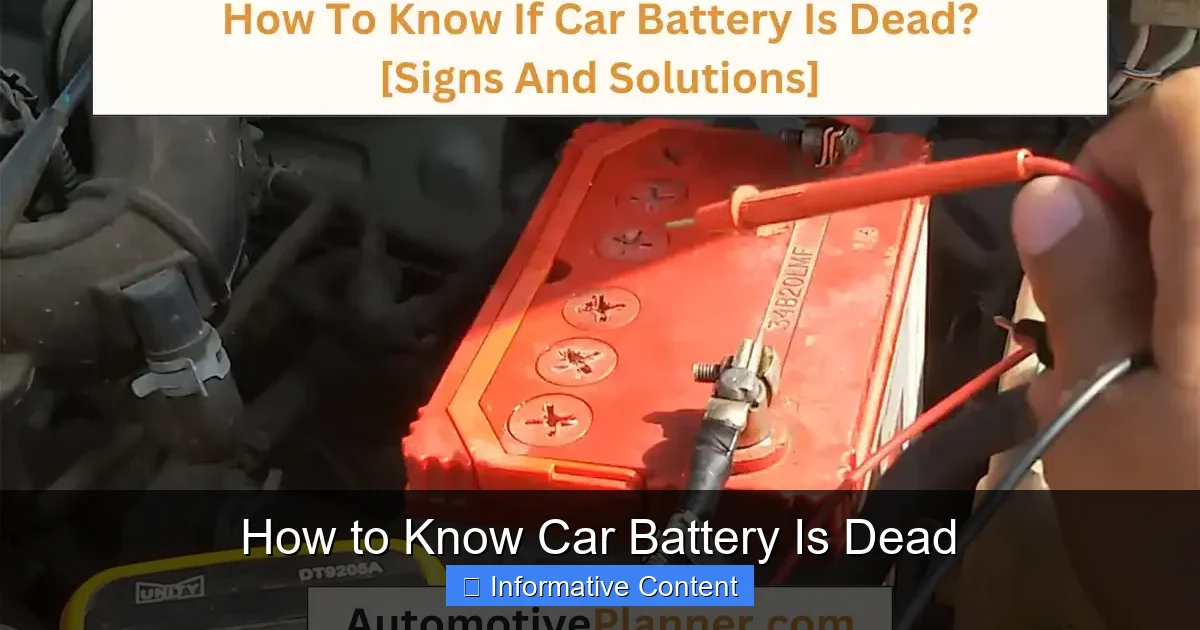
When your car won’t start, a dead battery is often the culprit. Common signs include a complete lack of power, clicking noises instead of an engine crank, or very dim lights and unresponsive electronics. You can confirm this with a multimeter or by noticing a slow engine crank. Understanding these symptoms and knowing how to diagnose them is crucial for prompt action, whether it’s a jump-start or a replacement.
Picture this: you’re running late, you hop into your car, turn the key, and… nothing. Maybe a slow, agonizing groan, or perhaps just a rapid series of clicks. It’s a frustrating, all-too-common scenario for drivers everywhere. When your vehicle refuses to spring to life, one of the first culprits that comes to mind is often the car battery. But how can you be sure? How to know car battery is dead, and not something more complicated like a bad starter or alternator?
Understanding the telltale signs of a dead car battery can save you time, stress, and potentially unnecessary repair costs. It empowers you to diagnose the problem quickly and take appropriate action, whether it’s a simple jump-start or knowing it’s time for a replacement. Let’s dive into the various indicators, from the obvious to the subtle, that signal your car battery has given up the ghost.
Key Takeaways
- No Power or Just Clicking: The most obvious sign your car battery is dead is a complete lack of power (no lights, no dashboard) or a rapid clicking sound when you turn the key, indicating insufficient power to crank the engine.
- Dim or Flickering Lights: If your headlights, dashboard lights, or interior lights are unusually dim, flicker, or don’t turn on at all, it’s a strong indicator of a dying or dead battery.
- Slow Engine Crank: A “sluggish” or prolonged cranking sound when you try to start your car means the starter motor isn’t getting enough power, pointing to a weak or dead battery.
- Visual Cues and Odors: Look for corrosion (white, blue, or green powdery substance) on the battery terminals or a sulfur-like (rotten eggs) smell, which can indicate internal battery issues.
- Using a Multimeter: The most accurate way to confirm a dead battery is by testing its voltage with a multimeter. A healthy battery should read around 12.6 volts when off; anything significantly lower, especially below 12 volts, suggests a dead or critically low charge.
- Causes and Prevention: Batteries die due to age, extreme temperatures, leaving lights on, or parasitic drains. Regular maintenance, checking terminal connections, and monitoring voltage can extend battery life.
- Next Steps: Once you know your car battery is dead, your options include attempting a jump-start, calling roadside assistance, or planning for a battery replacement.
Quick Answers to Common Questions
Can a completely dead battery be jump-started?
Yes, a completely dead battery can often be jump-started, but it might take longer for the dead battery to accumulate enough charge to start the engine. Once running, drive for at least 30 minutes to let the alternator recharge it.
How long does it take for a dead car battery to recharge?
After a jump-start, it typically takes 20-30 minutes of driving for your car’s alternator to put enough charge back into a moderately drained battery to restart the car reliably. A deeply discharged battery may need an hour or more, or even a dedicated charger.
What if my car starts with a jump-start but then dies again?
If your car starts after a jump but then dies shortly after, or if it won’t restart later, it likely points to either a faulty alternator (not charging the battery) or a battery that can no longer hold a charge and needs replacement.
Will a dead battery damage my car?
While a dead battery itself usually won’t damage your car, constantly trying to start it with a dead battery can put strain on your starter motor. Additionally, a faulty or leaking battery can cause corrosion that might damage nearby components.
Can a car battery die suddenly without any warning signs?
Yes, car batteries can sometimes die suddenly, especially if there’s an internal short circuit or a sudden component failure within the battery. However, more often than not, there are subtle warning signs if you know what to look for.
📑 Table of Contents
The Obvious Signs: When Your Car Just Won’t Start
Sometimes, the battery’s demise is dramatic and unmistakable. These are the situations that immediately make you think, “Yep, my car battery is dead.”
Complete Lack of Power
This is arguably the most definitive sign. You get in, turn the key, and absolutely nothing happens. No dashboard lights, no radio, no interior lights, no headlights – just silence. It’s as if your car has simply lost all its electrical life force. When you try to start it, there’s no crank, no click, just the sound of… well, nothing at all. This indicates a battery that is completely drained or has an internal short circuit preventing any power delivery.
Clicking Noise Instead of Engine Crank
If you turn the key and instead of the satisfying roar of your engine, you hear a rapid, machine-gun-like clicking sound coming from under the hood, this is a classic symptom. This clicking noise usually comes from the starter solenoid, which is trying to engage but doesn’t have enough power from the battery to fully turn the engine over. It’s like a valiant but ultimately futile attempt to start. The battery has just enough juice to activate the solenoid but not enough to spin the heavy engine components.
Engine Cranks Slowly or Stutters
Perhaps your car doesn’t go completely silent, but it struggles. You turn the key, and the engine cranks slowly, almost painfully, as if it’s running through molasses. It might turn over a few times with a sluggish “urr… urr… urr…” sound before giving up entirely. This tells you that the battery isn’t completely dead but is critically low on charge and can’t provide the robust surge of power needed to ignite the engine. If you hear this, you can be pretty confident your car battery is dead or very close to it.
Less Obvious Clues: Visual and Auditory Indicators
While the non-starting car is a clear sign, sometimes your battery gives you a heads-up before it completely fails. Paying attention to these subtle cues can help you address the problem proactively.
Visual guide about How to Know Car Battery Is Dead
Image source: i.ytimg.com
Dim or Flickering Lights
Before your battery fully dies, it might struggle to power all your car’s electrical components properly. If you notice your headlights are dimmer than usual, your dashboard lights seem faint, or your interior lights flicker weakly, especially when the engine is off, it’s a strong indicator of a low battery. Try turning on your headlights without starting the car; if they’re noticeably weak or quickly fade, your battery is likely on its last legs.
Unresponsive or Malfunctioning Electronics
Beyond lights, other electrical accessories can start acting up. Your power windows might roll up or down very slowly, the radio might cut out or refuse to turn on, or the central locking system might struggle to engage. These are all signs that the battery isn’t providing a consistent, strong current to all systems. When these things happen, it’s a good time to ask yourself, “how to know car battery is dead or dying?”
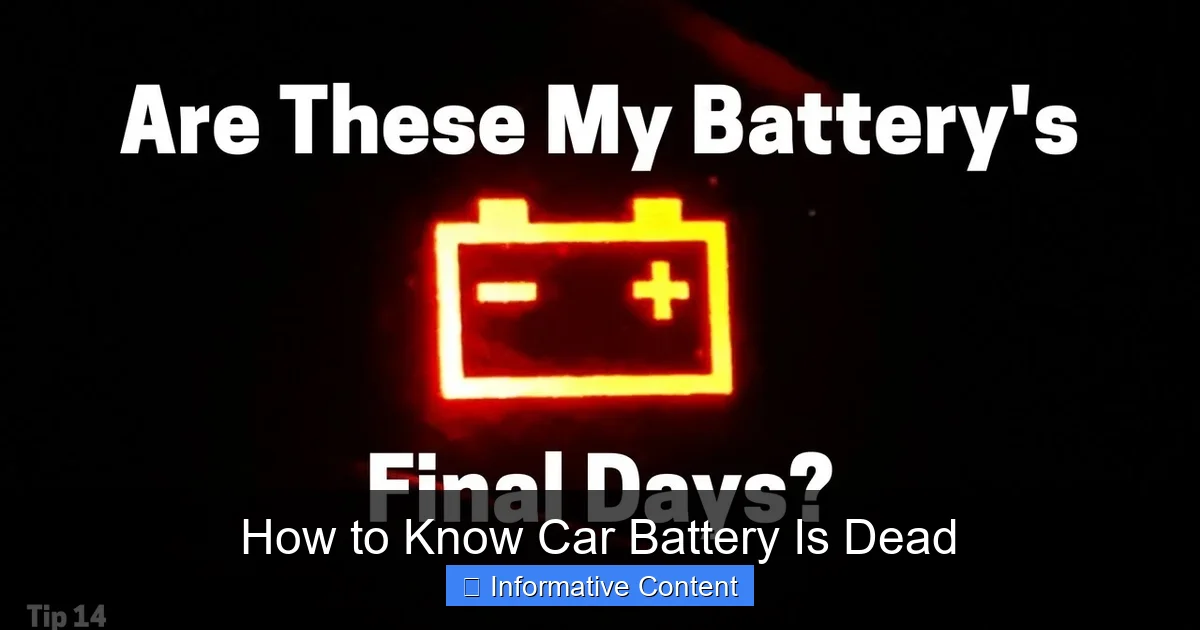
Dashboard Warning Lights
Many modern cars have a battery warning light on the dashboard, typically shaped like a battery icon. This light usually comes on when there’s an issue with the charging system, which includes the battery and alternator. If this light illuminates while you’re driving, it means your alternator isn’t charging the battery effectively, and you’re running solely on battery power, which will eventually lead to a dead battery. If it comes on when you try to start the car and stays on, it’s another clear indication of a power problem.
Corrosion on Battery Terminals
Pop the hood and take a look at your battery. Do you see a white, blue, or greenish powdery substance accumulating around the battery terminals (where the cables connect)? This is corrosion. While some corrosion is normal over time, excessive buildup can prevent a good electrical connection, making it harder for the battery to deliver power to the starter. This doesn’t necessarily mean the battery itself is dead, but it can certainly act like it, preventing your car from starting. Cleaning the terminals might solve the issue, but heavy corrosion can also be a symptom of a battery gassing out, indicating it’s on its way out.
Sulfur or Rotten Egg Smell
If you lift your hood and detect a strong, unpleasant smell akin to rotten eggs, it’s a serious red flag. This sulfurous odor indicates that your battery is leaking sulfuric acid or has overheated, often due to overcharging or an internal short circuit. This usually means the battery has suffered significant internal damage and is definitely dead or dying, and potentially dangerous. If you smell this, exercise caution and consider professional help for battery inspection and replacement.
Using Tools to Confirm: The Definitive Diagnosis
When in doubt, a few simple tools can give you a definitive answer on how to know car battery is dead.
Voltage Test with a Multimeter
This is the most accurate way to check your battery’s health. You’ll need a multimeter, which is an inexpensive tool available at any auto parts store or hardware store.
- Preparation: Ensure your car has been off for at least a few hours (preferably overnight) to get an accurate “resting voltage.” All accessories should be off.
- Connect: Set your multimeter to DC Volts (V with a straight line, typically 20V setting). Connect the red positive (+) lead of the multimeter to the positive terminal of the battery and the black negative (-) lead to the negative terminal.
- Read the Voltage:
- 12.6 volts or higher: Your battery is fully charged and healthy.
- 12.4 – 12.6 volts: Good charge, but not full.
- 12.0 – 12.4 volts: Your battery is partially discharged. It might start the car, but it’s getting weak.
- Below 12.0 volts: Your battery is significantly discharged. If it’s below 11.8 volts, it’s likely dead or very close to it and will struggle to start your car.
A reading consistently below 12 volts, especially after sitting, is a strong indicator that your car battery is dead or needs immediate charging and likely replacement.
Battery Load Tester
A battery load tester goes a step further than a multimeter. It not only measures voltage but also simulates the load placed on the battery when starting the car. This gives a more comprehensive picture of the battery’s ability to deliver current under stress. These testers are available for purchase or can be found at most auto parts stores, where they often offer free battery testing services. A load test will tell you if the battery can hold a charge and deliver enough current (Cold Cranking Amps – CCA) to start your engine.
Common Causes: Why Does a Car Battery Die?
Understanding why your car battery is dead can help you prevent future occurrences. Here are some common culprits:
Age
Car batteries typically last 3-5 years. Over time, their ability to hold a charge and deliver power diminishes due to internal chemical degradation. If your battery is older than 5 years, its chances of dying increase significantly.
Extreme Temperatures
Both extreme heat and extreme cold can shorten battery life. Heat accelerates internal corrosion and evaporation of battery fluid, while cold temperatures reduce the battery’s chemical efficiency, making it harder to deliver the required power to start the engine.
Leaving Lights On or Accessories Running
This is a classic. Accidentally leaving your headlights on, an interior light, or even a phone charger plugged in overnight can completely drain a battery, especially if it’s already old or weak. Even a small “parasitic drain” from a faulty component can drain a battery over several days or weeks.
Infrequent Driving or Short Trips
If you only drive short distances or infrequently, your alternator doesn’t have enough time to fully recharge the battery after starting the car. Over time, this can lead to a consistently undercharged battery and premature failure.
Faulty Alternator
The alternator is responsible for charging the battery while the engine is running. If your alternator is failing, your battery won’t receive the necessary charge, leading to a dead battery even if the battery itself is relatively new. This is where the battery warning light often comes into play.
What to Do When Your Car Battery Is Dead
So, you’ve confirmed that your car battery is dead. What now? Don’t panic; you have a few options.
Attempt a Jump-Start
This is often the first course of action. You’ll need another working vehicle and a set of jumper cables. Always follow the correct procedure for jump-starting a car to avoid damage to either vehicle or injury. The basic steps involve connecting the positive terminals of both batteries, then the negative terminal of the good battery to an unpainted metal surface on the dead car’s engine block. Start the good car, let it run for a few minutes, then try to start the dead car.
Call Roadside Assistance
If you’re a member of a roadside assistance program (like AAA) or if your car insurance offers it, give them a call. They can send a technician to jump-start your car or even replace the battery on the spot if needed.
Battery Replacement
If your battery is old, heavily corroded, or simply won’t hold a charge after a jump-start, it’s time for a new one. You can purchase a replacement battery at an auto parts store and install it yourself (it’s a relatively straightforward DIY task), or take your car to a mechanic for professional installation. Remember to choose a battery that matches your car’s specifications (size, CCA, and terminal configuration).
Preventative Measures: Keeping Your Battery Healthy
Now that you know how to know car battery is dead, let’s look at how to prevent it from happening as often.
- Regular Inspections: Periodically check your battery terminals for corrosion and clean them if necessary. Ensure the battery is securely mounted.
- Battery Testing: Have your battery tested annually, especially before winter or summer, at an auto parts store or mechanic.
- Turn Off Accessories: Always double-check that all lights, radio, and other accessories are off before leaving your car.
- Drive Regularly: If you don’t drive frequently, consider taking your car for a longer spin once a week to allow the alternator to fully charge the battery.
- Use a Battery Tender: For vehicles stored for extended periods, a trickle charger or battery tender can keep the battery topped up without overcharging it.
- Mind the Age: Keep track of your battery’s age. If it’s approaching 3-5 years, start thinking about a proactive replacement, especially if you live in an area with extreme temperatures.
A dead car battery is an inconvenience, but it doesn’t have to be a mystery. By recognizing the signs, using simple diagnostic tools, and understanding the common causes, you can confidently answer the question of how to know car battery is dead. Equip yourself with this knowledge, and you’ll be better prepared to get back on the road quickly and keep your vehicle running smoothly for miles to come.
Frequently Asked Questions
How often should I test my car battery?
It’s a good practice to have your car battery tested annually, especially if it’s over two years old. Most auto parts stores offer free battery testing services, which can help you identify a weakening battery before it leaves you stranded.
Can extreme weather conditions affect battery life?
Absolutely. Both extreme heat and extreme cold can significantly impact battery life and performance. Heat accelerates internal chemical reactions and water evaporation, while cold reduces a battery’s cranking power, making it harder to start your car.
Is it bad to fully drain a car battery?
Yes, fully draining a car battery, especially repeatedly, can significantly shorten its lifespan. Lead-acid batteries are designed to be kept mostly charged, and deep discharges can cause permanent damage and reduce their capacity.
What’s the difference between a dead battery and a faulty alternator?
A dead battery simply means it has insufficient charge to start the car. A faulty alternator means the component responsible for charging the battery while the engine runs is not working, leading to a dead battery even if the battery itself is good.
How do I know if my battery cables are the problem instead of the battery itself?
Corroded or loose battery cables can mimic a dead battery. Check for excessive corrosion around the terminals and ensure the cable clamps are tight. Cleaning and tightening the cables can sometimes resolve starting issues if the battery itself is healthy.
Should I replace my car battery myself or have a professional do it?
Replacing a car battery can be a DIY task for many, but it involves handling corrosive chemicals and electrical currents. If you’re comfortable with basic tools and safety precautions, you can do it. Otherwise, a professional can ensure it’s done correctly and safely, and often handle battery disposal.