When asking how many volts does a car battery need to start, remember that while a fully charged battery shows around 12.6 volts, it only needs to maintain at least 10.5 volts during cranking to successfully start most engines. Factors like temperature, engine size, and battery health heavily influence this requirement. Regularly checking your battery’s voltage and understanding its load capacity are crucial for reliable starts and preventing unexpected breakdowns.
There’s nothing quite like the feeling of turning the key, hearing that familiar rumble, and knowing your day is about to begin. But then there’s the other feeling: the dreaded click-click-click, or worse, absolute silence. In those moments, one question often springs to mind: “Is my battery dead?” And right after that, you might start wondering, how many volts does a car battery need to start?
It’s a question many car owners ponder, often in moments of panic. You know your car has a “12-volt” battery, but what does that really mean for getting your engine to spring to life? The truth is, it’s not quite as simple as just needing 12 volts. There’s a dynamic interplay of voltage, amperage, and internal resistance that dictates whether your engine will crank robustly or just wheeze into submission. Understanding this can save you from unexpected breakdowns and help you maintain your car’s electrical system with confidence.
In this comprehensive guide, we’re going to dive deep into the fascinating world of car battery voltage. We’ll explore the optimal voltage levels, what happens during the starting process, the factors that affect your battery’s performance, and how you can ensure your car battery is always ready to deliver the power it needs. So, let’s unlock the mystery of how many volts does a car battery need to start and empower you with the knowledge to keep your vehicle running smoothly.
Key Takeaways
- Nominal vs. Actual Voltage: A “12-volt” car battery is fully charged at approximately 12.6 volts, but this static voltage isn’t the only factor determining its ability to start a car.
- Minimum Cranking Voltage: During the actual starting process (cranking), the battery voltage typically drops. Most vehicles require the battery to maintain at least 10.5 volts under load to successfully turn over the engine and initiate ignition.
- Importance of Amperage (CCA): While voltage is crucial, the battery’s Cold Cranking Amps (CCA) rating is equally vital. It represents the battery’s ability to deliver high current at low temperatures, which is essential for overcoming engine resistance.
- Factors Influencing Start Requirements: Engine size, ambient temperature, battery age and health, and the condition of the starter motor all affect how many volts does a car battery need to start and how much power it draws.
- Testing Your Battery: A simple voltmeter can check static voltage, but a load test provides a more accurate picture of a battery’s true health and its ability to deliver current under pressure.
- Signs of a Weak Battery: Slow cranking, clicking noises, dimming lights during startup, or a static voltage below 12.4 volts are common indicators that your battery might struggle to provide the necessary starting power.
- Maintenance is Key: Regular battery maintenance, including keeping terminals clean, ensuring proper charging, and replacing an old battery proactively, helps ensure reliable starting voltage and prolongs battery life.
Quick Answers to Common Questions
What is the minimum voltage for a car battery to start?
Most car batteries need to maintain at least 10.5 volts during the cranking process to successfully start an engine. A fully charged battery should read around 12.6 volts when at rest.
What does 12.0 volts mean for a car battery?
A reading of 12.0 volts or less indicates that your car battery is severely discharged, likely at 25% charge or less. It will almost certainly struggle to start your car, especially in cold weather, and needs immediate recharging.
Can a battery be fully charged but still not start the car?
Yes, a battery can show a healthy static voltage (e.g., 12.6V) but still fail to start the car if it has high internal resistance or low Cold Cranking Amps (CCA). This means it can’t deliver the necessary high current under load, even if it holds a charge.
How often should I check my car battery’s voltage?
It’s a good practice to check your car battery’s static voltage every few months, especially before winter or if you notice any sluggishness during starting. A yearly professional load test is also highly recommended.
Does cold weather affect how many volts a car battery needs to start?
Cold weather significantly impacts battery performance. Batteries lose efficiency in the cold, and engine oil thickens, requiring more power to crank. While the *minimum* voltage remains around 10.5V, the battery struggles more to *achieve* and *maintain* that voltage under cold conditions.
📑 Table of Contents
The Basics of Car Battery Voltage: More Than Just a Number
Before we can truly answer how many volts does a car battery need to start, it’s essential to understand what a “12-volt” battery really is and how it functions within your car’s electrical system.
What is a 12-Volt Battery, Really?
When we talk about a 12-volt car battery, we’re actually referring to its nominal voltage. In reality, a fully charged 12-volt lead-acid battery, which is what’s typically found in most modern vehicles, will measure around 12.6 to 12.7 volts when at rest and fully charged. Each battery consists of six cells, and each cell provides approximately 2.1 volts, totaling 12.6 volts. This is the ideal static voltage you want to see when your car has been off for a while and the battery isn’t under any load.
The Role of Voltage in Starting
Voltage is essentially the electrical “pressure” that pushes electrons through a circuit. In the context of starting your car, this pressure is what drives the current to the starter motor. The starter motor, a powerful electric motor, needs a significant amount of voltage and amperage to overcome the resistance of the engine’s internal components and crank it over. If the voltage is too low, even if there’s some power, the pressure isn’t strong enough to get the starter motor to do its job effectively.
Amperage vs. Voltage for Starting
While voltage is crucial, it’s only half the story. The other equally important factor is amperage, specifically Cold Cranking Amps (CCA). Think of voltage as the water pressure in a hose, and amperage as the volume of water flowing through it. You need both good pressure (voltage) and a strong flow (amperage) to wash your car effectively. For your car battery, you need enough voltage to push the current, and enough amperage to sustain that push for the duration of the cranking process, especially in cold weather. A high CCA rating indicates a battery’s ability to deliver a large burst of current at low temperatures, which is critical for starting a cold engine.
The Minimum Voltage for a Successful Start
So, exactly how many volts does a car battery need to start? Let’s get to the brass tacks of it.
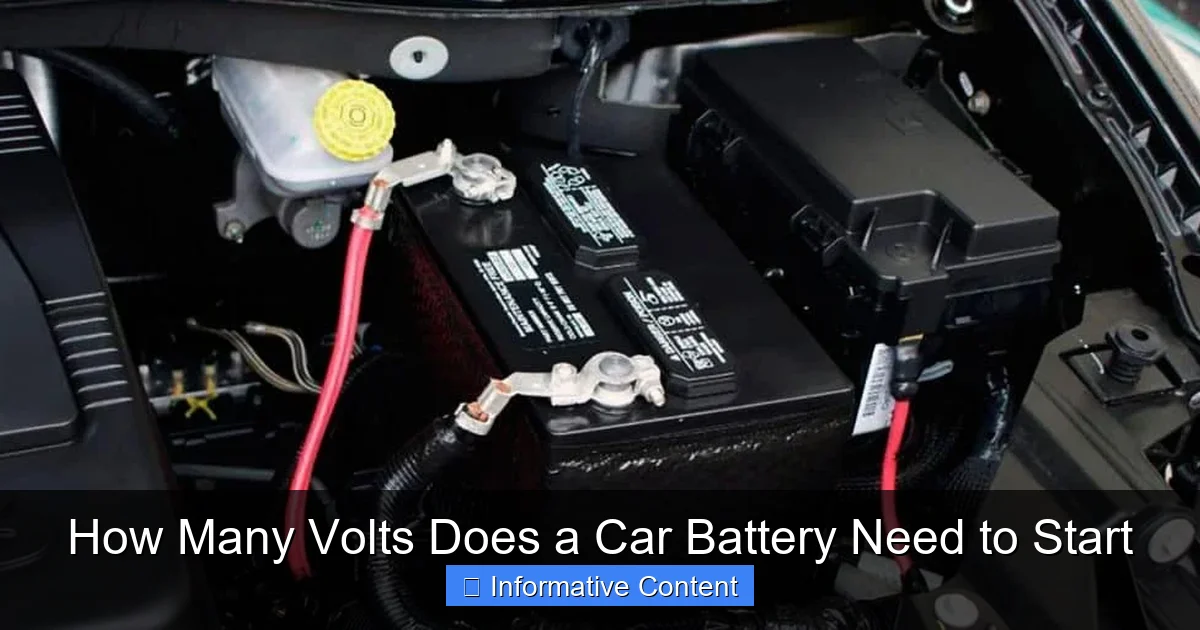
Visual guide about How Many Volts Does a Car Battery Need to Start
Image source: protguide.com
The “Magic Number” for Cranking
While a fully charged battery is 12.6 volts, the voltage will inevitably drop during the cranking process because the starter motor draws a massive amount of current. During this critical moment, most vehicles require the battery to maintain at least 10.5 volts under load to successfully turn over the engine and initiate ignition. Some more sensitive or larger engines might prefer a slightly higher minimum, closer to 11 volts, but 10.5V is a commonly accepted threshold. If the voltage dips below this point while the starter motor is engaged, the engine likely won’t crank effectively, or at all.
Why Voltage Drops During Cranking
The starter motor is one of the most power-hungry components in your entire vehicle. When you turn the key, it instantaneously demands hundreds of amps from your battery. This sudden, high current draw causes a temporary but significant voltage drop, which is completely normal. The healthier the battery, the less severe and shorter this voltage drop will be. A weak or old battery will experience a much more dramatic voltage sag, often falling below the critical 10.5-volt threshold, leading to starting problems.
Impact of Low Voltage
If your battery’s voltage consistently drops below the necessary threshold during cranking, you’ll experience several issues:
- Slow Cranking: The engine turns over sluggishly, making a “rrr…rrr…rrr” sound instead of a quick “vroom.”
- No Cranking: The starter motor might not engage at all, resulting in just a click or no sound.
- Dashboard Lights Flicker: Insufficient power can cause the dashboard lights and infotainment system to behave erratically.
- Increased Wear: Repeated attempts to start with low voltage can put strain on the starter motor and other electrical components.
Factors Affecting Starting Voltage Requirements
The simple answer to how many volts does a car battery need to start is 10.5 volts during cranking, but many variables can influence this requirement and the battery’s ability to meet it. Let’s look at some key factors.
Engine Size and Type
A larger engine, especially one with more cylinders (like a V8 compared to a 4-cylinder), requires more power to turn over. This means the starter motor will draw more current, placing a higher demand on the battery. Diesel engines, with their higher compression ratios, also demand significantly more cranking power than gasoline engines. Consequently, these vehicles often need batteries with higher CCA ratings and a more robust voltage delivery during starting.
Temperature
Temperature is a huge factor. Cold weather is the nemesis of car batteries. As temperatures drop:
- Battery Efficiency Decreases: Chemical reactions within the battery slow down, reducing its ability to deliver current efficiently. A battery can lose up to 30% of its cranking power at freezing temperatures.
- Engine Oil Thickens: Cold oil becomes much thicker, creating more resistance for the starter motor to overcome.
This double whammy means your battery has less power to give, and the engine demands more power to turn over. Therefore, in cold conditions, your battery needs to work harder and maintain a higher effective voltage to achieve a successful start.
Battery Health and Age
Batteries don’t last forever. Over time, chemical changes occur within the battery’s cells, leading to:
- Increased Internal Resistance: This makes it harder for the battery to deliver high current and causes a more significant voltage drop under load.
- Reduced Capacity: The battery can hold less charge, meaning its static voltage might look okay, but it quickly falls under load.
A battery typically lasts 3-5 years. An older battery, even if it shows a decent static voltage, might not have the robust power needed to reliably answer the question of how many volts does a car battery need to start in real-world conditions.
Accessory Load
If you have accessories like headlights, radio, or interior lights on before attempting to start the car, these will draw power from the battery, reducing the available voltage and amperage for the starter motor. Always turn off unnecessary electrical loads before starting your car, especially if you suspect your battery might be weak.
Starter Motor and Electrical System Condition
A faulty starter motor that’s drawing too much current, corroded battery terminals, loose cable connections, or a failing alternator can all impact the effective voltage available for starting. These issues can create additional resistance in the electrical path, meaning less power reaches the starter motor, even if the battery itself is in good health.
How to Test Your Car Battery’s Voltage
Knowing how many volts does a car battery need to start is one thing; being able to measure your battery’s health is another. Here’s how you can check your battery’s voltage.
Using a Multimeter
A simple digital multimeter is an inexpensive and invaluable tool for checking your battery’s voltage.
- Engine Off (Static Voltage): Make sure the car has been off for at least a few hours (preferably overnight) to get an accurate resting voltage reading. Set your multimeter to DC Volts (often marked as V= or DCV) and connect the red lead to the positive (+) terminal of the battery and the black lead to the negative (-) terminal.
- Engine Running (Charging Voltage): Start the car and let it run for a few minutes. Check the voltage again. This reading should be higher than the static voltage, typically between 13.7 and 14.7 volts. This indicates that your alternator is working correctly and charging the battery.
Interpreting the Readings
Here’s what your static voltage readings usually mean:
- 12.6 – 12.7 volts: Fully charged and healthy battery.
- 12.4 – 12.5 volts: Approximately 75% charged. Still good, but consider charging if you often see this.
- 12.2 – 12.3 volts: Approximately 50% charged. Might struggle to start in cold weather. Recharge soon.
- 12.0 volts or below: Severely discharged. Needs immediate charging. Will likely struggle to start the car or won’t start at all.
Remember, these are static readings. They tell you the battery’s charge level, but not necessarily its ability to deliver the high current needed for starting, which brings us to the next point.
Load Testing for Comprehensive Health
While a multimeter gives you a good static voltage reading, it doesn’t tell you how well the battery holds up under actual demand. This is where a battery load tester comes in. A load tester simulates the stress of starting an engine, drawing a significant amount of current from the battery for a short period. It then measures the voltage drop during this process. This test provides a much more accurate picture of a battery’s true health and its ability to consistently provide the power for how many volts does a car battery need to start. Many auto parts stores offer free battery load testing.
What Happens When Voltage is Too Low?
When your battery can’t meet the voltage demands for starting, the signs are usually quite clear. Let’s explore what you might experience.
Slow or No Crank
This is the most common symptom. If the engine slowly grinds to a halt during cranking, or makes a weak, strained sound, it’s a strong indicator that your battery’s voltage is dropping too far below the 10.5-volt threshold needed to turn the engine over effectively. In extreme cases, the starter won’t even engage, and you’ll hear nothing or just a single click.
Clicking Sound Only
A rapid clicking sound from under the hood often means the starter solenoid is getting just enough power to engage, but not enough power to spin the starter motor itself. The solenoid attempts to engage, but the insufficient voltage causes it to immediately disengage, leading to the rapid clicking sound. This is a classic sign that your battery cannot provide how many volts does a car battery need to start under load.
Dashboard Lights Flicker or Dim
When you try to start a car with a weak battery, you might notice the dashboard lights dimming significantly or flickering erratically. This happens because the starter motor is drawing almost all the available power, leaving very little for the rest of the car’s electrical components. As the battery struggles to provide the necessary starting voltage, other systems suffer.
Damage to Other Components
Consistently trying to start a car with a low-voltage battery can also put undue strain on other components. The starter motor might overheat if it’s repeatedly trying to crank with insufficient power. The alternator, which is responsible for recharging the battery while the car is running, can also be overworked if it’s constantly trying to bring a deeply discharged battery back to full charge, potentially shortening its lifespan.
Maintaining Optimal Battery Voltage for Reliable Starts
Understanding how many volts does a car battery need to start is just the beginning. Proactive maintenance is key to ensuring your battery consistently delivers that power.
Regular Driving Habits
Your car’s alternator recharges the battery as you drive. Short trips, especially in stop-and-go traffic, might not allow the alternator enough time to fully replenish the battery’s charge. This is particularly true if you’re frequently using power-hungry accessories like seat heaters, powerful sound systems, or air conditioning. Taking your car for a longer drive (at least 20-30 minutes) regularly helps keep the battery adequately charged and prolongs its life.
Battery Chargers and Maintainers
If you don’t drive your car often, or if it sits for extended periods (e.g., a classic car, motorcycle, or RV), a battery tender or maintainer is an excellent investment. These devices provide a low, consistent charge that keeps the battery topped off without overcharging it, ensuring it’s always ready with the necessary voltage to start. This is crucial for preventing deep discharge and sulfation, which can permanently damage the battery.
Cleaning Terminals and Connections
Corrosion on battery terminals and loose connections can significantly impede the flow of electricity, effectively reducing the voltage and amperage available to the starter. Periodically inspect your battery terminals for any white or bluish-green powdery buildup. Clean them using a wire brush and a mixture of baking soda and water. Ensure all connections are tight. This simple step can make a big difference in how efficiently your battery can deliver its power.
Replacing Old Batteries
Even with the best maintenance, batteries have a finite lifespan, typically 3 to 5 years. As a battery ages, its ability to hold a charge and deliver high current diminishes, regardless of its static voltage reading. If your battery is nearing or past its typical lifespan, and you’re starting to experience sluggish starts, it’s wise to consider proactive replacement. Don’t wait until you’re stranded to find out your old battery can no longer provide how many volts does a car battery need to start.
Conclusion
The question of how many volts does a car battery need to start might seem simple on the surface, but as we’ve explored, it involves a dynamic interplay of static voltage, cranking voltage under load, amperage, and a host of environmental and mechanical factors. While a fully charged battery rests at 12.6 volts, the critical threshold for starting is maintaining at least 10.5 volts during the high-demand cranking process.
Understanding these nuances empowers you to better care for your vehicle. By regularly checking your battery’s health, recognizing the signs of a weak battery, and practicing good battery maintenance habits, you can significantly extend its lifespan and ensure reliable starts every time you turn the key. So, the next time you hear that engine purr to life, you’ll know exactly what kind of electrical muscle went into making it happen. Drive safe!
Frequently Asked Questions
How long does a car battery usually last?
A typical car battery lasts between 3 to 5 years, depending on factors like climate, driving habits, and maintenance. Extreme temperatures and frequent short trips can shorten its lifespan.
Can I jump-start a car with a very low battery?
Yes, you can often jump-start a car with a very low battery, provided the battery isn’t completely dead or internally damaged. The jump-start provides enough temporary power to bypass the weak battery and get the engine running, allowing the alternator to recharge it.
What is the difference between voltage and amperage in a car battery?
Voltage is the electrical “pressure” that pushes current, while amperage (or current) is the volume or flow of electrons. Both are crucial for starting: voltage provides the pressure, and amperage delivers the raw power needed by the starter motor.
Why do car batteries die prematurely?
Car batteries often die prematurely due to factors like deep discharges, extreme heat or cold, poor maintenance (corroded terminals), faulty alternators (under or overcharging), and leaving accessories on when the engine is off.
What is a battery tender, and do I need one?
A battery tender (or maintainer) is a device that provides a small, continuous charge to keep a battery at full capacity without overcharging. You might need one if your car sits for extended periods, such as classic cars, motorcycles, or vehicles stored over winter, to prevent battery discharge.
Can a fully charged battery still be bad?
Yes, a fully charged battery can still be bad if it has high internal resistance or sulfation. It might show 12.6 volts at rest but fail a load test, meaning it cannot deliver the high current needed to crank the engine, especially when the demand is high.