When your car won’t start, a dead car battery is often the culprit. Look for common signs like a clicking sound when you turn the key, dim lights, or no power at all. Simple visual checks and a quick voltage test can help confirm if your car battery is dead, guiding your next steps to get back on the road.
How to Tell If Your Car Battery Is Dead
Picture this: You hop into your car, ready to head out, turn the key, and… nothing. Or maybe you get a sad, struggling whine instead of a robust engine roar. It’s a universally frustrating experience, and for many drivers, the first thought that pops into their head is, “Oh no, is my car battery dead?”
It’s a common scenario, and more often than not, a dead car battery is indeed the culprit behind an uncooperative vehicle. But how can you be sure? Is it really the battery, or could something else be at play? Knowing how to tell if your car battery is dead can save you time, money, and a whole lot of stress. It empowers you to diagnose the problem quickly and decide on the best course of action, whether that’s a jump start, a new battery, or a trip to the mechanic for a different issue.
In this guide, we’ll walk you through all the tell-tale signs, from the super obvious to the more subtle clues. We’ll also cover how to use simple tools to test your battery, and how to differentiate a truly dead car battery from other mechanical problems that might mimic the same symptoms. By the end, you’ll be a pro at diagnosing battery woes, and you’ll know exactly what to do when your car battery is dead.
Key Takeaways
- Clicking Sound & No Start: A rapid clicking noise when you try to start your car is a strong indicator that your car battery is dead or critically low on power.
- Dim Lights & Electronics: Weak interior lights, headlights that barely glow, or non-functional radio and power windows are common signs of a dying or dead car battery.
- Visual Inspection: Look for physical clues like corroded terminals, a swollen battery case, or a sulfur-like smell, which all point to battery problems.
- Dashboard Warning Light: An illuminated battery icon on your dashboard signals an issue with your vehicle’s charging system, which includes the battery.
- Voltmeter Test is Key: Using a multimeter to check the battery’s voltage (ideally 12.6V when off) is a definitive way to confirm if your car battery is dead.
- Differentiate from Other Issues: Symptoms similar to a dead car battery can also be caused by a faulty starter motor or alternator; learn to distinguish between them.
- Regular Maintenance: Proactive cleaning of terminals and periodic battery checks can prevent unexpected breakdowns and extend your battery’s lifespan.
Quick Answers to Common Questions
Question 1?
What’s the most common sign a car battery is dead?
Answer 1?
The most common sign that your car battery is dead is when you turn the key and the engine makes no sound, or you hear a rapid clicking noise, and the engine doesn’t crank over.
Question 2?
Can a dead battery affect dashboard lights?
Answer 2?
Yes, if your car battery is dead or severely low, your dashboard lights will likely be very dim, flicker, or not come on at all when you try to start the car.
Question 3?
What voltage should a healthy car battery show?
Answer 3?
A healthy, fully charged car battery should show a voltage of 12.6 volts or higher when the car is turned off.
Question 4?
Is a swollen battery dangerous?
Answer 4?
Yes, a swollen or bloated car battery is a sign of internal damage and can be dangerous. It could be leaking acid or building up gas, and should be replaced immediately.
Question 5?
How can I tell if it’s the starter or a dead battery?
Answer 5?
If your lights and electronics work perfectly fine but the car only makes a single click or grinding noise when you try to start it, it’s likely a starter problem. If electrical components are also dim or dead, then your car battery is dead.
📑 Table of Contents
The Obvious Signs: Your Car Just Won’t Cooperate
Sometimes, your car practically screams at you that its battery is dead. These are the symptoms that most people immediately associate with a battery problem.
No Crank, No Start
This is the most common and dramatic sign that your car battery is dead. You turn the key, and absolutely nothing happens. You might hear a single, dull click, or maybe just silence. There’s no engine noise, no struggle to turn over – just a complete lack of response. When there isn’t enough power to even engage the starter motor, your car will remain stubbornly silent. This often means your car battery is dead, completely drained, or has a critical internal failure.
The Dreaded Clicking Sound
If you turn the key and hear a rapid, machine-gun-like clicking sound, but the engine doesn’t turn over, it’s a very strong indicator that your car battery is dead or severely low on charge. This clicking comes from the starter solenoid rapidly engaging and disengaging. It’s trying to get enough power to turn the engine, but there simply isn’t enough juice from the battery to complete the circuit and spin the starter motor. Think of it like trying to run a marathon on an empty stomach – your body just doesn’t have the energy.
Dim or Non-Functional Lights and Electronics
Before you even try to start the car, take a look at the interior lights. Are they dim? Do they flicker? When you turn the key, do the dashboard lights barely glow, or do they not come on at all? What about your radio, power windows, or even the automatic door locks? If these electrical components are sluggish, very dim, or completely dead, it means the car battery is dead or very close to it. The battery has enough power for tiny things, but not enough to light up everything or, crucially, to crank the engine.
Less Obvious Clues: Visual and Auditory Hints
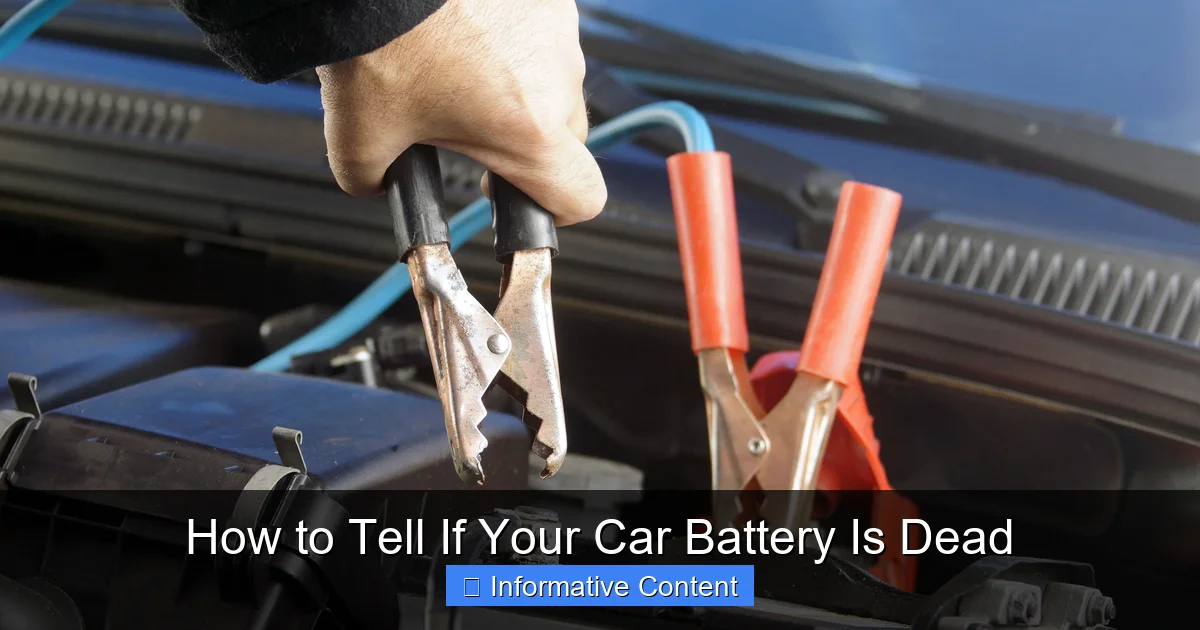
Visual guide about How to Tell If Your Car Battery Is Dead
Image source: racshop.co.uk
While the above signs are pretty clear, sometimes your car gives you more subtle hints before your car battery is dead. Keeping an eye (and an ear) out for these can help you catch a problem before you’re stranded.
Corroded Battery Terminals
Pop the hood and take a look at your battery. Do you see a white, blue, or green powdery substance built up around the positive (+) and negative (-) terminals? This is corrosion, and it can severely restrict the flow of electricity between the battery and your car’s electrical system. Even if the battery itself has some charge, corrosion can prevent that power from reaching the starter motor or other components. While not always a direct sign that your car battery is dead, heavy corrosion can prevent it from working properly, mimicking a dead battery. It’s a good idea to clean these regularly with a wire brush and a baking soda and water solution.
Swollen or Bloated Battery Case
A healthy car battery has a nice, rectangular shape. If you notice that the battery case looks swollen, bloated, or bulging, especially on the sides or top, that’s a serious red flag. This can happen due to internal damage, overcharging, or exposure to extreme temperatures (both hot and cold). A swollen battery is often nearing its end of life and could even be dangerous, as it might be leaking acid or building up gas. If you see this, your car battery is dead or certainly dying, and you should replace it immediately.
Foul Smell (Sulfur or Rotten Eggs)
This is another serious sign. If you open your hood and detect a strong, sulfur-like odor, often described as smelling like rotten eggs, it usually means your battery is leaking battery acid or has internal damage. This smell is hydrogen sulfide gas escaping from the battery. It’s not only unpleasant but also indicates a significant problem that means your car battery is dead or failing rapidly, and it needs to be handled with care and replaced.
Slow Crank, Hesitation
Before your car battery is completely dead, it might give you a warning with a slow crank. When you turn the key, the engine struggles to turn over, taking longer than usual, and sounds weak or sluggish. It might sound like a “rrrr-rrrr-rrrr” instead of an immediate “vroom!” This means the battery has *some* power, but not enough to deliver a quick, strong jolt to get the engine going efficiently. It’s on its last legs, and you should probably replace it soon before your car battery is dead for good.
Using Your Car’s Dashboard Warnings
Modern cars are smart and often try to tell you something is wrong before you get stranded. Pay attention to your dashboard lights!
The Battery Warning Light
This is perhaps the most direct warning your car can give you. If you see an icon shaped like a car battery illuminate on your dashboard while driving (not just during startup), it means there’s an issue with your car’s charging system. This doesn’t necessarily mean your car battery is dead right at that moment, but it indicates the alternator isn’t charging it properly. If the alternator isn’t working, your car is running solely on battery power, and it will eventually die. If this light comes on, get it checked immediately, as your car battery is dead to charging, and will soon be completely dead.
Other Electrical System Warnings
Sometimes, a failing or dead car battery can trigger other seemingly unrelated warning lights. Because so many systems rely on stable voltage, low power can cause erratic behavior in various electronic components. If you notice multiple warning lights flickering, or systems like your anti-lock brakes (ABS) or traction control (TCS) acting up along with starting issues, it could all point back to an underlying electrical problem stemming from a dying or dead car battery.
Testing Your Battery with Tools: Get Definitive Answers
While the signs are helpful, sometimes you need a definitive answer. This is where a few simple tools come in handy.
Using a Voltmeter (Multimeter)
A voltmeter, also known as a multimeter, is your best friend when trying to figure out if your car battery is dead. It’s a relatively inexpensive tool that can give you a precise reading of your battery’s voltage.
- Turn Everything Off: Make sure your car is completely off, and all lights and accessories are disconnected or turned off.
- Connect the Voltmeter: Connect the red positive (+) lead of the voltmeter to the positive terminal of the battery and the black negative (-) lead to the negative terminal.
- Read the Voltage:
- 12.6 volts or higher: Your battery is fully charged and healthy.
- 12.4 volts: Your battery is about 75% charged.
- 12.2 volts: Your battery is about 50% charged.
- Below 12.0 volts: Your battery is significantly discharged and likely needs a charge or replacement. If it’s much lower, like 10 volts or less, your car battery is dead or has a bad cell.
- Test While Cranking (Optional, but insightful): Have someone try to start the car while you watch the voltmeter. If the voltage drops significantly below 10 volts during cranking, it indicates a weak or dying battery that can’t supply enough current to the starter.
This simple test can tell you a lot about the health of your battery and if your car battery is dead.
Load Testing Your Battery
A load test is a more advanced diagnostic that puts the battery under a simulated “load” to see how well it performs under stress. While some advanced DIYers might have a load tester, it’s typically a test performed by mechanics or auto parts stores. They connect a special device that draws a significant amount of current from the battery, mimicking the demand of starting an engine. If the voltage drops below a certain threshold during the test, it confirms that the battery is weak or your car battery is dead. Most auto parts stores will perform this test for free, which is very helpful when you suspect your car battery is dead.
Professional Battery Check
If you’re unsure about using a voltmeter or don’t have one, don’t hesitate to visit an auto parts store or a trusted mechanic. They have specialized equipment that can not only test the voltage but also assess the battery’s Cold Cranking Amps (CCA), which is a crucial indicator of its ability to start an engine in cold weather. They can definitively tell you if your car battery is dead or simply needs a charge.
Differentiating Between a Dead Battery and Other Issues
It’s easy to jump to the conclusion that your car battery is dead, but sometimes other issues can present very similar symptoms. Knowing the differences can save you from replacing a perfectly good battery!
Starter Motor Problems
The starter motor is what physically spins the engine to get it running. If the starter motor is faulty, you might hear a single, loud click when you turn the key, followed by nothing. Or you might hear a grinding noise. The key difference here is that if your starter is the problem, all your lights, radio, and other electronics will still work perfectly fine. The battery has power, but it can’t engage the starter. If your car battery is dead, usually everything electrical will be affected.
Alternator Issues
The alternator is responsible for recharging your car battery while the engine is running and powering the electrical system. If your alternator fails, your car will run solely on battery power until your car battery is dead. Symptoms include the battery warning light coming on (as mentioned), headlights dimming while driving, or your car dying suddenly while you’re on the road. The car might start fine after a jump, but then die again shortly after or refuse to start the next time because the battery wasn’t recharged. So, while your car battery might appear dead, the root cause is the alternator.
Fuel System Problems
If your car cranks normally but just won’t start (you hear the engine trying to turn over, but it doesn’t catch), it could be a fuel system issue. This might mean you’re out of gas, have a clogged fuel filter, or a failing fuel pump. In this case, your lights and electronics will work, and the engine will crank with its usual vigor. This is distinctly different from a dead car battery where the car won’t crank at all or does so very slowly.
Immobilizer or Key Fob Issues
Modern cars have security systems (immobilizers) that prevent the car from starting without the correct key or key fob. If your key fob battery is dead, or there’s an issue with the immobilizer system, your car might crank but not start, or it might not respond at all. Again, the lights and electronics usually work fine in this scenario, differentiating it from a truly dead car battery.
What to Do When Your Car Battery Is Dead
So, you’ve diagnosed it: your car battery is dead. Now what?
Jump-Starting Your Car
This is often the quickest solution if your car battery is dead but otherwise healthy. You’ll need jumper cables and another vehicle with a working battery. Follow the instructions carefully to avoid damage: connect positive to positive, then negative of the good battery to a bare metal surface on the dead car (not the dead battery’s negative terminal itself). Let it charge for a few minutes, then try to start your car. If it starts, drive it around for at least 20-30 minutes to let the alternator recharge the battery.
Calling Roadside Assistance
If you’re not comfortable jump-starting, or don’t have another vehicle, roadside assistance is your best bet. Most services will come out, attempt to jump-start your car, and if necessary, tow you to a repair shop.
Replacing the Battery
If your battery is old, swollen, leaking, or consistently dies even after a jump, it’s time for a replacement. Most auto parts stores can help you find the right battery for your car and might even install it for you. Consider the age of your battery (they typically last 3-5 years) when deciding if a jump start is a temporary fix or if your car battery is dead for good.
Conclusion
Having your car refuse to start is never fun, but knowing how to tell if your car battery is dead can turn a confusing, stressful situation into a manageable one. By paying attention to the sounds, sights, and smells your car gives off, and by using simple diagnostic tools like a voltmeter, you can confidently determine if a dead car battery is the root of your troubles.
Remember, a little proactive maintenance, like cleaning battery terminals and having your battery tested periodically, can go a long way in preventing those dreaded no-start mornings. So, the next time your car acts up, you’ll be equipped with the knowledge to diagnose the problem, understand whether your car battery is dead, and get back on the road with confidence.
Frequently Asked Questions
How long does a car battery typically last?
Car batteries typically last between 3 to 5 years, depending on climate, driving habits, and maintenance. Extreme temperatures and frequent short trips can shorten their lifespan.
Can a car battery die without any warning signs?
While often there are warning signs like slow cranking, a car battery can sometimes die suddenly, especially if it has an internal short or a sudden cell failure. Regular checks can help catch issues early.
Is it safe to jump-start a car with a swollen battery?
No, it is generally not safe to jump-start a car with a swollen or leaking battery. A swollen battery indicates internal damage and could potentially explode during a jump start, posing a serious safety risk.
Why would my battery be dead if I just drove the car yesterday?
Even if you drove recently, a car battery can die due to several reasons, such as a faulty alternator failing to charge it, a parasitic drain (something constantly drawing power), extreme temperature changes, or simply an old battery reaching the end of its life.
Can cold weather make my car battery seem dead?
Yes, cold weather significantly reduces a battery’s capacity and its ability to deliver current (CCA). A battery that might start your car fine in warm weather could struggle or seem completely dead when temperatures drop significantly.
What is a parasitic drain, and how can it cause a dead battery?
A parasitic drain occurs when electrical components continue to draw power from your car battery even after the car is turned off. Common culprits include glove compartment lights, faulty alarms, or aftermarket accessories. Over time, this constant drain can completely deplete your car battery, leaving it dead.