Safely disconnecting a car battery is a crucial skill for any car owner, essential for various maintenance tasks, repairs, or long-term storage. Always prioritize safety by wearing protective gear and understanding the correct sequence: negative terminal first, then positive. Following these steps diligently prevents electrical shorts, personal injury, and damage to your vehicle’s sensitive electronics, ensuring peace of mind throughout the process.
Ever found yourself needing to work on your car, only to realize the first step is to cut the power? Or maybe you’re planning to store your vehicle for a while and want to prevent battery drain? Learning how to safely disconnect a car battery is one of those fundamental skills that every car owner should have in their toolkit. It’s not just about getting the job done; it’s about doing it right to protect yourself, your car, and your wallet.
While the process might seem simple at first glance, there are crucial safety precautions and a specific sequence of steps that you absolutely must follow. Ignoring these can lead to serious consequences, from painful electrical shocks and dangerous sparks to costly damage to your car’s sensitive electronic systems. But don’t worry, we’re here to guide you through every step of how to safely disconnect a car battery, making sure you feel confident and secure throughout the process. Let’s get started and demystify this essential maintenance task!
Key Takeaways
- Safety First: Always wear appropriate personal protective equipment (PPE) like safety glasses and gloves, and remove any metal jewelry before attempting to disconnect your car battery.
- Negative First, Positive Last: When disconnecting, always start with the negative (-) terminal, then the positive (+). When reconnecting, reverse this: positive (+) first, then negative (-). This sequence minimizes the risk of short circuits and sparks.
- Gather the Right Tools: Ensure you have the necessary tools, including an appropriately sized wrench, battery terminal cleaner, wire brush, and potentially a memory saver for modern vehicles to prevent loss of electronic settings.
- Understand Your Vehicle: Consult your car’s owner’s manual to locate the battery, understand specific safety warnings, and check for any unique procedures, especially for vehicles with start-stop technology or batteries located away from the engine bay.
- Inspect and Clean: Use the opportunity to inspect battery terminals for corrosion and clean them thoroughly with a wire brush and a baking soda solution to ensure good electrical contact and prolong battery life.
- Work in a Safe Environment: Disconnect your battery on a level surface, ensure good ventilation, and keep potential ignition sources away from the battery to prevent gas buildup.
Quick Answers to Common Questions
Which battery terminal should I disconnect first?
You should always disconnect the negative (-) terminal first when working on your car battery to prevent accidental short circuits and sparks.
What tools do I need to disconnect a car battery?
Typically, you’ll need a wrench (usually 10mm, 13mm, or 1/2 inch), safety glasses, gloves, and a wire brush for cleaning corrosion.
Can I get shocked disconnecting a car battery?
While the voltage isn’t high enough to deliver a fatal shock, you can experience a painful burn or create dangerous sparks if you short-circuit the battery, which is why proper technique and safety gear are crucial.
How long should I disconnect the battery to reset the car computer?
For a “hard reset” of the car’s computer, disconnecting the battery for 15-30 minutes is usually sufficient. Remember this may reset some electronic settings.
Is it safe to touch battery acid?
No, battery acid is highly corrosive and can cause severe burns to skin and eyes. Always wear protective gloves and safety glasses, and neutralize any spills immediately with a baking soda and water solution.
📑 Table of Contents
Why Disconnect Your Car Battery?
Before we dive into the “how-to,” it’s helpful to understand the various reasons why you might need to safely disconnect a car battery. Knowing the ‘why’ can help you appreciate the importance of doing it correctly.
Performing Vehicle Maintenance or Repairs
This is perhaps the most common reason. Anytime you’re working on any electrical component of your car, from replacing a headlight bulb to tinkering with the alternator or starter motor, disconnecting the battery is a non-negotiable safety step. It eliminates the risk of accidental electrical shorts, which can damage components, cause sparks, or even lead to severe burns. Think of it as hitting the “off” switch before you start working on any household appliance – it’s just smart practice.
Long-Term Vehicle Storage
Are you planning to store your classic car for the winter, or maybe you’re going on a long trip and your daily driver will be sitting idle for weeks? Even when a car is off, its various electronic systems (clocks, alarm systems, memory settings) draw a small amount of power, known as parasitic drain. Over time, this drain can completely deplete your battery, leaving you with a dead battery when you return. Learning how to safely disconnect a car battery prevents this slow drain, keeping your battery healthy and ready for action when you need it next.
Resetting Your Car’s Computer (ECU)
Sometimes, your car’s onboard computer (Engine Control Unit or ECU) might need a “hard reset” to clear fault codes, reset adaptive learning, or resolve minor electrical glitches. Disconnecting the battery for a short period, typically 15-30 minutes, can often achieve this. However, be aware that this might also reset radio presets, clock settings, and other personalized electronic configurations, which is why a memory saver (discussed later) can be useful for modern vehicles.
Replacing the Battery
Naturally, if you’re installing a new battery, the old one must first be safely disconnected and removed. This process directly involves knowing the correct steps for disconnection and, later, reconnection.
Essential Safety Precautions (Don’t Skip This!)
Safety isn’t just a suggestion; it’s a requirement when working with car batteries. They contain corrosive acid and produce flammable gases. Taking a few moments to prepare can prevent serious injury. Always remember, when you want to safely disconnect a car battery, your personal safety comes first.
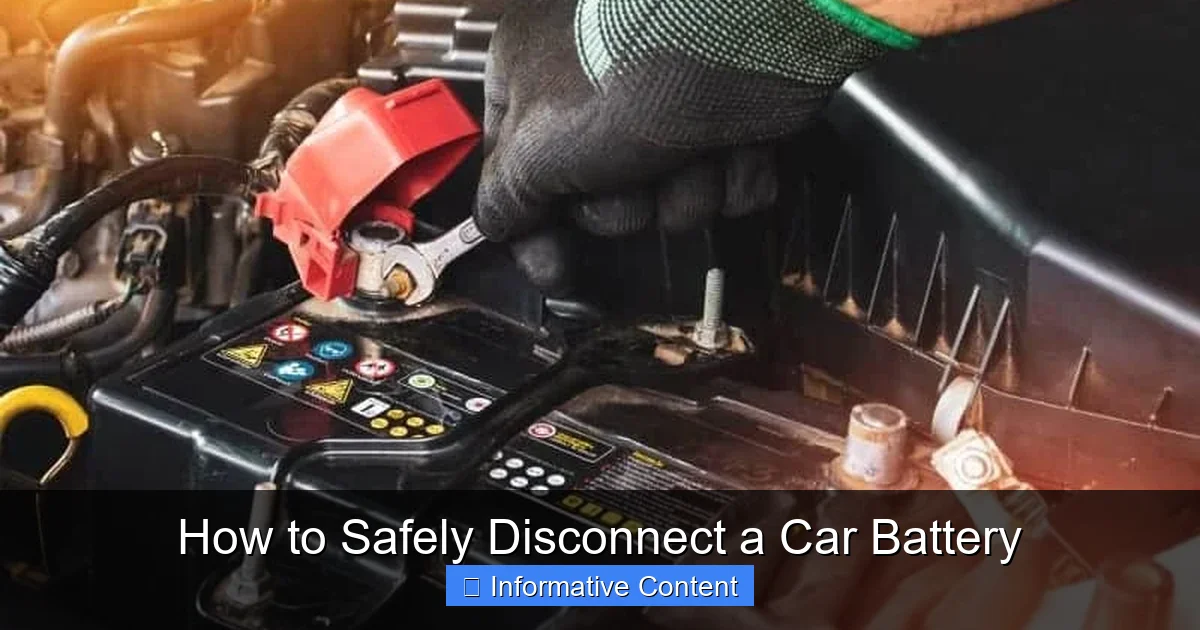
Visual guide about How to Safely Disconnect a Car Battery
Image source: rxmechanic.com
Wear Personal Protective Equipment (PPE)
- Safety Glasses: Battery acid is highly corrosive and can cause permanent blindness. Always wear ANSI-approved safety glasses or goggles to protect your eyes from splashes or fumes.
- Gloves: Acid-resistant gloves (like nitrile or rubber) are essential to protect your hands from battery acid and prevent electrical shocks.
Remove Jewelry and Loose Clothing
Metal jewelry (rings, watches, bracelets, necklaces) can accidentally short-circuit the battery terminals, leading to severe burns and damage to the jewelry itself. Always remove all metal jewelry before starting. Similarly, tie back long hair and secure any loose clothing that could get caught in moving parts or touch terminals.
Ensure Proper Ventilation
Car batteries, especially during charging or discharge, can emit hydrogen gas, which is highly flammable and explosive. Work in a well-ventilated area to prevent gas buildup. Avoid enclosed spaces like garages without open doors or windows.
Keep Ignition Sources Away
No smoking, open flames, or sparks near the battery! The hydrogen gas can ignite easily. Ensure your work area is free of potential ignition sources.
Work on a Level Surface
Park your car on a flat, stable surface. Engage the parking brake and put the transmission in “Park” (automatic) or “Neutral” (manual). This prevents the car from rolling unexpectedly while you’re working.
Consult Your Car’s Owner’s Manual
Modern vehicles can have complex electrical systems, and some batteries might be located in unusual places (under the back seat, in the trunk). Always check your car’s owner’s manual for specific instructions, warnings, or unique procedures related to safely disconnecting your car battery.
Gathering Your Tools and Supplies
Having the right tools ready before you start will make the job much smoother and safer. Here’s what you’ll typically need to safely disconnect a car battery:
- Wrench Set (or Adjustable Wrench): You’ll need a wrench to loosen the battery terminal nuts, usually 10mm, 13mm, or 1/2 inch. A ratcheting wrench can be helpful.
- Battery Terminal Cleaner/Wire Brush: Essential for scrubbing away corrosion from terminals and posts.
- Battery Post Cleaner: A specialized tool that cleans the inside of the battery terminal clamps and the battery posts.
- Battery Terminal Puller (Optional but Recommended): Some battery terminals can be stubborn. A puller can safely remove them without damaging the battery post.
- Baking Soda and Water Solution: Mix a tablespoon of baking soda with a cup of water. This neutralizes battery acid.
- Rags or Old Towels: For cleaning and wiping up spills.
- Battery Terminal Protectors (Optional): Felt washers or grease can help prevent future corrosion.
- Memory Saver (Optional but Recommended for Modern Cars): This device plugs into your car’s OBD-II port or cigarette lighter and provides a small current to maintain power to the computer memory while the main battery is disconnected. This prevents loss of radio presets, clock, and other learned settings.
- Flashlight or Headlamp: If working in a dimly lit area.
The Step-by-Step Guide to Safely Disconnecting Your Car Battery
Now that you’re prepared and armed with the right tools, let’s go through the steps to safely disconnect a car battery.
1. Prepare Your Vehicle
- Turn Off All Accessories: Ensure your headlights, radio, interior lights, and any other electrical accessories are off.
- Engine Off and Key Removed: Turn off the engine and remove the key from the ignition. For push-button start cars, ensure the vehicle is completely off.
- Parking Brake Engaged: Set your parking brake firmly.
- Hood Open and Secured: Open the hood and secure it with the prop rod.
2. Locate the Battery
For most cars, the battery is located in the engine bay. However, some vehicles might have it in the trunk, under the rear seat, or even under the fender. If you can’t find it, consult your owner’s manual.
3. Identify the Terminals (Negative First!)
This is the most critical step for safety. You’ll see two terminals on top of the battery:
- Negative Terminal (-): This terminal is usually marked with a “minus” symbol (-) and often has a black cable connected to it. This cable typically goes to the car’s chassis or engine block.
- Positive Terminal (+): This terminal is usually marked with a “plus” symbol (+) and often has a red cable connected to it. This cable typically goes to the starter motor and fuse box.
Always, always disconnect the negative terminal first. Why? Because the negative terminal is essentially the car’s ground. If you accidentally touch your wrench to a metal part of the car while loosening the positive terminal, you could create a dangerous spark or short circuit. By disconnecting the negative first, you break this ground path, making it much safer to then handle the positive terminal.
4. Disconnect the Negative Terminal
- Using your wrench, loosen the nut on the clamp that secures the negative cable to the negative battery post. You usually only need to loosen it a few turns, not remove it completely.
- Once loose, twist and pull the negative cable connector straight up off the battery post. If it’s stuck, a battery terminal puller can help.
- Once disconnected, move the cable away from the battery so it cannot accidentally touch the negative post again or any metal part of the car. You can secure it with a plastic zip tie or a piece of cloth to prevent accidental contact.
5. Disconnect the Positive Terminal
- Now that the negative cable is safely out of the way, you can proceed to the positive terminal.
- Using your wrench, loosen the nut on the clamp that secures the positive cable to the positive battery post.
- Twist and pull the positive cable connector straight up off the battery post.
- Again, move this cable away from the battery to prevent accidental contact.
6. Remove the Battery (If Necessary)
If your goal is to remove the battery (for replacement, cleaning, or charging), you’ll now need to:
- Remove the Hold-Down Clamp: Batteries are usually secured by a clamp or strap at the base or over the top. Loosen or remove this clamp according to your car’s design.
- Carefully Lift the Battery: Batteries are heavy! Lift with your legs, not your back, and be mindful of your surroundings. Some batteries have handles, which are helpful.
Post-Disconnection Best Practices
With the battery safely disconnected, it’s a great opportunity to perform some quick maintenance.
Clean Terminals and Posts
If you noticed any white, powdery, or blue-green corrosion, now is the time to clean it. Mix your baking soda and water solution and apply it to the corroded areas. The solution will bubble as it neutralizes the acid. Use your wire brush or battery post cleaner to scrub away the corrosion until the terminals and posts are shiny metal. Rinse with clean water and dry thoroughly with a rag.
Inspect Cables
Check the battery cables for any signs of wear, fraying, or cracking in the insulation. Damaged cables should be replaced to ensure good electrical flow and safety.
Battery Storage (If Applicable)
If you’ve removed the battery for long-term storage, store it in a cool, dry place away from direct sunlight and extreme temperatures. A concrete floor is generally fine; the myth about batteries discharging faster on concrete is largely outdated with modern battery casings. Consider using a trickle charger or battery maintainer to keep it topped up, especially during extended storage periods, to prevent sulfation and prolong its lifespan.
Reconnecting Your Car Battery Safely
Once you’re done with your maintenance or repair, it’s time to reconnect the battery. Just like disconnecting, there’s a specific order to follow for safety. When you want to safely reconnect a car battery, the sequence is reversed: positive first, then negative.
1. Prepare for Reconnection
- Clean Terminals: Ensure both the battery posts and the cable clamps are clean and free of corrosion.
- Position Battery: If you removed the battery, place it back in its tray and secure it with the hold-down clamp.
2. Reconnect the Positive Terminal
- Take the red positive cable and place its connector onto the positive (+) battery post.
- Tighten the nut with your wrench until the connection is snug. Don’t overtighten, as this can strip the threads or damage the battery post, but ensure there’s no wiggle.
3. Reconnect the Negative Terminal
- Take the black negative cable and place its connector onto the negative (-) battery post.
- Tighten the nut with your wrench until the connection is snug. Again, avoid overtightening.
4. Secure and Test
- Apply Anti-Corrosion Product (Optional): You can apply a thin layer of dielectric grease or use anti-corrosion felt washers over the terminals to help prevent future corrosion.
- Close Hood: Ensure all tools are clear of the engine bay, then safely close your car’s hood.
- Test: Start your car. If you used a memory saver, your settings should be intact. If not, you may need to reset your clock, radio presets, and potentially perform a drive cycle for your car’s computer to relearn certain parameters.
And there you have it! You’ve successfully learned how to safely disconnect a car battery and reconnect it. This skill will not only save you time and money but also empower you to tackle more DIY car projects with confidence. Remember, safety is always paramount, so take your time, follow these steps, and don’t hesitate to consult your owner’s manual for specific vehicle details.
Frequently Asked Questions
What happens if I disconnect the positive terminal first?
If you disconnect the positive terminal first and your wrench accidentally touches a grounded metal part of the car, it will create a direct short circuit. This can result in a large spark, potential burns, and damage to the battery or your car’s electrical system due to the sudden rush of high current.
Do I need a memory saver when disconnecting the battery?
For modern vehicles, a memory saver is highly recommended. It provides a temporary power source to your car’s computer and electronics, preventing the loss of radio presets, clock settings, learned engine parameters, and other personalized settings that would otherwise reset when the main battery is disconnected.
How do I clean corrosion off battery terminals?
To clean corrosion, first safely disconnect the battery. Then, mix a solution of baking soda and water to neutralize the acid. Apply it to the corroded areas, let it bubble, and then scrub with a wire brush or battery post cleaner until the terminals are clean. Rinse with clear water and dry thoroughly.
Can I store a car battery on a concrete floor?
Yes, you can safely store a modern car battery on a concrete floor. The old myth about concrete draining batteries applied to older battery casings that were porous. Modern plastic battery casings are not affected, so storing it on concrete won’t cause it to discharge faster.
What should I do if battery acid gets on my skin or eyes?
If battery acid gets on your skin, rinse the affected area immediately and thoroughly with plenty of water for at least 15-20 minutes. If it gets in your eyes, flush them with water for the same duration and seek immediate medical attention, even if irritation seems minor.
How tight should battery terminals be?
Battery terminals should be snug and secure, allowing no wiggle when you try to move the cables. Avoid overtightening, as this can strip the threads of the nut or damage the battery post itself. A good rule of thumb is to tighten until you feel resistance, then give it an additional quarter to half turn.