Don’t get stranded! Learning how to tell if your car battery is dying is crucial for proactive car maintenance. Look for symptoms like a slow engine crank, dim headlights, or flickering dashboard lights. Physical signs like corrosion or a swollen battery case also indicate a failing battery, urging you to test its health and consider a replacement soon.
Picture this: You hop into your car, ready to start your day, turn the key, and… nothing. Or maybe just a slow, groaning sound that quickly fades. Few things are as frustrating as a dead car battery, especially when you’re in a hurry. It’s a common scenario, but it doesn’t have to be your reality.
Your car battery is the unsung hero under the hood, providing the initial jolt of electricity needed to start your engine and power all your vehicle’s electrical components when the engine isn’t running. But like all good things, batteries don’t last forever. They degrade over time, losing their ability to hold a charge efficiently. The good news is that your car often gives you plenty of warning signs before it completely quits. Learning how to tell if my car battery is dying can be the difference between a quick fix and being stranded on the side of the road.
This article will walk you through the most common symptoms and practical tests to help you identify a dying car battery. We’ll cover everything from the obvious electrical issues to subtle physical clues, empowering you to take action before your car leaves you high and dry. Let’s dive into how to tell if my car battery is dying.
Key Takeaways
- Slow Crank & Dim Lights: A sluggish engine start or unusually dim headlights and interior lights are primary indicators of a weakening battery.
- Electrical Glitches: Malfunctioning accessories such as slow power windows, an unreliable radio, or flickering dashboard lights can signal insufficient power from your battery.
- Physical Clues: Visibly inspect your battery for signs like white or blue-green corrosion on terminals, a swollen or bloated battery case, or a distinct rotten egg smell. These are serious warning signs.
- Battery Age: Car batteries typically last 3-5 years. If your battery is nearing or past this age, it’s significantly more prone to failure, especially in extreme temperatures.
- Testing is Key: While simple at-home voltage checks with a multimeter can give you an idea, a professional load test from an auto parts store or mechanic offers the most accurate assessment of your battery’s health.
- Proactive Steps: Addressing warning signs quickly is essential. Knowing how to tell if my car battery is dying can save you from inconvenient breakdowns and potential safety hazards.
Quick Answers to Common Questions
Question 1?
A car battery typically lasts between 3 to 5 years, though this can vary based on climate, driving habits, and maintenance.
Question 2?
The immediate sign of a dying car battery is often a slow engine crank when you try to start your car, making a sluggish “rrruh-rrruh” sound.
Question 3?
Yes, extreme hot and cold weather can significantly affect your battery’s life, accelerating its degradation and reducing its ability to hold a charge.
Question 4?
No, it is NOT safe to jump start a swollen or leaking battery. This indicates serious internal damage and poses a fire or explosion risk. It should be replaced immediately by a professional.
Question 5?
Yes, you can perform a basic voltage test at home using a multimeter. A healthy, fully charged battery should read around 12.6 volts or higher when the engine is off.
📑 Table of Contents
The Slow Crank and Dim Lights – Classic Symptoms
These are often the first and most recognizable indicators that your car battery is dying. They’re direct consequences of the battery struggling to deliver the necessary power.
Slow Engine Crank
This is perhaps the most common and tell-tale sign that your car battery is dying. When you turn the key or push the start button, does your engine take longer than usual to turn over? Does it sound sluggish, like it’s struggling, making a “rrruh-rrruh-rrruh” sound instead of a quick “vroom”? This slow cranking is your battery fighting to deliver enough power to the starter motor. A healthy battery should crank your engine quickly and confidently. If it sounds like your car is yawning awake, it’s a big clue how to tell if my car battery is dying.
Dim Headlights and Interior Lights
Another strong indicator is if your car’s lights appear dimmer than usual. This is especially noticeable when the engine is off or idling. Try turning on your headlights before starting the car. If they look weak or dull, it means your battery isn’t providing its full voltage. Once the engine starts, the alternator takes over powering the lights and charging the battery, so the lights might brighten up. However, if they dim significantly or flicker when the engine is off or just barely started, it’s a sign your car battery is dying and struggling to maintain a consistent output.
Warning Lights on the Dashboard
Modern cars have a sophisticated network of sensors. While the battery warning light (often shaped like a battery icon) is the most obvious sign, other warning lights can also illuminate if your battery is weak. Low voltage can confuse your car’s computer, leading to various system errors. If your battery light comes on while driving, it usually means your alternator isn’t charging the battery properly, or the battery itself is failing. Don’t ignore these dashboard warnings; they are crucial signals on how to tell if my car battery is dying.
Electrical Quirks and Malfunctions
Beyond starting the engine and powering lights, your car battery is responsible for many other electrical components. When it starts to fail, these systems might behave erratically.
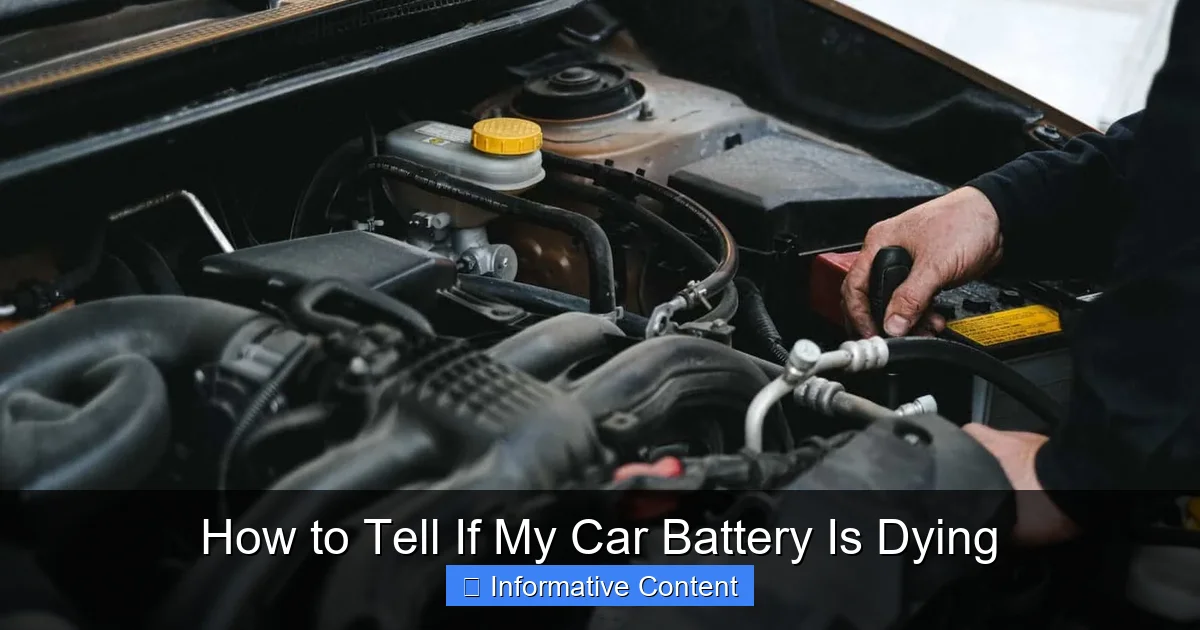
Visual guide about How to Tell If My Car Battery Is Dying
Image source: autoily.com
Power Windows and Seats Moving Slowly
Have you noticed your power windows taking their sweet time to go up or down? Or maybe your power seats adjust with a noticeable drag? This sluggishness often points to an insufficient power supply. These motors require a good amount of consistent power to operate smoothly. If your car battery is dying, it won’t be able to provide that steady stream of electricity, leading to noticeably slower operation.
Issues with Radio, GPS, or Infotainment
Your car’s entertainment and navigation systems are quite power-hungry. If your radio’s presets keep resetting, your GPS takes longer to boot up, or your infotainment screen flickers or goes blank intermittently, it could be due to a failing battery. These systems need stable voltage to function correctly. When your battery can’t deliver that, it manifests as these frustrating electronic glitches. This is a subtle but clear way to tell if my car battery is dying.
Intermittent or Non-Functioning Accessories
Think about other electrical accessories in your car: wipers, heated seats, USB chargers, or even the automatic door locks. If these components start working intermittently, weakly, or stop working altogether, and there’s no obvious fuse issue, a weak battery could be the culprit. These seemingly minor inconveniences can add up to a significant warning that your car battery is dying and struggling to power everything it’s supposed to.
Physical Signs of Battery Degradation
Sometimes, the signs aren’t just electrical; they’re visible to the naked eye. A quick peek under the hood can reveal physical symptoms that clearly indicate a car battery is dying.
Corroded Battery Terminals
Open your hood and take a look at your battery. Do you see a white, blue-green, or grayish powdery substance building up around the battery terminals (where the cables connect)? This is corrosion. While some minor corrosion can be normal and cleaned, excessive buildup impedes the flow of electricity, making it harder for your battery to charge and discharge efficiently. Heavy corrosion is a strong signal that your car battery is dying or at least struggling, and it needs attention.
Swollen or Bloated Battery Case
Carefully inspect the battery case itself. Does it look swollen, bloated, or bulging on the sides or top? This is a very serious sign of internal battery damage, often caused by overcharging, excessive heat, or freezing. A swollen battery indicates that the internal components are deteriorating and gases are building up inside. If you see this, do not attempt to jump start it or try to charge it further. It’s a significant safety hazard and a definitive sign that your car battery is dying and needs immediate replacement by a professional.
Foul, Rotten Egg Smell
If you catch a pungent odor that smells distinctly like rotten eggs around your car, especially when you open the hood, pay attention. This smell is hydrogen sulfide gas, which is released when the battery acid is leaking or when the battery is overheating or overcharging. This indicates internal damage and a potential leak of corrosive battery acid. It’s a hazardous situation and a clear sign that your car battery is dying and requires immediate professional attention.
Leakage Around the Battery
Alongside the rotten egg smell, you might also see actual liquid seeping out of the battery case. This is battery acid, which is extremely corrosive and dangerous. Any visible leakage is a critical warning sign that the battery’s casing or seals have failed. If you spot any leakage, avoid touching it, and seek professional help right away. This is another unmistakable way to tell if my car battery is dying and is a safety concern.
Age is More Than Just a Number
Even without visible symptoms, the age of your battery plays a huge role in its reliability. Understanding its typical lifespan and the factors that shorten it can help you anticipate problems.
The Typical Lifespan of a Car Battery
On average, a car battery lasts between 3 to 5 years. This isn’t a hard and fast rule, but it’s a good general guideline. If your battery is approaching or has passed its fifth birthday, you should be extra vigilant for any signs of weakness. Even if it seems fine, an older battery is simply less reliable and more prone to sudden failure, making it difficult to tell if my car battery is dying without testing.
Factors Affecting Battery Longevity
- Climate: Extreme temperatures, both hot and cold, are battery killers. Intense heat can accelerate the breakdown of internal components, while severe cold reduces a battery’s cranking power.
- Driving Habits: Frequent short trips (less than 20 minutes) don’t allow the alternator enough time to fully recharge the battery, leading to a chronically undercharged state. Conversely, cars that sit idle for long periods can also suffer from battery drain.
- Vibrations: A battery that isn’t securely fastened can experience excessive vibrations, which can damage its internal plates and connections.
- Parasitic Drains: Sometimes, electrical components in your car can draw a small amount of power even when the car is off, slowly draining the battery over time.
- Lack of Maintenance: Not cleaning terminals or checking electrolyte levels (in maintainable batteries) can also shorten battery life.
Testing Your Battery’s Health at Home
While observation is key, sometimes you need more definitive proof. There are simple ways to test your battery’s health at home, and professional options for a more thorough assessment.
Using a Multimeter to Check Voltage
A multimeter is an inexpensive tool that can give you a good indication of your battery’s charge. Here’s how to use it:
- Set your multimeter to DC Volts (usually marked with a “V” and a straight line).
- Touch the red probe to the positive (+) battery terminal and the black probe to the negative (-) battery terminal.
- A fully charged, healthy battery (with the engine off) should read around 12.6 volts or higher.
- If the reading is 12.4 volts, your battery is only about 75% charged. Below 12 volts usually indicates a severely discharged or failing battery.
- Now, have someone start the car while you watch the multimeter. The voltage shouldn’t drop much below 10 volts during cranking. A significant drop (below 9.6V) indicates a weak battery.
- Once the car is running, check the voltage again. It should read between 13.7 and 14.7 volts. This indicates your alternator is working correctly and charging the battery. If it’s outside this range, you might have an alternator issue, not just a dying battery.
Load Testing (Brief Mention/Recommendation)
While a multimeter checks voltage, a load test evaluates your battery’s ability to hold that voltage under a heavy electrical load, mimicking the strain of starting your engine. This is the most accurate way to assess a battery’s true health and its ability to deliver the necessary current (Cold Cranking Amps or CCA). Load testers are specialized tools that most DIYers don’t own. For an accurate load test, it’s best to visit an auto parts store or a mechanic.
Professional Battery Checks
Many auto parts stores offer free battery testing services. They have professional equipment that can perform a comprehensive load test, checking both voltage and cold cranking amps (CCA). This will give you a definitive answer on whether your car battery is dying and if it needs replacement. This is highly recommended, especially if you’re unsure about your at-home test results or if your battery is showing multiple warning signs.
What to Do When You Suspect a Dying Battery
Once you’ve confirmed or strongly suspect that your car battery is dying, it’s time to take action. Ignoring the signs will only lead to an inevitable breakdown.
Jump Starting Safely
If your battery has died completely, a jump start can get you going again. However, it’s crucial to do this safely and correctly to avoid damage to either vehicle or injury. Always consult your car’s owner manual for specific instructions. Remember the correct order: positive to positive, negative to a ground point on the dead car (not directly to the negative terminal), and then negative to negative on the donor car. Never attempt to jump start a swollen, leaking, or corroded battery, as it could be dangerous.
Getting a Replacement
A jump start is a temporary fix. If your car battery is dying, the only long-term solution is replacement. You’ll need to know your car’s make, model, and year to get the correct battery type and size. Most modern cars use maintenance-free batteries. Consider the Cold Cranking Amps (CCA) rating; higher CCA is better, especially in colder climates. You can replace it yourself if you’re comfortable, but many auto parts stores and mechanics offer installation services, and they’ll also properly recycle your old battery.
Preventative Maintenance Tips
You can extend your new battery’s life and delay the question of how to tell if my car battery is dying again with a few simple habits:
- Clean Terminals: Regularly clean any corrosion off your battery terminals using a battery brush and a mixture of baking soda and water.
- Check Water Levels: If you have a maintainable (non-sealed) battery, check the electrolyte levels periodically and top up with distilled water if needed.
- Keep it Charged: If your car sits for long periods, consider using a trickle charger or battery maintainer to keep it topped up.
- Secure Battery: Ensure your battery is securely fastened in its tray to prevent vibrations.
- Limit Short Trips: If possible, take longer drives regularly to allow your alternator to fully charge the battery.
Conclusion
Nobody wants to be caught off guard by a dead car battery. Fortunately, your vehicle usually provides clear signals when its power source is starting to falter. By understanding how to tell if my car battery is dying – recognizing symptoms like slow cranking, dim lights, electrical quirks, and physical signs of degradation – you can take proactive steps. Regularly checking your battery’s age and performing simple voltage tests can further empower you.
Don’t wait until your car won’t start at all. Pay attention to these warning signs, and if you suspect your car battery is dying, get it tested or replaced promptly. A little vigilance can save you a lot of hassle, keep your car running reliably, and ensure your peace of mind on the road.
🎥 Related Video: DEAD BAD CAR BATTERY SYMPTOMS – How To Tell If Your Battery is Dead
📺 YOUCANIC
Buy YOUCANIC Pro Scanner https://www.youcanic.com/scanner/ Get Factory Service Repair Manuals & Specs …
Frequently Asked Questions
What causes a car battery to die prematurely?
Premature battery death can be caused by various factors, including extreme temperatures (both hot and cold), frequent short trips that prevent full charging, excessive vibrations, parasitic drains, and a lack of proper maintenance like cleaning terminals or checking fluid levels.
How often should I have my car battery checked?
It’s a good practice to have your car battery checked by a professional, especially with a load test, at least once a year, particularly as it approaches its 3-year mark. This proactive check can help identify weaknesses before they lead to a breakdown.
Can a dying battery affect other car components?
Yes, a dying battery can indeed affect other car components. Low voltage can put extra strain on your starter motor, confuse your car’s computer system, and even lead to premature failure of other electrical components due to inconsistent power delivery.
Is it better to replace a dying battery or keep jump starting it?
It is always better to replace a dying battery rather than relying on repeated jump starts. Jump starting is a temporary fix; a failing battery will eventually leave you stranded, and continuous jump starts can potentially damage your car’s electrical system or the alternator.
What should I do if my battery smells like rotten eggs?
If your battery smells like rotten eggs, it’s a serious warning sign of internal damage or leakage of battery acid (hydrogen sulfide gas). You should avoid touching the battery and seek immediate professional assistance to inspect and safely replace it, as it poses a safety hazard.
How can I extend the life of my car battery?
To extend your car battery’s life, ensure its terminals are clean and corrosion-free, keep it securely fastened to prevent vibrations, limit frequent short trips, and consider using a trickle charger if your car sits idle for long periods. Regular professional checks also help.