
How to Charge a Dead Car Battery

Experiencing a dead car battery can be frustrating, but knowing how to charge a dead car battery is a crucial skill for any driver. This guide covers everything from safety precautions and understanding why batteries die to step-by-step instructions for jump-starting and using a dedicated battery charger. You’ll learn the best methods to get your car running again and tips to prevent future battery woes.
There’s hardly a more unwelcome surprise than turning the key in your ignition only to be met with silence, or perhaps a weak, struggling groan from under the hood. A dead car battery is a common inconvenience, one that many drivers will face at some point. It can throw a wrench in your morning commute, delay important errands, or leave you stranded at an inconvenient time. But don’t worry – you’re not alone, and more importantly, dealing with a dead battery is often a solvable problem, especially if you know the right steps to take.
Understanding how to charge a dead car battery isn’t just about getting your vehicle started; it’s about gaining confidence, saving time, and potentially avoiding costly service calls. Whether your battery gave up because you left the headlights on, or it’s simply succumbed to old age and cold weather, knowing the proper techniques to revive it can be a real lifesaesaver. In this comprehensive guide, we’ll walk you through everything you need to know, from the essential safety precautions to different charging methods, ensuring you’re well-equipped to handle this common automotive hiccup.
So, take a deep breath, and let’s get ready to learn how to charge a dead car battery safely and effectively. We’ll cover everything from simple jump-starting to using a dedicated battery charger, alongside tips to keep your battery healthy in the long run. By the end of this article, you’ll feel empowered to tackle a dead battery with confidence and competence.
Key Takeaways
- Safety First: Always prioritize safety by wearing protective gear, ensuring good ventilation, and avoiding sparks when working with car batteries.
- Understand Battery Basics: Learn common reasons why a car battery dies (e.g., lights left on, cold weather, old age) to better prevent future incidents.
- Jump-Starting is a Temporary Fix: While effective for getting started, jump-starting only provides a temporary charge; a deeper charge from driving or a dedicated charger is needed.
- Battery Chargers are the Long-Term Solution: For a thoroughly discharged battery, a smart battery charger offers a safer, more complete charge, extending battery life.
- Choose the Right Charger: Select a charger suitable for your battery type and size, considering options like trickle chargers, smart chargers, or rapid chargers.
- Post-Charge Maintenance is Key: After charging, inspect battery terminals, test your car’s charging system, and practice good habits to maintain battery health.
- Preventative Measures: Regular maintenance, avoiding short trips, and turning off accessories can significantly prolong your car battery’s life and prevent it from dying unexpectedly.
Quick Answers to Common Questions
Can I charge a completely dead car battery with a trickle charger?
Yes, but it will take a very long time, potentially days, because trickle chargers deliver a very low amperage. For a completely dead battery, a smart charger with higher amperage (10+ amps) is much more effective and efficient.
How long does it take to charge a dead car battery by driving?
After a jump-start, you should drive your car for at least 20-30 minutes, ideally at highway speeds, to allow the alternator sufficient time to recharge the battery to a functional level. Longer drives are even better.
Is it safe to charge a car battery overnight?
It is generally safe to charge a car battery overnight if you are using a modern “smart” or “automatic” battery charger/maintainer. These chargers are designed to monitor the battery’s charge and automatically switch to a maintenance mode once fully charged, preventing overcharging.
Can I jump-start a car with a portable jump starter?
Yes, portable jump starters are designed specifically for this purpose. They are compact battery packs with built-in cables, allowing you to jump-start your car without needing a second vehicle.
What is the minimum voltage for a car battery to be considered “dead”?
A car battery is generally considered dead or critically discharged when its voltage drops below 12.0 volts. A fully charged 12-volt battery should read around 12.6 to 12.8 volts.
📑 Table of Contents
- Understanding Your Car Battery and Why It Dies
- Safety First: Essential Precautions Before You Begin
- Method 1: Jump-Starting Your Car Battery (Temporary Fix)
- Method 2: Using a Car Battery Charger (The Long-Term Solution)
- Method 3: Solar Chargers and Other Alternatives (Niche Solutions)
- Post-Charging Care and Preventing Future Drains
- Conclusion
Understanding Your Car Battery and Why It Dies
Before we dive into how to charge a dead car battery, let’s briefly understand what makes it tick – or, in this case, not tick – and why it might suddenly leave you stranded. Your car battery is a vital component, acting as the primary power source for starting your engine and running various electrical components when the engine is off.
Anatomy of a Car Battery
Most car batteries are 12-volt lead-acid batteries, composed of six cells, each producing about 2.1 volts. These cells contain lead plates immersed in an electrolyte solution of sulfuric acid and water. A chemical reaction between these materials generates electricity. When you start your car, the battery provides a surge of power to the starter motor. Once the engine is running, the alternator takes over, powering the electrical systems and recharging the battery.
Common Reasons for a Dead Battery
A dead battery isn’t always a sign of a bad battery; sometimes, it’s just temporarily drained. Here are some common culprits:
- Lights Left On: The most classic reason! Interior lights, headlights, or even trunk lights left on overnight will slowly drain the battery.
- Cold Weather: Extreme cold significantly reduces a battery’s cranking power and its ability to hold a charge. This is why many batteries die in winter.
- Short Trips: If you only drive short distances, your alternator doesn’t have enough time to fully recharge the battery after starting the car. Over time, this leads to a gradual discharge.
- Old Age: Car batteries typically last 3-5 years. Over time, the internal components degrade, reducing their capacity to hold a charge.
- Parasitic Drain: Sometimes, electrical components like an alarm system, a faulty stereo, or even a glove box light can draw power even when the car is off, slowly draining the battery.
- Corroded Terminals: Corroded battery terminals can impede the flow of electricity, making it difficult for the battery to deliver power or receive a charge.
Signs of a Dying Battery
Your battery often gives you hints before it completely dies:
- Slow engine crank (it sounds like it’s struggling to start).
- Dim headlights or interior lights.
- Clicking sound when you turn the key.
- Battery warning light on your dashboard.
- Corrosion build-up on battery terminals.
Safety First: Essential Precautions Before You Begin
Before you even think about how to charge a dead car battery, safety must be your absolute top priority. Car batteries contain corrosive acid and produce flammable hydrogen gas, making them potentially hazardous if not handled correctly. Taking a few moments to prepare can prevent injury and damage.
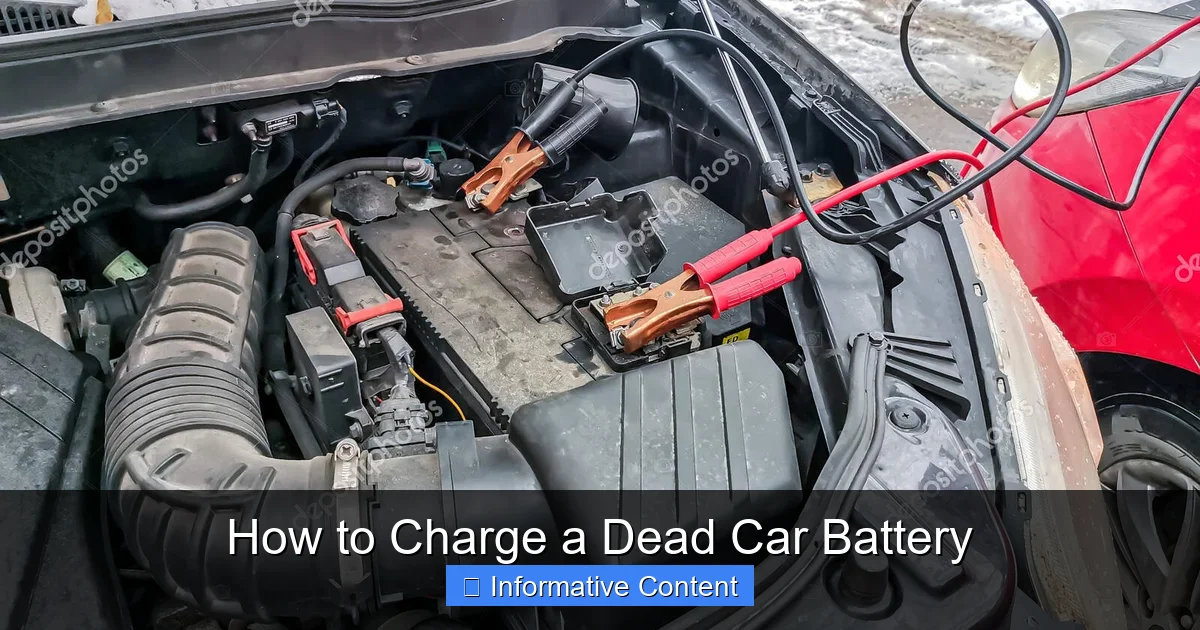
Visual guide about How to Charge a Dead Car Battery
Image source: st2.depositphotos.com
Personal Protective Equipment (PPE)
- Eye Protection: Always wear safety glasses or goggles. A splash of battery acid can cause serious eye damage.
- Gloves: Wear heavy-duty work gloves to protect your hands from acid and electrical shocks.
- Old Clothes: Battery acid can also ruin clothing, so wear something you don’t mind getting stained or damaged.
Ventilation
Ensure you are in a well-ventilated area. When charging, batteries can release hydrogen gas, which is highly flammable and explosive. A garage door should be open, or you should be outside.
Avoiding Sparks and Open Flames
Hydrogen gas, as mentioned, is very explosive. Never smoke, use open flames, or create sparks near a car battery. This means no grinding, welding, or even operating power tools that could spark. Always connect and disconnect cables in a specific order to minimize spark risk.
Understanding Battery Acid
Battery acid is sulfuric acid and is extremely corrosive. If it gets on your skin or clothes, flush the area immediately with plenty of water. Keep a box of baking soda nearby; it can neutralize acid spills on surfaces.
Vehicle Safety
- Park Safely: Ensure both vehicles (if jump-starting) are on a level surface, out of the way of traffic.
- Ignition Off: Make sure the ignition of both vehicles is turned off.
- Handbrake On: Engage the parking brake on both vehicles to prevent any accidental rolling.
- Neutral/Park: Ensure automatic transmission vehicles are in “Park” and manual transmission vehicles are in “Neutral.”
Method 1: Jump-Starting Your Car Battery (Temporary Fix)
Jump-starting is the quickest way to get your car running again, but it’s important to remember that it’s only a temporary solution to how to charge a dead car battery. It uses another car’s battery to give yours enough power to start the engine. Once your car is running, your alternator will begin recharging your battery. However, if your battery is completely dead or faulty, it might not hold a charge, and you’ll need a more permanent solution.
What You’ll Need
- A set of good quality jumper cables.
- A donor vehicle with a working, fully charged 12-volt battery.
Step-by-Step Guide for Jump-Starting
Follow these steps carefully to safely jump-start your vehicle:
- Position the Vehicles: Park the donor vehicle close enough to the disabled vehicle so the jumper cables can reach both batteries, but without the vehicles touching. Ensure both engines are off and parking brakes are engaged.
- Open Hoods and Locate Batteries: Open the hoods of both cars and identify the batteries. Locate the positive (+) and negative (-) terminals. The positive terminal is usually larger and marked with a plus sign, often covered by a red cap. The negative terminal is marked with a minus sign and often has a black cap or is connected to the car’s frame.
- Connect the Red Cable (Positive):
- Attach one red (positive) clamp to the positive (+) terminal of the dead battery.
- Attach the other red (positive) clamp to the positive (+) terminal of the donor battery.
- Connect the Black Cable (Negative):
- Attach one black (negative) clamp to the negative (-) terminal of the donor battery.
- Attach the other black (negative) clamp to an unpainted metal surface on the engine block or frame of the dead car. Choose a sturdy, grounded metal part away from moving belts or fuel lines. This creates a ground connection and minimizes spark risk away from the battery’s flammable gases. Never connect the black clamp directly to the negative terminal of the dead battery.
- Start the Donor Vehicle: Start the engine of the donor vehicle and let it run for 5-10 minutes to charge the dead battery slightly.
- Start the Dead Vehicle: After a few minutes, try to start the disabled vehicle. If it starts, let both cars run for several minutes (10-15 minutes) to allow the newly started car’s battery to get some charge from its alternator.
- Disconnect the Cables (Reverse Order): Disconnect the cables in the exact reverse order of connection:
- Remove the black clamp from the chassis of the formerly dead car.
- Remove the black clamp from the negative (-) terminal of the donor battery.
- Remove the red clamp from the positive (+) terminal of the donor battery.
- Remove the red clamp from the positive (+) terminal of the formerly dead battery.
- Drive the Car: Once your car is running, drive it for at least 20-30 minutes to allow the alternator to fully recharge the battery. If the car won’t start again after turning it off, the battery may be beyond a simple jump-start, or your alternator might be faulty.
When Jump-Starting Isn’t Enough
If your battery is extremely old, has a short circuit, or is severely damaged, a jump-start might not work. In such cases, you’ll need a new battery or professional assistance. Similarly, if your car starts but immediately dies after disconnecting the cables, it could indicate a faulty alternator, which means your battery isn’t being recharged while the engine runs.
Method 2: Using a Car Battery Charger (The Long-Term Solution)
When you need to truly restore a dead battery’s charge, or if jump-starting isn’t an option, a dedicated car battery charger is the way to go. This method provides a more thorough and controlled charge, which is better for the battery’s longevity. Learning how to charge a dead car battery with a charger is a valuable skill for anyone with a vehicle.
Types of Battery Chargers
- Trickle Chargers: These deliver a low, continuous current (usually 1-2 amps) over a long period. They are ideal for maintaining a battery’s charge during long-term storage but are very slow for charging a completely dead battery.
- Smart/Automatic Chargers (Maintainers): These are the most popular and recommended type. They monitor the battery’s condition and adjust the charging rate as needed, preventing overcharging. Many also have desulfation modes to help revive neglected batteries. They can charge a dead battery and then switch to a “maintenance” mode.
- Rapid Chargers (Fast Chargers): These deliver a higher amperage (10-40 amps or more) to quickly charge a battery. While faster, excessive use of rapid charging can shorten battery life if not managed by smart circuitry.
- Jump Starter/Chargers: Some portable jump starters also double as battery chargers, offering versatility.
Choosing the Right Charger for Your Battery
When selecting a charger, consider:
- Battery Voltage: Most car batteries are 12V. Ensure your charger matches this.
- Amperage Output: For a completely dead battery, a charger with at least 10 amps will be much more efficient than a trickle charger. Smart chargers often have selectable amperage settings.
- Battery Type: Ensure the charger is compatible with your battery type (e.g., standard lead-acid, AGM, Gel, EFB). Most modern smart chargers are multi-chemistry compatible.
- Safety Features: Look for features like spark-proof connection, reverse polarity protection, and automatic shut-off to prevent overcharging.
Step-by-Step Guide for Charging with a Charger
Here’s how to charge a dead car battery using a dedicated battery charger:
- Preparation and Safety:
- Ensure your car’s engine is off, and the parking brake is engaged.
- Wear your safety glasses and gloves.
- Ensure you are in a well-ventilated area, away from any flammable materials or sparks.
- If possible, remove the battery from the car to charge it, especially if you’re worried about acid spills or fumes inside the vehicle. If you do this, ensure the battery is placed on a stable, non-conductive surface.
- Clean any corrosion from the battery terminals using a wire brush and a baking soda/water solution.
- Connect the Charger:
- Connect the red (positive) clamp from the charger to the positive (+) terminal of the battery.
- Connect the black (negative) clamp from the charger to the negative (-) terminal of the battery. If the battery is still in the car, you can connect the negative clamp to an unpainted metal part of the car chassis, away from the battery, for added safety, similar to jump-starting.
- Ensure the clamps have a secure connection.
- Set Up the Charger:
- Plug the charger into an electrical outlet.
- Select the appropriate voltage (12V for most cars) and amperage settings. If you have a smart charger, it might automatically detect these.
- If your charger has different modes (e.g., “Standard,” “AGM,” “Maintenance”), select the one that matches your battery type and desired charging speed. For a dead battery, you’ll want a charging mode that delivers higher amps initially.
- Monitor the Charging Process:
- Allow the battery to charge. Charging times vary significantly based on the battery’s state of discharge, its size (CCA and Ah ratings), and the charger’s output. A completely dead car battery (e.g., 50Ah) might take 4-8 hours with a 10-amp smart charger, or much longer with a lower amperage charger.
- Most smart chargers have indicator lights that show charging progress and when the battery is fully charged.
- Do not leave a charging battery unattended for extended periods, especially if using a non-smart charger, to prevent overcharging.
- Disconnect the Charger:
- Once the charger indicates the battery is fully charged, unplug the charger from the electrical outlet first.
- Then, disconnect the black (negative) clamp from the battery (or chassis).
- Finally, disconnect the red (positive) clamp from the battery.
- Reinstall and Test: If you removed the battery, reinstall it, ensuring terminals are clean and connections are tight. Try starting your car.
Charging Times and What to Expect
A good rule of thumb for how to charge a dead car battery: a 50 Ah (Ampere-hour) battery would take roughly 5 hours to charge from 50% capacity with a 10 Amp charger (50Ah / 10A = 5 hours). If it’s completely dead, it will take longer. Always refer to your battery charger’s manual for specific guidelines and expected charging times. It’s better to charge slowly over a longer period than to rush it, which can generate excessive heat and damage the battery.
Method 3: Solar Chargers and Other Alternatives (Niche Solutions)
Beyond traditional jump-starting and dedicated battery chargers, there are a few other options for how to charge a dead car battery or prevent it from dying in the first place, particularly useful in specific situations.
Solar Battery Maintainers
Solar battery maintainers are small, low-wattage solar panels designed to provide a trickle charge to your car battery. They are excellent for:
- Vehicles stored for long periods (RVs, classic cars, motorcycles).
- Cars that are not driven frequently, preventing parasitic drains from killing the battery.
- Maintaining charge in cars parked outdoors during the day.
They usually connect via the cigarette lighter socket or directly to the battery terminals. While they won’t quickly charge a completely dead battery, they are fantastic for keeping a healthy battery topped up. This helps avoid the problem of needing to know how to charge a dead car battery in the first place!
Portable Jump Starters/Battery Packs
These compact devices are essentially powerful portable batteries with built-in jumper cables. They allow you to jump-start your own car without needing a second vehicle. They are a fantastic emergency tool to keep in your trunk. Many also come with USB ports for charging phones and other electronics.
- Pros: Self-sufficient, compact, often include extra features.
- Cons: Requires periodic recharging itself, can be more expensive than basic jumper cables.
Using a portable jump starter is similar to a traditional jump-start, but you connect both clamps directly to your car’s battery terminals (positive to positive, negative to negative) and then activate the device.
Post-Charging Care and Preventing Future Drains
You’ve successfully learned how to charge a dead car battery, but your job isn’t quite done. After charging, it’s crucial to take a few steps to ensure your battery stays healthy and to prevent future incidents. A charged battery is only as good as the system that keeps it charged.
Check Your Charging System
After successfully starting your car, drive it to an auto parts store. Many stores offer free battery and charging system tests. They can check:
- Battery Health: They’ll test the battery’s voltage and cold-cranking amps (CCA) to determine if it’s holding a charge well.
- Alternator Output: This test verifies that your alternator is properly charging the battery while the engine is running. A faulty alternator means your battery will eventually die again, no matter how many times you charge it.
- Starter Draw: This test checks if your starter motor is drawing excessive power, which could prematurely drain your battery.
Regular Maintenance Tips
Prevention is always better than cure. Here’s how to keep your battery in top shape:
- Clean Terminals: Regularly inspect battery terminals for corrosion. Clean them with a wire brush and a baking soda/water paste (1 tablespoon baking soda to 1 cup water). Rinse with clean water and dry thoroughly. Apply a thin coat of dielectric grease or battery terminal protector to prevent future corrosion.
- Check Fluid Levels (if applicable): For non-sealed batteries, check the electrolyte levels. If low, top up with distilled water (never tap water or battery acid).
- Secure Battery: Ensure the battery is securely fastened in its tray. Vibrations can damage internal components.
- Avoid Short Trips: If possible, take longer drives (at least 20-30 minutes) regularly to allow your alternator to fully recharge the battery.
- Turn Off Accessories: Always ensure all lights (headlights, interior, trunk), radio, and other accessories are off before leaving your car.
- Limit Electronics Use When Engine is Off: Avoid using the radio, charging phones, or running other accessories for extended periods when the engine isn’t running.
Battery Longevity
Even with perfect care, car batteries have a finite lifespan, typically 3-5 years. Factors like climate (hot climates are harder on batteries than cold ones in the long run) and driving habits influence this. If your battery is consistently failing, struggles to hold a charge, or is nearing its age limit, it’s often more cost-effective and reliable to replace it rather than continually needing to know how to charge a dead car battery.
Conclusion
A dead car battery can certainly be a frustrating experience, but it doesn’t have to be a nightmare. By understanding the basics of your battery, prioritizing safety, and knowing the proper techniques for both jump-starting and using a dedicated charger, you’ve gained invaluable knowledge. We’ve covered how to charge a dead car battery in multiple scenarios, from quick fixes to more thorough methods, and even explored preventative measures.
Remember, the ability to safely charge or jump-start your car battery gives you a powerful sense of self-reliance on the road. Always keep your jumper cables or a portable jump starter handy, and consider investing in a smart battery charger for long-term battery health. Regular maintenance and attentive driving habits will go a long way in preventing future dead battery surprises.
So, the next time your car greets you with a click instead of a roar, you’ll be ready. Stay safe, stay prepared, and happy driving!
🎥 Related Video: Best battery charging hack for dead batteries!!!!
📺 10 Minute Fix
Charging a dead battery is easy. Connect them in parallel then connect the charger to the know good battery. The charger will …
Frequently Asked Questions
How often should I check my car battery’s health?
It’s a good practice to have your car battery and charging system tested at least once a year, especially before extreme weather conditions like winter or summer. Many auto parts stores offer this service for free, which can help you catch potential issues before your battery completely dies.
What’s the difference between a battery charger and a battery maintainer?
A battery charger is designed to replenish a discharged battery, often delivering higher amps. A battery maintainer (or trickle charger) delivers a very low current to keep an already charged battery topped off during long periods of inactivity, preventing self-discharge and extending its life. Many modern “smart” chargers combine both functions.
Can a dead battery damage my car’s electrical system?
A truly dead battery itself is unlikely to damage your car’s electrical system. However, repeated jump-starts or improperly performed jump-starts (e.g., reverse polarity) can potentially damage sensitive electronic components in either the donor or recipient vehicle.
What does it mean if my battery keeps dying after being charged?
If your battery repeatedly dies after being charged, it could indicate several underlying issues. The battery itself might be old or faulty and no longer able to hold a charge, or your car’s charging system (alternator) might be failing, meaning the battery isn’t being recharged while you drive. A parasitic drain, where something in the car is drawing power while it’s off, is another common cause.
How do I know if my battery is beyond saving and needs replacement?
Signs that your battery needs replacement include being more than 3-5 years old, consistent failure to hold a charge even after proper charging, visible swelling or corrosion, a strong sulfur smell, or failing a professional battery health test that shows low cold-cranking amps (CCA).
Should I disconnect my car battery if I won’t be driving it for a long time?
Yes, if you plan to store your car for several weeks or months, disconnecting the negative battery terminal can prevent parasitic drains from slowly discharging the battery. Alternatively, using a smart battery maintainer is an excellent way to keep the battery charged without disconnecting it, especially if you want to keep electronic settings intact.