
Jumping a car battery typically requires 5 to 15 minutes of direct connection to charge sufficiently, but the entire process, including setup and post-jump driving, can take 30 minutes or more. The exact duration hinges on battery drain severity, cable quality, and ambient temperature. Patience is crucial for a successful and lasting jump start.
Picture this: You hop into your car, turn the key, and… nothing. Just a sad click, or perhaps complete silence. Your heart sinks. You’ve got a dead car battery, and now you’re stuck. The immediate thought is, “I need a jump!” But then a crucial question pops into your mind: “How long does it take to jump a car battery?”
It’s a common query, and for good reason. Whether you’re in a hurry to get to work or just want to get back on the road, knowing what to expect in terms of time can help you plan and stay calm. While the internet might offer quick answers like “5 minutes,” the reality is a little more nuanced. There isn’t a single, one-size-fits-all answer because several factors can influence the duration of a successful jump start.
In this comprehensive guide, we’ll dive deep into everything you need to know about jumping a car battery. We’ll explore the typical timelines, uncover the critical factors that affect how long it takes, walk you through the step-by-step process with practical timings, and even discuss what to do if a jump start doesn’t work. Our goal is to equip you with the knowledge and confidence to handle a dead battery situation effectively, making sure you understand exactly how long does it take to jump a car battery in various scenarios.
Key Takeaways
- Variability is Key: There’s no single answer to “how long does it take to jump a car battery.” The time can range from a few minutes to over an hour, depending on various factors.
- Core Connection Time: Generally, the donor car should be connected and running for at least 5-10 minutes to transfer enough charge for the dead battery to start, possibly longer if the battery is deeply discharged.
- Crucial Influencing Factors: The severity of the dead battery, the quality and gauge of your jumper cables, the health of the donor vehicle’s battery and alternator, and even the ambient temperature all play a significant role in the jump-starting duration.
- The Full Process is Longer: While the actual charging might take 5-15 minutes, the complete process, including finding a donor, setting up cables, trying to start, and then driving to fully recharge, will take significantly more time – often 30 minutes to an hour.
- Safety First: Always prioritize safety. Correctly connecting jumper cables in the right sequence is vital to prevent sparks, damage, or injury.
- Post-Jump Drive is Essential: After a successful jump, drive your car for at least 15-30 minutes (or longer) to allow the alternator to recharge the battery fully and prevent another stall.
- Know When to Give Up: If your car doesn’t start after several attempts or prolonged charging, the battery might be completely dead, or there could be another underlying issue. In such cases, professional help or battery replacement might be necessary.
Quick Answers to Common Questions
How quickly can a car be jump-started?
A car can sometimes be jump-started in as little as 2-3 minutes of direct connection if the battery is only slightly discharged, but 5-10 minutes is a more common and safer practice for a successful boost.
What is the minimum driving time after a jump start?
After a successful jump start, you should drive your car for at least 15-30 minutes at normal speeds to allow the alternator sufficient time to recharge the battery. Shorter drives might not fully replenish the charge.
Can a car battery be too dead to jump?
Yes, if a car battery is completely dead, very old, or internally damaged, it might not accept a charge from a jump start, no matter how long the cables are connected. In such cases, professional help or replacement is needed.
Is it safe to leave jumper cables connected for a long time?
No, it’s not recommended to leave jumper cables connected for an excessively long time (e.g., more than 15-20 minutes of charging). Prolonged connection can potentially overcharge the dead battery or strain the donor vehicle’s electrical system.
What if my car doesn’t start after a jump attempt?
If your car doesn’t start after a jump attempt, double-check your cable connections for proper contact. If it still fails, the battery might be too far gone, or there could be another issue like a faulty starter or alternator, requiring professional diagnosis.
📑 Table of Contents
The Core Answer: How Long Does It *Actually* Take?
Let’s get straight to the point: the actual time it takes to jump a car battery can vary significantly. However, for most standard situations, you’re looking at a range of about 5 to 15 minutes of direct connection time with the donor vehicle. This doesn’t include the setup and post-jump driving, but it’s the core period where charge is being transferred.
The Quick Initial Connection
If your car battery is only slightly drained – perhaps you left your headlights on for a short period – you might get lucky with a very quick jump. Sometimes, just a few minutes of connection (even 2-3 minutes) with the donor car running can provide enough juice for your engine to crank and start. This is often the case when the battery still has some residual charge but not quite enough to turn over the starter motor.
Charging Time for a Severely Dead Battery
On the other hand, if your battery is completely dead, meaning no lights, no dashboard activity, and certainly no clicking sound, it will require a longer charging period. In these scenarios, it’s best to keep the donor car connected and running for at least 10-15 minutes. This extended time allows for a more substantial charge to be transferred to your battery, increasing the likelihood of a successful start and reducing the chances of it immediately dying again.
Factors Influencing the Time
It’s important to remember that these are just averages. The true answer to how long does it take to jump a car battery really depends on a blend of variables. We’ll explore these in detail in the next section, but briefly, they include the condition of your battery, the quality of your jumper cables, the health of the donor vehicle, and even the weather. Patience is often your best friend when faced with a stubborn, dead battery.
Factors That Influence Jump Start Time
Understanding the variables at play is crucial for managing your expectations and troubleshooting any issues. Each of these elements can add or subtract minutes from the overall process of how long does it take to jump a car battery.
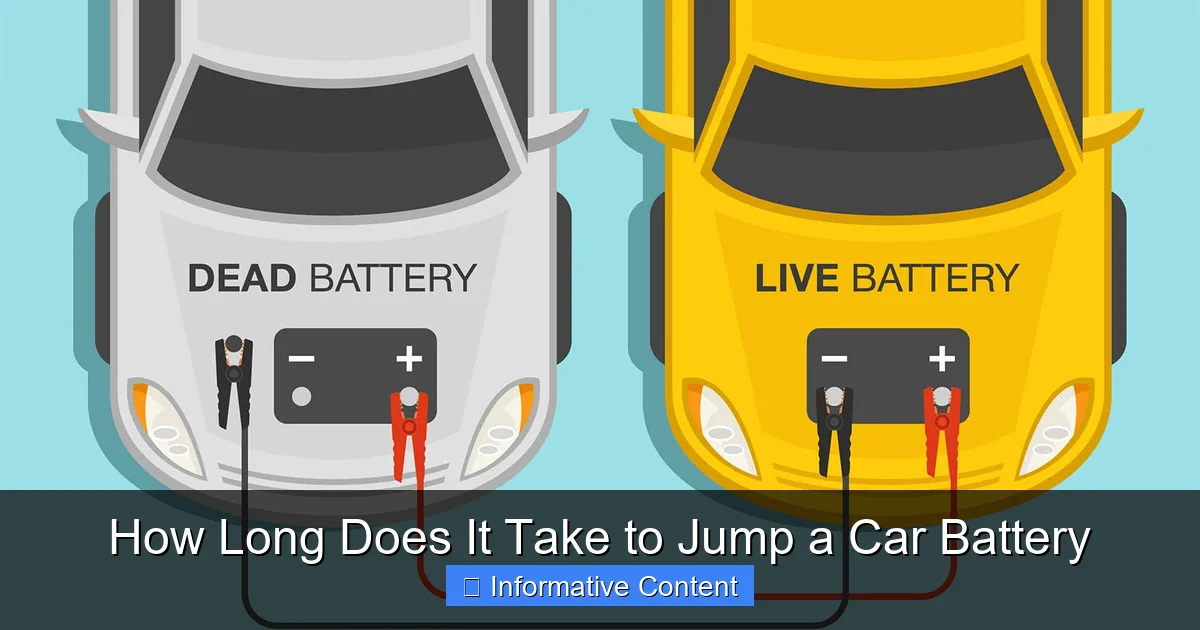
Visual guide about How Long Does It Take to Jump a Car Battery
Image source: cdn.hswstatic.com
Battery Condition: Slightly Drained vs. Completely Dead
This is perhaps the most significant factor. A battery that’s just a little low from leaving an interior light on overnight will recharge much faster than a battery that’s been completely dead for days or weeks. A deeply discharged battery has less internal resistance initially and can take longer to accept a charge that’s sufficient to start the engine. If it’s old and weak, it might not hold a charge at all, regardless of how long you try to jump it.
Battery Size and Type
Larger vehicles, like trucks or SUVs, often have larger batteries with higher cold cranking amps (CCA). These batteries require more power and a longer charging time to get enough juice to start compared to a small sedan’s battery. Similarly, different battery types (e.g., lead-acid, AGM) can have slightly different charging characteristics.
Quality of Jumper Cables
This is often overlooked! Thin, cheap jumper cables can act like a bottleneck, limiting the amount of current that can flow from the donor car to your dead battery. High-quality cables are thicker (lower gauge number, e.g., 4-gauge or 6-gauge are better than 8-gauge or 10-gauge) and have robust clamps that make good contact. Better cables mean a faster, more efficient transfer of power, directly impacting how long does it take to jump a car battery.
Donor Car’s Engine and Alternator Health
The car providing the jump also plays a role. A healthy donor car with a strong battery and a fully functioning alternator will provide a consistent and robust charge. If the donor car’s battery is weak or its alternator is struggling, it might not be able to provide enough current, making the jump slower or even impossible.
Environmental Conditions (Cold Weather)
Cold weather is notorious for weakening car batteries. Battery performance decreases significantly in freezing temperatures. Not only does a cold battery hold less charge, but the engine oil also thickens, requiring more power to turn the engine over. This combination means that jumping a car battery in cold weather will almost always take longer than doing it on a warm day.
User Error or Improper Connection
Incorrectly connected cables can either prevent a jump start entirely or make it dangerously inefficient. If the clamps aren’t making good contact, or if the cables are connected in the wrong sequence, you won’t be transferring power effectively. Double-checking your connections is a quick way to ensure you’re not wasting time or risking damage.
Step-by-Step Guide to Safely Jumping a Car Battery (With Timings)
Knowing the proper procedure isn’t just about safety; it’s also about efficiency. Following these steps can minimize the time it takes to jump a car battery successfully.
Preparation (5-10 minutes)
Before you even touch the cables, take a few moments for preparation. This includes:
- Gathering Supplies: Make sure you have good quality jumper cables and ideally, gloves and eye protection.
- Positioning Vehicles: Park the donor car nose-to-nose or side-by-side with the disabled car, ensuring they are close enough for the cables to reach but not touching. Turn off both engines and engage parking brakes.
- Locating Batteries: Identify the batteries in both vehicles. Many modern cars have them under the hood, but some might be in the trunk or under the rear seat.
- Safety Check: Ensure there are no leaks or visible damage to either battery. Clean any corrosion off the terminals if possible (though this might require tools).
Connecting the Cables (2-3 minutes)
This is the most critical part for safety and effectiveness. Follow this sequence carefully:
- Red to Dead Positive: Attach one red (positive) clamp to the positive (+) terminal of the dead battery.
- Red to Donor Positive: Attach the other red (positive) clamp to the positive (+) terminal of the donor battery.
- Black to Donor Negative: Attach one black (negative) clamp to the negative (-) terminal of the donor battery.
- Black to Metal Ground: Attach the other black (negative) clamp to an unpainted metal surface on the engine block or frame of the disabled car, away from the battery and moving parts. This is your ground connection and helps prevent sparks near the battery’s potentially explosive hydrogen gas.
The Waiting Game (5-15 minutes, depending)
Once the cables are securely connected:
- Start Donor Car: Start the engine of the donor car and let it run for a few minutes. This allows its alternator to generate current.
- Rev Donor Engine (Optional): Some experts recommend slightly revving the donor car’s engine (around 1500-2000 RPM) for a few minutes to increase the charging output, especially if the dead battery is severely depleted.
- Wait and Charge: This is where the core “how long does it take to jump a car battery” question comes into play. Wait 5-15 minutes. For a slightly drained battery, 5 minutes might suffice. For a very dead battery, aim for 10-15 minutes. During this time, the healthy battery is transferring charge to the dead one.
- Attempt to Start: After the waiting period, try to start the disabled car. If it starts, great! If not, wait another 5 minutes with the donor car running and try again. Avoid cranking the engine for more than 5-10 seconds at a time to prevent overheating the starter motor.
Disconnecting and Starting (2-3 minutes)
Once the disabled car starts, disconnect the cables in the reverse order of connection, to avoid sparks:
- Black from Ground: Disconnect the black (negative) clamp from the metal ground on the formerly disabled car.
- Black from Donor Negative: Disconnect the black (negative) clamp from the donor battery.
- Red from Donor Positive: Disconnect the red (positive) clamp from the donor battery.
- Red from Dead Positive: Disconnect the red (positive) clamp from the formerly dead battery.
Congratulations, you’ve successfully learned how long does it take to jump a car battery and executed the jump!
Post-Jump Drive (15-30 minutes minimum)
Do NOT turn off your engine immediately after a jump start. Your alternator needs time to recharge your battery properly. Drive your car for at least 15-30 minutes, or longer, if possible, allowing the battery to replenish its charge. Short drives or idling might not be enough, leading to another dead battery situation. This follow-up drive is an essential part of the complete jump-start process.
When a Jump Start Doesn’t Work (Troubleshooting & Next Steps)
Sometimes, even after following all the steps, your car still won’t start. This can be frustrating, but it’s important to know what to do next. If your answer to “how long does it take to jump a car battery” becomes “too long, it’s not working,” it’s time to troubleshoot.
Common Reasons for Failure
- Completely Dead Battery: The battery is so old or damaged that it simply cannot hold a charge, no matter how much power is transferred.
- Faulty Jumper Cables: Poor quality cables, internal breaks, or corroded clamps prevent proper current flow.
- Poor Connections: Cables not clamped tightly or making good metal-to-metal contact.
- Other Electrical Issues: The problem might not be the battery. A faulty starter motor, a bad alternator, a blown fuse, or other electrical issues can prevent your car from starting even with a fully charged battery.
- Donor Car Issues: The donor car’s battery or charging system might be weaker than you assume.
Signs Your Battery is Beyond Jumping
If you observe these signs, it’s likely time for a new battery:
- No Click, No Lights: Absolutely no electrical activity when trying to start.
- Corrosion: Excessive corrosion around the battery terminals that can’t be cleaned.
- Swollen Battery Case: A bulging or cracked battery case indicates internal damage.
- Old Age: Most car batteries last 3-5 years. If yours is older, it’s probably at the end of its life.
- Repeated Jumps Needed: If you need to jump your car frequently, the battery isn’t holding a charge.
Alternative Solutions
- Battery Charger/Maintainer: If you have access to power, a dedicated battery charger can provide a slow, deep charge over several hours (or overnight), which is better for the battery’s health than a jump start.
- Professional Help: If the car won’t start, or you suspect a deeper issue, calling roadside assistance or a mechanic is your best bet. They have specialized equipment to diagnose the problem.
- Battery Replacement: Ultimately, if your battery is old or damaged, replacement is the only lasting solution.
Maintaining Your Car Battery to Avoid Future Jumps
The best way to avoid asking “how long does it take to jump a car battery” is to prevent your battery from dying in the first place! A little proactive maintenance goes a long way.
Regular Inspections
Periodically check your battery terminals for corrosion (a white or blue powdery substance). If you find any, clean it off with a wire brush and a mixture of baking soda and water. Ensure the battery terminals are tight. Also, make sure the battery is securely mounted in its tray to prevent vibrations from damaging it.
Driving Habits
Short trips are hard on your battery. Your alternator needs time to fully recharge the battery, especially after starting the engine. If you mostly make short drives, try to take a longer drive (30 minutes or more) once a week to ensure your battery gets a full charge. Avoid leaving accessories (lights, radio, charging devices) on when the engine is off.
Investing in a Battery Tender/Maintainer
If you don’t drive your car frequently, or if it sits for extended periods (e.g., a classic car, a motorcycle, or a second vehicle), a battery tender is an excellent investment. This device plugs into an outlet and provides a low, continuous charge, keeping your battery topped off and preventing deep discharge, which can prolong its life significantly.
Knowing When to Replace
Even with perfect maintenance, car batteries don’t last forever. Most have a lifespan of 3 to 5 years. Pay attention to signs of a weakening battery, such as slow engine cranking, dimming lights when starting, or the need for frequent jump starts. Getting your battery tested annually, especially after 3 years, can help you replace it before it leaves you stranded.
Conclusion
So, how long does it take to jump a car battery? As we’ve seen, it’s not a fixed number. While the actual power transfer might occur within 5 to 15 minutes, the overall process, from preparation to the post-jump drive, can easily extend to 30 minutes or even an hour. The condition of your battery, the quality of your cables, the donor vehicle, and even the weather all play a significant role in determining the exact timeline.
The key takeaways are patience, safety, and preparedness. Always use proper jump-starting techniques to protect yourself and both vehicles. Understand that a jump start is a temporary fix; it gets you going, but your battery needs a good drive to fully recover or a replacement if it’s truly at the end of its life. By understanding these nuances, you’ll be better equipped to handle a dead battery situation efficiently and safely, getting you back on the road with minimal fuss.
🎥 Related Video: How to jump a car battery. Love, Dad #dadadvice
📺 Dad Advice From Bo
Frequently Asked Questions
How often should I jump my car battery?
Ideally, you should only jump your car battery once or twice. Needing frequent jumps indicates an underlying problem, either with the battery itself, the charging system (alternator), or a parasitic drain. Get it professionally checked if you find yourself needing jumps often.
Can I jump a car battery with a portable jump starter?
Yes, portable jump starters are excellent alternatives to using another car. They typically work just as quickly as traditional cables, often within 5-10 minutes, and offer the convenience of not needing a second vehicle.
Does the size of the donor car matter when jumping a car battery?
While a larger donor car with a more powerful battery and alternator might provide a more robust charge, almost any running vehicle can jump-start another. The key is that the donor car’s battery and charging system are healthy and the cables are properly connected.
Can jumping a car damage the electronics?
Incorrectly jumping a car, especially reversing the polarity, can potentially damage the electrical systems or sensitive electronics in either vehicle. Always follow the correct connection sequence (positive to positive, negative to ground) and disconnect carefully to avoid sparks.
What’s the difference between a jump start and charging a battery?
A jump start provides a quick burst of power to get your engine running, relying on the alternator to then recharge the battery. Charging a battery (with a dedicated charger) is a slower, more controlled process that fully replenishes the battery’s charge over several hours, which is healthier for the battery in the long run.
How do I know if my battery is truly dead or just needs a jump?
If your car shows no signs of life (no lights, no clicking), it’s likely very dead. If lights dimly flicker or you hear a weak clicking sound, it’s probably just drained. A successful jump will get it running, but if it keeps dying, it’s time for a new battery.