A dead car battery can leave you stranded, but recharging it yourself is a straightforward process when you follow proper safety guidelines. This guide will walk you through understanding your battery, selecting the correct charger, and executing the recharge safely and efficiently, ensuring your vehicle is ready to go.
How to Recharge a Car Battery
Picture this: you’re running late, you hop in your car, turn the key, and… nothing. Just a sad click, or maybe a slow, struggling whine. Your car battery is dead. It’s a frustrating, all-too-common scenario that most drivers experience at some point. But what if you could take control of the situation, armed with the knowledge of how to recharge a car battery yourself?
Many people assume a dead battery means an immediate call to roadside assistance or a trip to the mechanic. While those are certainly options, understanding how to recharge a car battery can save you time, money, and a whole lot of stress. It’s a valuable skill that empowers you to get back on the road quickly and safely.
This comprehensive guide will walk you through everything you need to know about recharging your car battery. From understanding why your battery might die to choosing the right equipment and following a step-by-step charging process, we’ll equip you with the confidence to tackle this common car problem head-on. Let’s get your vehicle powered up and ready for adventure!
Key Takeaways
- Prioritize Safety: Always wear personal protective equipment (PPE) like gloves and eye protection, ensure good ventilation, and work in a spark-free environment to prevent accidents during the recharging process.
- Understand Your Battery: Know your car battery type (e.g., lead-acid, AGM) and its basic health indicators to choose the most suitable charging method and charger.
- Choose the Right Charger: Select an appropriate battery charger – whether it’s a trickle charger, a smart charger, or a maintainer – based on your battery type and charging needs. Avoid using chargers that are too powerful or too weak for extended periods.
- Follow Correct Connection Order: Always connect the positive (+) charger clamp to the positive (+) battery terminal first, then the negative (-) charger clamp to the negative (-) battery terminal or a bare metal ground point away from the battery. Disconnect in reverse order.
- Monitor the Charging Process: Keep an eye on the charger’s indicators and avoid overcharging, which can damage the battery. Modern smart chargers often handle this automatically, but older models may require manual monitoring.
- Perform Post-Charge Checks: After recharging, check the battery’s voltage with a multimeter to confirm a full charge, and inspect terminals for corrosion. Perform basic maintenance to extend battery life.
- Know When to Replace: A battery that frequently dies, struggles to hold a charge, or shows signs of physical damage may be beyond recharging and require replacement to ensure vehicle reliability.
Quick Answers to Common Questions
Can I recharge a completely dead car battery?
Yes, most completely dead car batteries can be recharged, especially with a smart charger. However, if the battery has been deeply discharged for a long time, it may have suffered irreversible damage and might not hold a charge effectively afterward.
How long does it take to recharge a car battery?
The time varies depending on the battery’s state of discharge, its capacity, and the charger’s amperage. A moderately discharged battery can take 4-12 hours with a standard 6-10 amp charger, while a deeply discharged one might take 12-24 hours or more.
Is it safe to recharge a car battery in the garage?
Yes, it is safe to recharge a car battery in a garage, provided there is adequate ventilation to disperse hydrogen gas. Open the garage door or ensure good airflow, and keep all sources of sparks or flames away from the battery.
Can I overcharge my car battery?
Older or basic trickle chargers can overcharge a battery if left connected for too long, leading to damage. Modern smart chargers and battery maintainers have automatic shut-off and float modes to prevent overcharging by switching to a low-current maintenance charge once the battery is full.
Do I need to disconnect the car battery from the car’s electrical system before charging?
For most standard car battery charging with a smart charger, it’s usually not necessary to disconnect the battery from the car’s electrical system. However, always check your car’s owner manual and the charger’s instructions for specific recommendations, as some vehicles or chargers may require it.
📑 Table of Contents
Understanding Your Car Battery and Why It Dies
Before you even think about how to recharge a car battery, it helps to know a little bit about what makes it tick – and why it might stop ticking in the first place.
Types of Car Batteries
Most modern cars use one of a few types of 12-volt lead-acid batteries:
- Flooded Lead-Acid (Wet Cell) Batteries: These are the traditional batteries you’re most familiar with. They contain a liquid electrolyte solution and often have caps that allow you to check and refill the fluid levels. They are generally reliable and cost-effective.
- Absorbent Glass Mat (AGM) Batteries: AGM batteries are a type of valve-regulated lead-acid (VRLA) battery. The electrolyte is absorbed into mats of fine glass fibers, making them spill-proof and maintenance-free. They are more resistant to vibration and perform better in extreme temperatures, often found in vehicles with start-stop technology.
- Gel Cell Batteries: Similar to AGM, gel batteries use a silica-based gel to suspend the electrolyte. They are also spill-proof and maintenance-free but typically have lower cranking amps and are less tolerant to overcharging than AGMs.
Knowing your battery type is important because some chargers are specifically designed for certain types, especially AGM and Gel batteries, which require more precise voltage control during recharging.
Common Reasons for Battery Drain
Why does a car battery die? It’s usually one of these common culprits:
- Lights Left On: The classic mistake! Leaving headlights, interior lights, or even a trunk light on overnight can completely drain your battery.
- Short Trips: If you only drive short distances, your alternator doesn’t have enough time to fully recharge the battery after starting the car. Over time, this leads to a gradual discharge.
- Extreme Temperatures: Both extreme heat and cold can impact battery performance and life. Cold weather, in particular, reduces a battery’s cranking power and makes it harder for the engine to start, while heat can accelerate internal corrosion.
- Parasitic Drain: This happens when electrical components (like a faulty radio, alarm system, or navigation unit) continue to draw power even when the car is off. It’s a slow, stealthy drain that can be hard to detect.
- Old Age: Car batteries typically last 3-5 years. As they age, their ability to hold a charge diminishes due to internal wear and tear, eventually making it impossible to recharge a car battery effectively.
- Faulty Alternator: If your alternator isn’t properly charging the battery while the engine is running, your battery will eventually die, even if it’s otherwise healthy.
Signs of a Weak or Dead Battery
Your car often gives you warnings before it completely gives up. Look out for:
- Slow engine crank, especially in the morning or cold weather.
- Dim headlights or interior lights when the engine is off.
- Dashboard warning lights (e.g., battery light).
- Clicking sound when you turn the key, but no engine turnover.
- No power at all – no lights, no sounds.
Catching these signs early means you can recharge a car battery before you’re stranded.
Safety First: Essential Precautions Before You Start
Recharging a car battery involves working with electricity and potentially corrosive chemicals. Safety is paramount to prevent injuries or damage to your vehicle. Never skip these steps!
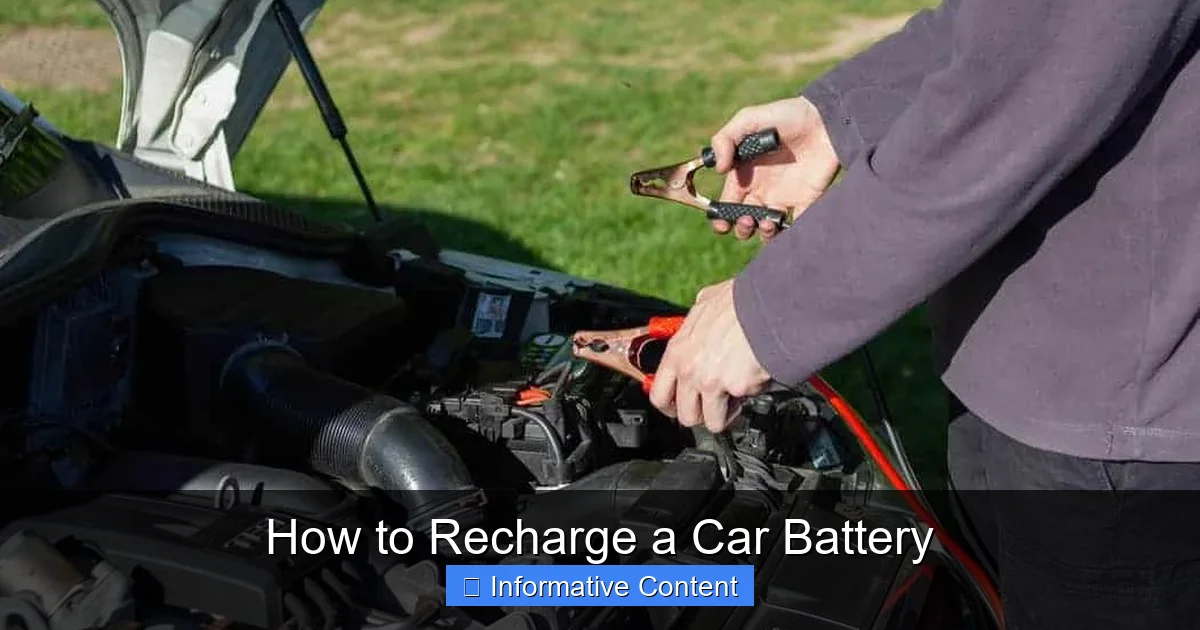
Visual guide about How to Recharge a Car Battery
Image source: batterytools.net
Personal Protective Equipment (PPE)
- Eye Protection: Always wear safety glasses or goggles. Batteries contain sulfuric acid, which can cause severe eye damage.
- Gloves: Chemical-resistant gloves (latex, nitrile, or neoprene) protect your hands from acid and provide some electrical insulation.
- Old Clothes: Wear clothes you don’t mind getting stained or damaged, as battery acid can eat through fabric.
Ensuring Proper Ventilation
When a lead-acid battery charges, it releases hydrogen gas, which is highly flammable and explosive. Work in a well-ventilated area, such as outdoors or in a garage with the door open, to prevent gas buildup.
The Right Environment
- Park Safely: Ensure your car is on a flat, stable surface, away from traffic. Engage the parking brake.
- Turn Off Engine and Accessories: Make sure the engine is off and all lights, radio, and other accessories are turned off.
- Remove Jewelry: Metal jewelry can conduct electricity and cause burns if it accidentally contacts battery terminals.
Avoiding Sparks and Open Flames
As mentioned, hydrogen gas is explosive. Keep cigarettes, lighters, matches, and any other sources of sparks or open flames far away from the battery. Even a small spark from connecting charger clamps incorrectly can ignite the gas.
Battery Disconnection (When Necessary)
For most standard battery charging with a modern smart charger, you don’t need to remove the battery from the car or disconnect its terminals from the car’s electrical system. The charger will provide power directly to the battery. However, if you need to clean terminals, perform maintenance on the battery itself, or if your car manufacturer or charger manual specifically instructs you to disconnect, follow this order:
- Disconnect the negative (black, “-“) cable first.
- Then disconnect the positive (red, “+”) cable.
When reconnecting, do the reverse: positive first, then negative. For simply recharging a car battery in place, you typically connect the charger directly to the battery terminals without disconnecting the car’s cables, but always consult your car’s owner manual and charger instructions for specific guidance.
Choosing the Right Car Battery Charger
Not all chargers are created equal. Selecting the appropriate one is key to safely and effectively recharge a car battery.
Types of Chargers
- Trickle Chargers: These provide a slow, steady, low-amperage charge over a long period. They are good for maintaining a fully charged battery or slowly bringing a deeply discharged battery back to life. However, they don’t have automatic shut-off and can overcharge if left connected too long.
- Smart/Automatic Chargers: These are highly recommended. They monitor the battery’s voltage and adjust the charging rate as needed. They typically have multiple charging stages (bulk, absorption, float) and automatically switch to a maintenance mode once the battery is full, preventing overcharging. Many are compatible with different battery types (Flooded, AGM, Gel).
- Battery Maintainers (Float Chargers): Similar to trickle chargers but with smart technology. They deliver a very low current to keep an already charged battery at its peak, ideal for vehicles stored for long periods (e.g., classic cars, RVs, motorcycles). They won’t recharge a dead battery quickly but prevent it from dying.
- Jump Starters (Portable Power Packs): While they provide an instant boost to start your car, most jump starters are not designed for fully recharging a car battery. They provide a high burst of current, not a sustained charge. Think of them as a temporary fix to get you moving, after which your car’s alternator will do the recharging. Some larger, more advanced models might have a charging function, but their primary purpose is jumping.
Understanding Amperage and Voltage
Car batteries are typically 12-volt systems, so you’ll need a 12-volt charger. The amperage (A) rating of the charger determines how quickly it will recharge a car battery:
- Low Amperage (1-3A): Ideal for battery maintainers or very slow, gentle charging. Can take 24+ hours to recharge a moderately drained battery.
- Medium Amperage (4-10A): Good for general-purpose charging. Can recharge a car battery in 6-12 hours, depending on its condition and capacity.
- High Amperage (10-20A+): Faster charging, but generally less gentle on the battery. Can recharge a car battery in 2-6 hours. Some chargers offer an “engine start” mode which delivers a very high amperage burst to help start a car with a weak battery, but this is not sustained charging.
For most situations, a smart charger in the 4-10A range is a good balance of speed and battery health. Always check your battery’s Amp-hour (Ah) rating; a charger’s amperage should generally be 10-20% of the battery’s Ah capacity for safe charging.
Charger Features to Look For
- Automatic Shut-off/Float Mode: Prevents overcharging. Essential for smart chargers.
- Reverse Polarity Protection: Prevents damage if you connect the clamps incorrectly.
- Spark Proof Clamps: Reduces the risk of igniting hydrogen gas.
- Battery Type Selector: Allows you to choose between standard, AGM, or Gel battery settings for optimized charging.
- Reconditioning Mode: Some advanced chargers have a mode to desulfate older batteries, potentially extending their life.
Step-by-Step Guide: How to Recharge Your Car Battery
Now that you’ve got your safety gear and the right charger, let’s get down to the actual process of how to recharge a car battery.
Step 1: Preparation and Location
- Park Safely: Ensure your car is on a level surface, engine off, parking brake engaged.
- Open the Hood: Locate your car battery. It’s usually under the hood, but sometimes in the trunk or under the rear seat.
- Clean Terminals (Optional but Recommended): If you notice a white or bluish-green powdery substance on the battery terminals, that’s corrosion. It can impede the charging process. Disconnect the battery cables (negative first, then positive, if removing for cleaning) and use a wire brush and a battery terminal cleaner (or a mixture of baking soda and water) to scrub the corrosion away. Rinse with clean water and dry thoroughly before reconnecting the car’s cables (positive first, then negative). If only minor, you can often clean it in place carefully.
Step 2: Connecting the Charger
This is a critical step for safety. Always follow the specific instructions provided with your battery charger, but generally:
- Connect Positive First: Take the red (positive, +) clamp from your battery charger. Connect it firmly to the positive (+) terminal of your car battery. This terminal is usually marked with a plus sign and is often larger than the negative terminal.
- Connect Negative (to Ground): Take the black (negative, -) clamp from your battery charger. Connect it to a bare, unpainted metal part of your car’s chassis or engine block, *away from the battery*. This helps to ground the circuit and reduces the risk of sparks occurring directly near the battery, where explosive hydrogen gas might be present. Avoid moving parts. Some modern smart chargers may instruct you to connect directly to the negative battery terminal; if so, they usually have spark-proof technology. When in doubt, ground to the chassis.
- Plug in the Charger: Once both clamps are securely connected, and *only then*, plug your battery charger into a power outlet.
Step 3: Setting the Charger
Refer to your charger’s manual. Most smart chargers are fairly intuitive:
- Select Battery Type: If your charger has a setting for battery type (e.g., standard, AGM, Gel), select the one that matches your battery.
- Select Amperage/Mode: Choose the appropriate charging mode. For a typical recharge, a medium amperage setting (e.g., 6-10A) is usually suitable. Avoid “engine start” modes for sustained charging.
Step 4: Monitoring the Charging Process
Modern smart chargers typically have indicators to show charging progress:
- Initial Stages: The charger might show “charging” or “bulk charge” and the battery voltage will slowly rise.
- Mid-Charge: As the battery gains charge, the amperage drawn by the battery will decrease.
- Full Charge: When the battery is full, a smart charger will typically switch to a “float” or “maintenance” mode, indicated by a green light or “fully charged” message. This prevents overcharging.
- Charging Time: How long it takes to recharge a car battery depends on the battery’s initial state, its capacity, and the charger’s amperage. A deeply discharged battery with a 6A charger could take 10-12 hours or more. A moderately drained battery might take 4-8 hours. Don’t rush the process.
Step 5: Disconnecting the Charger
Once the battery is fully charged and the charger indicates completion:
- Unplug the Charger: First, unplug the charger from the wall outlet.
- Remove Negative Clamp: Then, remove the black (negative, -) clamp from the car’s chassis or negative battery terminal.
- Remove Positive Clamp: Finally, remove the red (positive, +) clamp from the positive battery terminal.
Close the hood, and your car should now be ready to start!
Post-Charge Checks and Battery Maintenance Tips
Successfully learning how to recharge a car battery is a great step, but ongoing maintenance can prevent future issues.
Checking Battery Health
After charging, you can use a multimeter to check the battery’s voltage. A fully charged 12-volt battery should read around 12.6-12.8 volts when the engine is off. If it quickly drops below 12.4V after charging, it might indicate a failing battery that struggles to hold a charge.
Cleaning Battery Terminals
Periodically inspect and clean your battery terminals and cable connections. Corrosion can interfere with current flow, both when starting and when the alternator is trying to recharge the battery.
Checking Electrolyte Levels (Flooded Batteries Only)
If you have a flooded lead-acid battery with removable caps, carefully remove them and check the electrolyte levels. The fluid should be above the top of the lead plates. If it’s low, top it off with distilled water (never tap water). Do this *after* charging, as the levels naturally rise during charging. Wear your PPE!
Regular Maintenance Habits
- Regular Driving: Ensure you drive your car regularly and for sufficient durations (at least 20-30 minutes) to allow the alternator to fully recharge the battery.
- Turn Off Accessories: Always double-check that lights, radio, and other accessories are off before leaving your car.
- Mind the Weather: In extremely cold weather, consider using a battery blanket or a battery maintainer if your car is parked outdoors for long periods. In hot climates, protect your battery from excessive heat.
- Battery Maintainer for Storage: If you store your vehicle for weeks or months, connect a battery maintainer to keep it in optimal condition.
When to Replace Your Battery
Even with proper maintenance, car batteries don’t last forever. If you find yourself needing to recharge a car battery frequently, or if it struggles to hold a charge even after a full recharge, it’s likely time for a replacement. Other signs include physical damage (cracks, leaks, swelling), a strong sulfur smell, or failing a load test at an auto parts store.
Conclusion
A dead car battery doesn’t have to ruin your day. By understanding the basics of your battery, prioritizing safety, choosing the right charger, and following a few simple steps, you can confidently recharge a car battery yourself. It’s a practical skill that not only saves you from inconvenient breakdowns but also empowers you with greater control over your vehicle’s maintenance.
Remember, safety first! Always take the necessary precautions, consult your car’s owner manual and charger instructions, and when in doubt, don’t hesitate to seek professional help. With this knowledge, you’re well-equipped to keep your car’s heart beating strong, ensuring reliable starts and smooth journeys ahead.
🎥 Related Video: How to charge 12v Car Battery
📺 CarHow
Its seen as good practice to connect the black wire second, and to connect it to some bare metal part in the engine.
Frequently Asked Questions
What type of charger is best for general use?
For general use, a “smart charger” or “automatic charger” is highly recommended. These chargers detect the battery’s charge level, adjust the current as needed, and automatically switch to a maintenance mode to prevent overcharging, making them safe and efficient for various battery types.
Can a car battery be recharged multiple times?
Yes, a healthy car battery can be recharged multiple times throughout its lifespan. However, frequent deep discharges and subsequent recharges can shorten a battery’s overall life. It’s best to identify and fix the cause of the discharge to prolong battery health.
What is “sulfation” and how does it affect recharging?
Sulfation is the buildup of lead sulfate crystals on the battery plates, which occurs when a battery is discharged and not promptly recharged. This buildup can significantly reduce a battery’s capacity and its ability to accept a charge, making it harder to recharge a car battery effectively. Some smart chargers have a desulfation or reconditioning mode.
Can I use a jump starter to fully recharge my car battery?
No, a jump starter is designed to provide a high burst of current to start a car with a dead battery, not to fully recharge it. While it will get your car running, the car’s alternator is then responsible for recharging the battery. For a complete recharge, use a dedicated battery charger.
What should I do if my battery keeps dying after recharging?
If your battery repeatedly dies after recharging, it indicates a deeper problem. It could be an aging battery that can no longer hold a charge, a faulty alternator not charging the battery while driving, or a “parasitic drain” where something in your car is constantly drawing power. Have a mechanic diagnose the issue.
How often should I check my car battery’s charge?
If your car is driven regularly (at least 20-30 minutes a few times a week), the alternator usually keeps the battery charged. However, if your car sits for extended periods, it’s wise to check the battery’s voltage every few weeks or connect a battery maintainer to prevent discharge and ensure you don’t need to recharge a car battery unexpectedly.