
How to Remove Car Battery

Removing your car battery can seem like a complex task, but it’s a straightforward process when approached with the right knowledge and emphasis on safety. This comprehensive guide walks you through every step, from gathering essential tools and protective gear to the correct procedure for safely disconnecting and lifting the battery. By following these instructions, you’ll gain the confidence to perform this common maintenance task yourself, ensuring both efficiency and safety.
How to Remove Car Battery
Hey there, fellow car enthusiast! Ever found yourself staring at your car’s battery, wondering how on earth you’re supposed to get it out without causing sparks, spills, or a major headache? You’re not alone! Many people feel a bit intimidated by the idea of handling a car battery, but I’m here to tell you that with the right knowledge and a dash of caution, learning how to remove car battery yourself is totally doable. It’s a skill that can save you time, money, and empower you with a better understanding of your vehicle.
Whether your old battery has finally kicked the bucket, you’re trying to clean up some nasty corrosion, or you simply need to access other components under the hood, knowing how to safely remove car battery is a fundamental skill for any car owner. Think of this guide as your friendly mentor, walking you through each step, making sure you understand the ‘whys’ behind the ‘hows.’ We’ll cover everything from getting your tools ready to the crucial safety measures and even what to do with the old battery once it’s out. Let’s get your hands a little dirty, shall we?
Key Takeaways
- Safety First: Always wear protective gloves and safety glasses to protect against battery acid and electrical hazards.
- Gather the Right Tools: Ensure you have an appropriate wrench set (usually 10mm or 13mm), a battery terminal cleaner, and a battery carrier before you begin.
- Disconnect Negative First: This is a crucial safety step. Always disconnect the negative (black) terminal before the positive (red) terminal to prevent accidental shorts.
- Check for Corrosion: Inspect battery terminals and the tray for corrosion. Clean them thoroughly with a wire brush and baking soda solution if present.
- Secure the Battery: Before attempting to lift, ensure the battery hold-down clamp is fully loosened or removed, and the battery is stable.
- Lift Safely: Use a battery carrier or appropriate lifting technique, bending with your knees, as car batteries are heavy.
- Proper Disposal is Key: Never throw an old car battery in the trash. Recycle it at an auto parts store or designated recycling center.
Quick Answers to Common Questions
How long does it typically take to remove a car battery?
For most vehicles, removing a car battery is a relatively quick process that takes about 15 to 30 minutes, assuming you have the right tools and no major corrosion issues.
What should I do if the battery terminals are stuck due to corrosion?
If terminals are stuck, first try spraying penetrating oil and letting it sit for a few minutes. Then, gently wiggle the cable and use a wire brush to clean the corrosion. Never force it excessively, as you could damage the battery post.
Is there a risk of electric shock when removing a car battery?
While the voltage (12V) isn’t high enough to cause a severe shock, a short circuit can generate a large current, causing sparks, burns, and even an explosion if hydrogen gas is present. Always disconnect the negative terminal first to minimize this risk.
What are the absolute essential tools I need for battery removal?
At a minimum, you will need a wrench (usually 10mm or 13mm) to loosen the terminal clamps, safety glasses, and protective gloves. A battery terminal cleaner or wire brush is also highly recommended for good practice.
Will removing my car battery reset my car’s computer or radio settings?
Yes, disconnecting the battery can sometimes reset your car’s computer (ECU), radio presets, clock, and other personalized electronic settings. Some modern cars have a memory saver device you can use to prevent this.
📑 Table of Contents
Why You Might Need to Remove Your Car Battery
Before we dive into the nitty-gritty of the process, let’s chat about why you might even need to tackle this job in the first place. There are several common scenarios where knowing how to remove car battery comes in handy:
Replacing a Dead Battery
This is probably the most common reason. Car batteries don’t last forever. On average, they have a lifespan of about 3-5 years. If your car is struggling to start, the lights are dim, or it just won’t crank at all, it’s likely time for a new one. To put in the fresh power source, you’ll first need to gracefully remove car battery that’s currently residing under your hood.
Cleaning Corrosion
Over time, you might notice a fuzzy, often blue or white, powdery substance building up around your battery terminals. This is corrosion, and it’s not just unsightly; it can significantly impede your battery’s ability to deliver power efficiently. Removing the battery, or at least disconnecting it, is often necessary to properly clean these terminals and ensure good electrical contact. This is a common maintenance task, and it definitely requires you to know how to remove car battery safely.
Working on Other Car Components
Sometimes, the battery just happens to be in the way. If you’re working on your car’s starter, alternator, or certain engine components, you might find that the battery is blocking access. Disconnecting and temporarily moving the battery ensures both easier access and an important safety measure, as it prevents accidental electrical shorts while you’re wrenching away. To make space or ensure safety, you might need to remove car battery for a while.
Long-Term Storage or Maintenance
If you’re planning to store your car for an extended period, say for a few months during winter, removing the battery can help prevent it from discharging completely. This preserves its lifespan. Also, during certain deep-dive maintenance procedures, it’s often a best practice to disconnect the battery to prevent any electrical mishaps. Knowing how to remove car battery properly is essential for these situations.
Gathering Your Arsenal: Essential Tools and Safety Gear
Alright, before we touch anything under the hood, let’s make sure we have everything we need. Safety is paramount when you remove car battery, as you’re dealing with electricity and corrosive chemicals. Don’t skip this section!
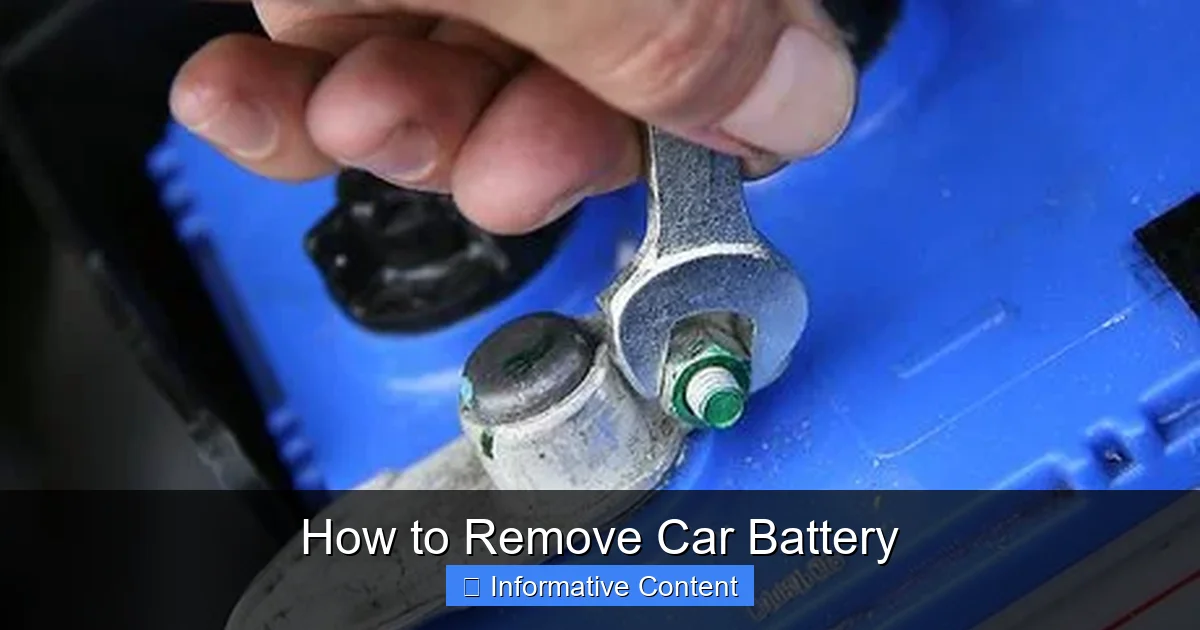
Visual guide about How to Remove Car Battery
Image source: wikihow.com
Must-Have Tools
- Wrench or Socket Set: Most battery terminals require a 10mm or 13mm wrench or socket. Having a small ratchet set with these sizes is ideal.
- Battery Terminal Cleaner/Wire Brush: This is crucial for scrubbing away corrosion from terminals and posts.
- Battery Carrier/Strap: Car batteries are heavy! A specialized carrier makes lifting and carrying much safer and easier.
- Penetrating Oil (Optional): If your terminal bolts are really rusted, a quick spray can help loosen them.
- Baking Soda and Water Solution (Optional): For cleaning up corrosion and neutralizing battery acid.
Crucial Safety Gear
- Safety Glasses: This is non-negotiable! Battery acid can splash, and sparks can fly. Protect your eyes.
- Rubber Gloves or Heavy-Duty Work Gloves: To protect your hands from acid, dirt, and sharp edges.
- Old Clothes: Battery acid can ruin fabric. Don’t wear your Sunday best!
- Fire Extinguisher (Optional but Recommended): A small ABC-rated extinguisher is a good safety measure to have nearby, just in case.
Having these items ready before you start will make the entire process of how to remove car battery much smoother and safer.
The Step-by-Step Guide: How to Remove Your Car Battery Safely
Now for the main event! Follow these steps carefully, and you’ll be able to remove car battery with confidence.
Preparation is Key
- Park on a Flat Surface: Engage the parking brake.
- Turn Off Your Car: Make sure the ignition is off, and the keys are out. Close all doors and turn off any accessories (radio, lights).
- Pop the Hood: Secure it open with the prop rod.
- Locate Your Battery: Most cars have the battery under the hood, but some might have it in the trunk, under a seat, or even in the wheel well. Refer to your car’s owner’s manual if you can’t find it.
Identifying Terminals and Cleaning Corrosion
Look at your battery terminals. You’ll see two posts. One will have a “PLUS” sign (+) and a red cover or cable, indicating the positive terminal. The other will have a “MINUS” sign (-) and a black cover or cable, indicating the negative terminal. Make a mental note of which is which. If there’s any visible corrosion, gently clean it off with your wire brush before proceeding. A mix of baking soda and water can neutralize the acid and help clean it. Rinse with plain water and dry thoroughly.
Disconnecting the Negative Terminal (The Crucial First Step!)
This is arguably the most important safety step when you remove car battery. Locate the negative terminal (black cable, “-” sign). Using your wrench or socket, loosen the nut that clamps the cable to the battery post. You usually only need to loosen it a few turns, not remove it entirely. Once loose, twist and pull the cable straight up and off the battery post. Make sure the cable doesn’t accidentally touch any metal parts of the car or the positive terminal. It’s a good idea to tuck it away or cover the end with a rag. Why negative first? Because if your wrench accidentally touches the positive terminal and any metal part of the car (which is grounded), it will create a dangerous short circuit. Disconnecting the negative first eliminates this risk.
Disconnecting the Positive Terminal
Now that the negative side is safely out of the way, you can move to the positive terminal (red cable, “+” sign). Loosen the nut on this terminal in the same way you did the negative. Once loose, carefully remove the positive cable from the post. Again, make sure it doesn’t touch any metal surfaces. You’re almost ready to remove car battery from its tray!
Removing the Battery Hold-Down Clamp
Car batteries are usually secured in place by a hold-down clamp or strap. This clamp prevents the heavy battery from shifting around while you’re driving. Locate this clamp – it could be a strap across the top, a clamp at the base, or a bolt securing it to the tray. Use your wrench to loosen or remove the bolts that hold the clamp in place. Once loose, set the clamp and any associated hardware aside in a safe spot so you don’t lose them.
Safely Lifting and Removing the Battery
Now that the terminals are disconnected and the hold-down is off, you’re ready to actually remove car battery. Remember, batteries are heavy! A typical car battery can weigh anywhere from 30 to 60 pounds.
- Use a Battery Carrier: If you have one, attach it securely to the battery. This provides handles for a much safer lift.
- Lift with Your Legs: If you don’t have a carrier, bend at your knees, not your back, and use both hands to lift the battery straight up and out of the tray. Be careful not to tilt it too much, as some older batteries might leak acid.
- Place it Safely: Once out, place the old battery on a stable, non-conductive surface, away from anything flammable. A sturdy cardboard box or a plastic bin is a good temporary spot.
Congratulations! You’ve successfully managed to remove car battery from your vehicle.
After the Removal: Cleaning, Installation Prep, and Disposal
You’ve done the hard part, but there are a few important steps to take once the old battery is out.
Cleaning the Battery Tray and Terminals
Now that the battery is gone, take a good look at the battery tray. It’s common to find accumulated dirt, debris, and corrosion residue. Clean the tray thoroughly with your wire brush and the baking soda solution. This will neutralize any lingering acid and remove crud. Rinse with water and dry completely before installing a new battery or putting the old one back. Also, if you plan to reuse the old battery, give its posts a good clean with the wire brush.
Preparing for a New Battery (If Applicable)
If you’re installing a new battery, now’s the time to prepare the tray and cables. Ensure the tray is clean and dry. You might consider applying anti-corrosion pads or grease to the new battery’s posts before installation. These help prevent future corrosion and ensure a long life for your new power source. When you’re ready to put the new battery in, you’ll simply reverse the removal steps: install the battery, secure the hold-down, connect the positive cable first, then the negative cable. Torque the bolts to spec, but don’t overtighten.
What to Do with Your Old Battery: Proper Disposal is Key
Car batteries contain lead and sulfuric acid, both of which are harmful to the environment and human health if not disposed of properly. Never, ever throw an old car battery in the regular trash.
- Recycle It: Most auto parts stores (like AutoZone, O’Reilly, Advance Auto Parts, NAPA) will accept old batteries for recycling, often for free, or will give you a core charge refund if you’re buying a new one.
- Local Recycling Centers: Check with your local waste management facility or recycling center; many have specific drop-off points for automotive batteries.
Doing your part to recycle helps protect our planet and ensures the hazardous materials are handled safely. Learning how to remove car battery properly extends to knowing how to dispose of it responsibly.
Common Pitfalls and Pro Tips for a Smooth Removal
Even with the best instructions, little things can go wrong. Here are some extra tips and common mistakes to avoid when you remove car battery:
Don’t Rush It!
Take your time with each step. Rushing is when mistakes happen, like accidental shorts or dropping a heavy battery. Double-check your terminal connections, especially when putting a new battery in. Always remember the negative-first-off, positive-first-on rule.
The Importance of Cleanliness
Corrosion isn’t just ugly; it’s an insulator that prevents good electrical flow. Keeping terminals and the battery tray clean can extend your battery’s life and improve your car’s electrical system’s efficiency. A simple wire brush and baking soda solution can work wonders. If you often remove car battery for maintenance, regular cleaning will become second nature.
Double-Checking Connections
When you’re ready to install a new battery (or reinstall the old one), ensure all connections are snug but not overtightened. Overtightening can strip threads or damage the battery posts. A good rule of thumb is “snug plus a quarter turn.” Test the battery after installation by starting your car. If everything powers up, you’ve done a great job!
When to Call a Pro
While learning how to remove car battery is usually a DIY-friendly task, there are times when it’s best to call in a professional. If your battery is severely swollen, leaking excessively, or has major damage, it could be very dangerous to handle. Similarly, if your battery is in an extremely hard-to-reach location or you encounter persistent issues after replacement (like the car still not starting), don’t hesitate to contact a qualified mechanic. Your safety and the health of your vehicle are worth it.
Conclusion
And there you have it! You’ve learned the ins and outs of how to remove car battery safely and efficiently. It’s a skill that demystifies a common automotive task and gives you greater independence as a car owner. Remember to always prioritize safety by wearing protective gear and following the negative-first, positive-last disconnection rule. Gather your tools, take your time, and don’t forget to properly recycle that old battery.
You’ve now got the knowledge and confidence to tackle this job whenever it arises. So, the next time your car needs a battery swap or a thorough cleaning, you won’t be scratching your head. You’ll be grabbing your wrench and getting to work, knowing exactly how to remove car battery like a pro. Happy wrenching!
🎥 Related Video: How to Change a Car Battery | DIY Car Repairs | The Home Depot
📺 The Home Depot
Learn how to change your car battery in a few simple steps. Before you begin, you’ll want to assemble your tools and make sure …
Frequently Asked Questions
Why is it so important to disconnect the negative terminal first when removing a car battery?
Disconnecting the negative terminal first is a critical safety step because it breaks the circuit between the battery and the car’s grounded metal frame. This prevents accidental short circuits if your wrench touches both the positive terminal and any metal part of the car simultaneously, which could cause sparks, fire, or even an explosion.
What size wrench or socket do I typically need to remove car battery terminals?
Most car battery terminals are secured with nuts that require a 10mm or 13mm wrench or socket. Some older vehicles or specific models might use a different size, so having a small set of common metric wrenches or sockets is ideal.
Where can I safely dispose of an old car battery once I remove it?
You should never throw an old car battery in the regular trash because it contains hazardous materials. Most auto parts stores (e.g., AutoZone, O’Reilly, Advance Auto Parts) will accept old batteries for recycling, often for free or as part of a core charge refund when purchasing a new one. Your local recycling center or waste management facility may also have specific drop-off points.
Can I remove the battery without wearing gloves or safety glasses?
It is strongly not recommended to remove a car battery without wearing protective gloves and safety glasses. Battery acid is highly corrosive and can cause severe chemical burns to your skin and eyes. Sparks during disconnection can also cause eye injury, making safety gear essential for this task.
What does a corroded car battery terminal look like, and how do I clean it?
Corroded car battery terminals typically appear as a white, blue, or greenish powdery or crusty substance around the battery posts and cable clamps. To clean it, first disconnect the battery safely, then use a wire brush and a solution of baking soda and water to scrub away the corrosion. Rinse thoroughly with plain water and dry completely.
How do I know if my car battery needs to be removed and replaced?
Your car battery might need to be removed and replaced if your car is slow to crank or won’t start, if the headlights dim when starting, if the battery light is on, or if you notice visible signs of damage like a swollen casing or excessive leaking. A professional battery test can confirm its health.