Most hybrid cars do not need to be plugged in; their batteries efficiently self-charge through regenerative braking and the gasoline engine. This ingenious design captures energy normally lost during deceleration and uses the engine as a generator, keeping the battery topped up. Only Plug-in Hybrid Electric Vehicles (PHEVs) require external charging to utilize their extended all-electric range.
How Do You Charge Hybrid Car Battery Simple Guide
Hey there, fellow explorer of sustainable driving! Have you ever found yourself gazing at a shiny new hybrid car, perhaps imagining zipping past gas stations with a smug grin, but then a little question mark pops up in your mind? That question is often, “Wait, how do you charge hybrid car battery anyway?” It’s a super common query, and honestly, it’s a brilliant one because the answer isn’t always as straightforward as “just plug it in!”
Many of us grew up with the simple logic of gasoline cars: you fill ‘er up, and off you go. Electric cars simplified it in a different way: plug it in, and wait. Hybrids, however, sit wonderfully in the middle, offering a blend of both worlds. This blend often leads to a bit of confusion about their power source. Don’t worry, you’re not alone in wondering about the mechanics of hybrid battery charging. I remember feeling a bit overwhelmed when I first started looking into them, but trust me, it’s much simpler than it seems once you understand the different types.
In this guide, we’re going to demystify the process of hybrid car battery charging, breaking it down into easy-to-understand chunks. We’ll explore the different kinds of hybrids out there and exactly how do you charge hybrid car battery for each. Think of me as your friendly guide, helping you navigate the world of hybrid power with practical tips and clear explanations. By the end, you’ll feel confident and informed about powering your eco-friendly ride.
Key Takeaways
- Most Hybrids Self-Charge: Standard hybrids (HEVs) charge automatically while driving; no plugging in needed.
- PHEVs Require Charging: Plug-in hybrids (PHEVs) must be externally charged to utilize electric range.
- Utilize Regenerative Braking: Drive smoothly to maximize battery charging through deceleration and braking.
- Engine Charges Battery: Your hybrid’s gasoline engine also generates power for the battery pack.
- No Special HEV Charger: Standard hybrids do not require any external charging equipment or stations.
- Understand Your Hybrid Type: Know if it’s HEV or PHEV to charge your battery correctly.
- PHEV Charging is Simple: Use standard Level 1 or Level 2 EV chargers for plug-in hybrids.
Quick Answers to Common Questions
Do I even need to plug in my hybrid?
For most traditional hybrids, like a Toyota Prius, you absolutely don’t! Your car automatically knows how to charge hybrid car battery using the gasoline engine and regenerative braking when you slow down.
So, how do traditional hybrids charge their battery then?
They ingeniously charge hybrid car battery on the go! The gasoline engine generates electricity, and “regenerative braking” captures energy normally lost during deceleration and braking, sending it straight back to the battery.
What if I have a Plug-in Hybrid (PHEV)? Is that different?
Yes, plug-in hybrids are different! To get the most electric range, you *will* need to charge hybrid car battery by plugging it into an external power source, just like an electric car.
Where can I charge a Plug-in Hybrid?
You can easily charge hybrid car battery at home using a standard 120V outlet (Level 1) for an overnight charge, or install a faster 240V charger (Level 2). Public charging stations are also available, offering even quicker charging options.
Is it complicated to charge a Plug-in Hybrid car battery?
Not at all! Learning how to charge hybrid car battery in a PHEV is super simple – it’s often as easy as plugging in your smartphone. Just connect the charging cable, and your car handles the rest.
📑 Table of Contents
- What Exactly is a Hybrid Car (and Why Charging Varies)
- How Traditional Hybrids (HEVs) Charge Their Batteries
- How Plug-in Hybrids (PHEVs) Charge Their Batteries (The “Plugging In” Part)
- Tips for Efficient Hybrid Battery Charging and Longevity
- Dispelling Common Myths About Hybrid Battery Charging
- The Future of Hybrid Charging: What’s Next?
- Conclusion
What Exactly is a Hybrid Car (and Why Charging Varies)
Before we dive into the nitty-gritty of how do you charge hybrid car battery, let’s quickly clarify what a hybrid car actually is. At its core, a hybrid vehicle combines a traditional gasoline engine with an electric motor and a battery pack. This pairing allows the car to run on electricity, gasoline, or a combination of both, offering better fuel efficiency and reduced emissions compared to conventional gasoline-only cars. However, not all hybrids are created equal, and this is where the charging differences come into play.
Traditional Hybrids (HEVs)
These are the original hybrids, like many Toyota Priuses you see on the road. HEVs, or Hybrid Electric Vehicles, have a smaller battery pack and their primary goal is to assist the gasoline engine, improving fuel economy. When you ask, “how do you charge hybrid car battery in an HEV?”, the answer is quite surprising to many: you don’t actually plug them in! Their batteries are charged entirely through internal means, which we’ll explore in the next section.
Plug-in Hybrids (PHEVs)
PHEVs, or Plug-in Hybrid Electric Vehicles, are the bridge between traditional hybrids and pure electric vehicles. They come with a larger battery pack than HEVs, allowing them to travel a significant distance (typically 20-50 miles) purely on electric power. This means they can handle most daily commutes without using a drop of gasoline. For these vehicles, the question of “how do you charge hybrid car battery?” directly involves plugging them into an external power source, much like an all-electric car.
Mild Hybrids (MHEVs)
Mild hybrids are a more recent development and represent the lowest level of hybrid technology. They use a small electric motor and battery to provide a modest boost to the gasoline engine, primarily for functions like starting the engine more smoothly, assisting with acceleration, or allowing the engine to turn off when coasting or stopped. Like traditional hybrids, MHEVs do not require external charging. Their electric components simply assist the primary gasoline engine to improve efficiency slightly, and their batteries are charged internally.
How Traditional Hybrids (HEVs) Charge Their Batteries
Now, let’s tackle the big question for HEV owners or potential buyers: how do you charge hybrid car battery when you don’t plug it in? This is where the clever engineering of HEVs really shines. Their battery charging is an entirely automatic, self-sustaining process that happens behind the scenes as you drive. You don’t need to do anything special; the car handles it all. This “set it and forget it” approach is one of their biggest appeals.
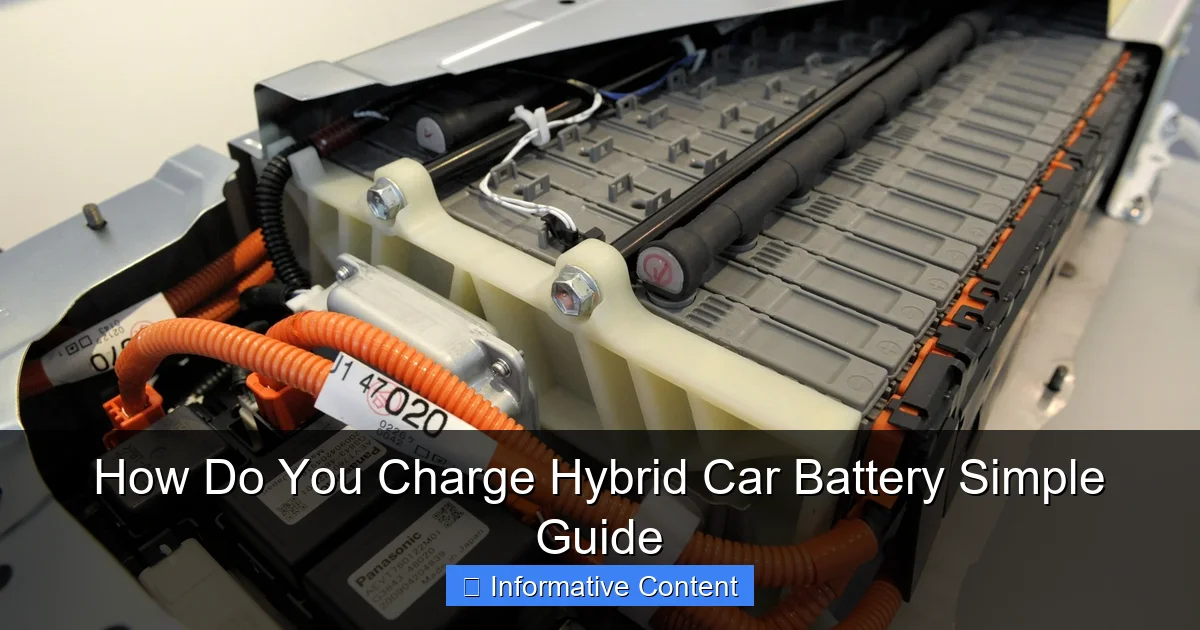
Visual guide about hybrid car battery charge
Image source: carcarebd.com
Regenerative Braking: Your Car’s Energy Recycler
This is perhaps the most fascinating aspect of HEV charging. Every time you slow down, coast, or press the brake pedal, your hybrid car isn’t just wasting that kinetic energy as heat (like a conventional car). Instead, its electric motor acts as a generator, converting the car’s motion back into electricity. This electricity is then sent directly to the battery pack, effectively recycling energy that would otherwise be lost. It’s like having a tiny power plant built right into your brakes! This process is a huge contributor to how do you charge hybrid car battery in an HEV.
Practical Tip: To maximize regenerative braking, try to anticipate stops and slow down gradually rather than sudden, hard braking. You’ll notice your car’s energy flow display (if it has one) showing power returning to the battery.
Gasoline Engine: The Onboard Generator
Beyond regenerative braking, the gasoline engine in an HEV also plays a crucial role in keeping the battery charged. When the battery level drops below a certain threshold, or when the car needs extra power, the gasoline engine can kick in not only to propel the vehicle but also to directly spin a generator that sends electricity to the battery. This happens seamlessly and automatically. For example, if you’re driving on the highway at a steady speed, the engine might run slightly longer than strictly necessary to propel the car, dedicating some of its power to recharging the battery. So, when people ask, “how do you charge hybrid car battery when driving?” the gasoline engine is a key part of that answer.
The “Set It and Forget It” Advantage
The beauty of traditional hybrids is their simplicity when it comes to charging. You never have to think about it. You just drive it like a regular car, fueling up with gasoline when needed, and the car’s advanced systems handle all the battery management and charging automatically. This makes HEVs a fantastic choice for those who want the fuel economy benefits of a hybrid without any changes to their driving or fueling habits. You’re constantly contributing to how do you charge hybrid car battery without even realizing it!
How Plug-in Hybrids (PHEVs) Charge Their Batteries (The “Plugging In” Part)
For Plug-in Hybrid Electric Vehicles (PHEVs), the answer to “how do you charge hybrid car battery?” definitively includes plugging in. This is what sets them apart from traditional hybrids. Their larger battery packs are designed to be replenished from an external power source, giving you the ability to drive on pure electricity for a significant range before the gasoline engine even needs to start. This electric-only range is a game-changer for daily commutes and significantly reduces your reliance on gasoline.
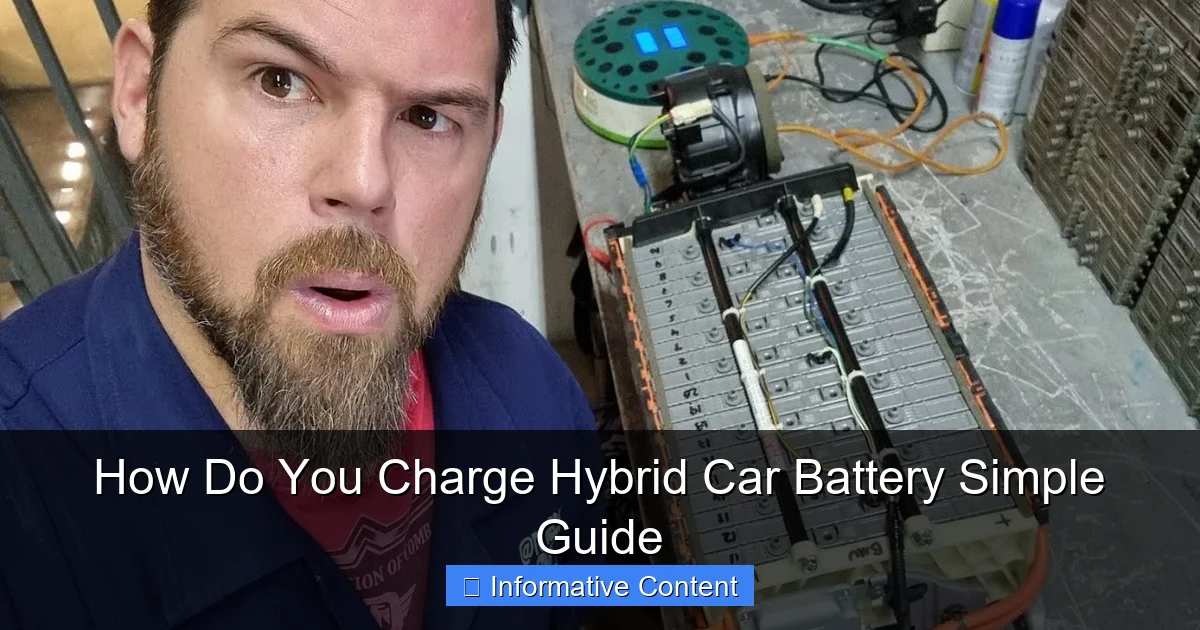
Visual guide about hybrid car battery charge
Image source: i.ytimg.com
Level 1 Charging: The Everyday Wall Outlet
This is the simplest and most accessible way to charge a PHEV. Level 1 charging uses a standard 120-volt household outlet, just like the one you plug your toaster or lamp into. Your PHEV will come with a charging cable that has a standard three-prong plug on one end and a J1772 connector (the universal standard for most EVs and PHEVs in North America) on the other. It’s super convenient because you can charge practically anywhere there’s an outlet. However, it’s also the slowest option. For a typical PHEV, a full charge might take anywhere from 8 to 15 hours. So, if you’re wondering “how do you charge hybrid car battery overnight at home?”, Level 1 is your go-to.
Practical Example: You get home from work, plug your PHEV into a standard garage outlet, and by morning, it’s fully charged and ready for your electric commute.
Level 2 Charging: Faster and More Convenient
Level 2 charging uses a 240-volt power source, similar to what powers large appliances like electric dryers or ovens. This requires installing a dedicated charging station (often called an EVSE – Electric Vehicle Supply Equipment) in your home or accessing public Level 2 chargers. Level 2 charging significantly speeds up the process. A full charge for a PHEV typically takes between 2 to 4 hours, making it ideal for topping up during the day or fully charging in a few hours after work. Many workplaces and public spaces offer Level 2 charging stations, making it easier to keep your battery topped up while you’re out and about. This is often the preferred method when considering “how do you charge hybrid car battery efficiently.”
Practical Tip: If you drive a PHEV daily and want to maximize your electric range, consider installing a Level 2 charger at home. The upfront cost is often offset by fuel savings.
DC Fast Charging: The Rare Bird for PHEVs
While common for pure electric vehicles, DC Fast Charging (also known as Level 3 charging) is generally *not* used for PHEVs. Most PHEVs are not equipped to handle the high power output of DC fast chargers because their battery packs are smaller and designed for different charging rates. Attempting to fast charge a PHEV not designed for it could damage the battery. Always check your car’s manual to confirm if it supports DC fast charging, but generally, it’s not part of the answer to “how do you charge hybrid car battery efficiently for a PHEV.”
Understanding Charging Connectors
In North America, the standard connector for Level 1 and Level 2 charging on most PHEVs (and EVs) is the J1772 connector. This is the plug that you insert into your car’s charging port. For DC Fast Charging, there are different connectors like CCS, CHAdeMO, or Tesla’s proprietary connector, but as mentioned, these are rarely relevant for PHEVs.
PHEV Charging Levels Comparison
Here’s a quick look at the typical charging times for a PHEV:
| Charging Level | Voltage | Typical Charge Time (PHEV) | Location |
|---|---|---|---|
| Level 1 | 120V AC | 8-15 hours | Standard Home Outlet |
| Level 2 | 240V AC | 2-4 hours | Home Charger, Public Stations |
| DC Fast Charging | 400-900V DC | N/A (Generally not supported by PHEVs) | Public Fast Chargers |
Tips for Efficient Hybrid Battery Charging and Longevity
Whether you own an HEV or a PHEV, understanding how do you charge hybrid car battery is just the first step. To ensure your hybrid’s battery lasts as long as possible and performs optimally, there are some best practices you can follow. Just like taking care of your phone’s battery, a little mindfulness goes a long way in extending the life of your car’s power source.
Don’t Always Charge to 100% (for PHEVs)
While it might seem counterintuitive, constantly charging your PHEV’s battery to 100% and letting it drain to 0% can put more stress on the battery over its lifetime. Most manufacturers build in buffers, meaning that what your car displays as 0% or 100% isn’t the absolute physical limit of the battery. However, for optimal longevity, aiming to keep your battery charge between 20% and 80% when possible is a good rule of thumb. Of course, for longer trips or when you need the full electric range, don’t hesitate to charge fully! This flexibility is key to understanding how do you charge hybrid car battery for the long haul.
Avoid Extreme Temperatures
Hybrid batteries, like most batteries, are sensitive to extreme heat and cold. Parking your car in direct sunlight during a heatwave or leaving it exposed to freezing temperatures for extended periods can degrade the battery over time. Manufacturers design battery management systems to mitigate these effects, but doing what you can to keep your car in a garage or shaded area during harsh weather conditions can help. This also affects how do you charge hybrid car battery, as extreme temperatures can slow down charging or make it less efficient.
Regular Driving is Good
For HEVs, regular driving naturally engages the regenerative braking and engine charging systems, keeping the battery in its optimal operating range. For PHEVs, using the electric range regularly and plugging in ensures the battery cells remain active and healthy. Batteries prefer to be used, not just sit idle for long periods. If you’re going away for an extended time, check your car’s manual for specific storage recommendations regarding battery charge levels.
Schedule Charging for Off-Peak Hours (for PHEVs)
If your electricity provider offers time-of-use rates, charging your PHEV during off-peak hours (often overnight) can save you money. Many PHEVs and home charging stations have scheduling features that allow you to set when charging begins and ends. This is a smart way to manage how do you charge hybrid car battery cost-effectively.
Keep Your Car Maintained
Regular maintenance, as recommended by the manufacturer, is crucial for all aspects of your hybrid, including the battery system. Keeping up with fluid changes, tire rotations, and general inspections ensures that all components, including those that contribute to battery health and charging, are functioning correctly. A healthy car is a happy car, and that includes its battery!
Dispelling Common Myths About Hybrid Battery Charging
With new technologies often come misconceptions, and hybrid cars are no exception. Let’s clear up a few common myths about how do you charge hybrid car battery to give you more confidence in these fantastic vehicles.
Myth: Hybrid Batteries Die Quickly
This is a pervasive myth. Modern hybrid batteries are incredibly durable and designed to last for the lifetime of the vehicle. Most manufacturers offer extensive warranties on their hybrid battery packs, often 8 years/100,000 miles or even 10 years/150,000 miles in some states. The advanced battery management systems in hybrids prevent overcharging and deep discharging, which are the main culprits for battery degradation. So, while you might wonder “how do you charge hybrid car battery to make it last?”, the truth is the car does most of the work to protect it.
Myth: You Always Have to Plug In a Hybrid
Absolutely not! This is a common confusion, especially between HEVs and PHEVs. As we’ve discussed, traditional hybrids (HEVs) never need to be plugged in. They generate all their electricity internally. Only Plug-in Hybrids (PHEVs) require external charging to utilize their full electric range. Even then, if you can’t plug in a PHEV, it will simply revert to operating like a traditional hybrid, using its gasoline engine to power itself and charge the battery. You won’t be stranded!
Myth: Hybrid Charging is Complicated
While the internal workings of a hybrid are complex, the act of charging for the driver is anything but. For HEVs, there’s literally nothing to do but drive. For PHEVs, it’s as simple as plugging an appliance into a wall socket, or connecting to a dedicated charging station. The technology is designed for user-friendliness, not complexity. The initial learning curve about the different hybrid types and charging levels might seem like a lot, but once you understand your specific vehicle, how do you charge hybrid car battery becomes second nature.
The Future of Hybrid Charging: What’s Next?
The automotive industry is constantly evolving, and hybrid technology is no exception. As we continue to refine how do you charge hybrid car battery and make it even more convenient and efficient, we can expect some exciting developments on the horizon. These innovations aim to make hybrids even more appealing and seamlessly integrate them into our daily lives.
Wireless Charging Technologies
Imagine simply parking your PHEV over a special pad in your garage or a public parking spot, and it automatically starts charging without any cables! Wireless charging, or inductive charging, is a technology already in development and testing. While not widespread yet, it promises ultimate convenience, eliminating the need to physically plug in your car. This would be a significant leap in simplifying how do you charge hybrid car battery for PHEV owners.
Smarter Grid Integration
As more electric and plug-in hybrid vehicles hit the road, the way they interact with our electricity grid becomes more important. Future charging systems will likely feature smarter integration, allowing your car to communicate with the grid to charge when electricity is cheapest or cleanest (e.g., when renewable energy is plentiful). Vehicle-to-Grid (V2G) technology, where your car can even feed power *back* into your home or the grid during peak demand, is also on the horizon. This could transform how do you charge hybrid car battery from a simple act to an active participant in energy management.
Longer Electric Ranges and Faster PHEV Charging
Battery technology is continuously improving, leading to higher energy density and faster charging capabilities. We can anticipate PHEVs with even longer electric-only ranges, potentially covering the vast majority of daily driving for more people. Additionally, the charging speeds for PHEVs, particularly Level 2, will likely continue to get faster, making those 2-4 hour charging times even shorter and more convenient. This ongoing improvement impacts how do you charge hybrid car battery by making it more flexible and less time-consuming.
Conclusion
So, there you have it – a comprehensive look at the ins and outs of how do you charge hybrid car battery. It’s clear that there isn’t just one answer, but rather a spectrum of solutions depending on the type of hybrid you choose. Whether you opt for the effortless, self-charging convenience of a traditional HEV or the plug-in flexibility and electric range of a PHEV, hybrid technology offers a compelling path towards more efficient and environmentally conscious driving.
The key takeaway is that hybrid car battery charging, while varied, is designed to be user-friendly and integrate smoothly into your lifestyle. You don’t need to be an automotive expert to understand or manage it. By understanding the basics – regenerative braking, engine charging, and the different levels of external charging for PHEVs – you’re well-equipped to make informed decisions and get the most out of your hybrid experience. Happy driving, and enjoy the journey towards a greener future!
🎥 Related Video: How to charge 12v battery on your hybrid car.
📺 TmT Toyota mechanic Tips
Frequently Asked Questions
Do I need to manually charge a hybrid car battery?
This depends on the type of hybrid vehicle you own. Traditional or “self-charging” hybrids regenerate their battery through braking and the engine, so you never plug them in. Plug-in Hybrid Electric Vehicles (PHEVs), however, require external charging to utilize their electric-only range and reduce fuel consumption.
How do you charge a plug-in hybrid car battery?
To charge a plug-in hybrid car battery, you simply connect your vehicle to an external power source using a compatible charging cable. This can be done at home using a standard outlet or a dedicated charging station, or at various public charging points. The process is similar to charging a large mobile device.
What equipment do I need to charge my hybrid car battery at home?
For a basic Level 1 charge, you typically just need the charging cable that comes with your PHEV and a standard 120V household outlet. For faster Level 2 charging, which is highly recommended for daily use, you’ll need to install a 240V charging station (also known as EVSE) at home, similar to an electric clothes dryer outlet.
How long does it take to charge a hybrid car battery?
Charging times vary significantly based on the battery’s size and the charging level you use. A Level 1 charge can take anywhere from 8 to 12 hours for a full charge, often done overnight. A Level 2 charger can dramatically reduce this time, typically fully charging a PHEV battery in 2-4 hours.
Where can I charge a hybrid car battery?
You can charge your plug-in hybrid conveniently at home using standard household outlets (Level 1) or a faster dedicated wall charger (Level 2). Additionally, a growing network of public charging stations, found at workplaces, shopping centers, and public parking lots, provides convenient charging options while you’re out and about.
Is charging a hybrid car battery expensive, and what is the typical electric range?
The cost to charge a hybrid car battery is generally much lower than filling up with gasoline, varying by your local electricity rates. Most plug-in hybrids offer an electric-only range of 20 to 50 miles, which is often sufficient for daily commutes and errands without using any fuel. Utilizing this electric range can lead to significant fuel savings over time.